
Business
20 of 33 Nigerian Banks Meet Recapitalisation Requirement, Cardoso Says


Governor of the Central Bank of Nigeria (CBN), Olayemi Cardoso, has disclosed that 20 out of the 33 deposit money banks that raised fresh capital have met the new recapitalisation requirements set by the apex bank.
Cardoso made the announcement on Tuesday at the end of the 304th Monetary Policy Committee (MPC) meeting held in Abuja, describing the progress as a significant step toward strengthening Nigeria’s banking sector.
According to him, members of the MPC acknowledged the importance of the ongoing recapitalisation exercise and commended banks that have successfully met the new capital thresholds.
He, however, urged institutions yet to comply to intensify their efforts to ensure timely completion of the process, stressing that full compliance across the industry would enhance financial system stability and resilience.
The CBN had introduced the recapitalisation programme as part of broader reforms aimed at positioning Nigerian banks to better absorb economic shocks, support large-scale financing, and compete effectively in regional and global markets.
Cardoso noted that a well-capitalised banking system remains critical to sustaining investor confidence, safeguarding depositors’ funds, and supporting long-term economic growth.
The recapitalisation drive is expected to reshape the competitive landscape of the banking industry, with analysts predicting possible mergers, acquisitions, and strategic partnerships among lenders seeking to meet regulatory requirements.

Nigeria’s gross external reserves have risen to $50.45 billion as of February 16, 2026, marking the highest level in 13 years, according to the Central Bank of Nigeria (CBN).
CBN Governor Olayemi Cardoso disclosed the figure during a high-level economic briefing after the Monetary Policy Committee (MPC) meeting, describing the development as a significant boost to the country’s macroeconomic stability.
The latest reserve position rivals levels last recorded in May 2013 and now provides 9.6 months of import cover far above the three-month benchmark widely regarded as adequate for external stability.
Key Drivers of the Reserve Growth
The apex bank attributed the increase to a combination of policy reforms and favourable external conditions between 2025 and early 2026.
Diaspora remittances played a major role, rising by 66 percent to an average of nearly $600 million monthly following reforms that streamlined licensing processes for International Money Transfer Operators (IMTOs).
Nigeria also posted a $3.42 billion current account surplus in late 2025, supported by improved non-oil export performance and reduced demand for refined petroleum imports.
In the oil sector, crude production climbed to 1.46 million barrels per day in January 2026. The implementation of the Tinubu administration’s executive order on direct remittance of oil revenues also ensured that more foreign exchange earnings flowed directly into government accounts.
The CBN noted that its recent position as a “net buyer” of foreign exchange purchasing more dollars from the market than it sells signals renewed private capital inflows and strengthening investor confidence.
Implications for the Naira
Analysts say the stronger reserve buffer provides greater firepower to defend the naira and manage volatility in the foreign exchange market.
The gap between the official and parallel market exchange rates has narrowed to under two percent, one of the tightest spreads in decades, reflecting improved liquidity and rate convergence.
With nearly 10 months of import cover, monetary authorities are seen as better positioned to cushion external shocks without significant pressure on the currency.
Some industry leaders, including Aliko Dangote, have projected that the naira could strengthen toward ₦1,100 to the dollar by the end of 2026 if current trends are sustained.
The development underscores growing confidence in Nigeria’s external position, even as policymakers maintain a cautious stance to preserve price and exchange rate stability.

The Central Bank of Nigeria (CBN) has reduced its benchmark interest rate for the second time in five months, lowering the Monetary Policy Rate (MPR) to 26.5 percent in a move aimed at supporting economic growth as inflation shows signs of moderation.
The decision was announced on Tuesday by the Governor of the apex bank, Olayemi Cardoso, at the end of the two-day Monetary Policy Committee (MPC) meeting held in Abuja.
Latest data from the National Bureau of Statistics showed that Nigeria’s headline inflation rate eased marginally to 15.10 percent in January 2026, down from 15.15 percent recorded in December 2025. The slight decline has strengthened expectations of a gradual monetary easing cycle following months of aggressive tightening.
The latest adjustment follows a previous rate cut in September 2025, when the MPR was reduced to 27 percent from 27.5 percent. That move marked a policy shift after years of rate hikes aimed at curbing persistent inflationary pressures and stabilising the naira.
Prior to the recent easing cycle, the last time the CBN reduced rates was in September 2020, when the MPR was cut from 12.5 percent to 11.5 percent to cushion the economic impact of the COVID-19 pandemic.
Despite the rate cut, the MPC retained other key monetary parameters. The asymmetric corridor was maintained at +50/-450 basis points around the MPR. The Cash Reserve Ratio (CRR) remained at 45 percent for Deposit Money Banks and 16 percent for Merchant Banks, while the Liquidity Ratio was left unchanged at 30 percent.
Market analysts say the easing stance could support activity in the fixed income market. Analysts at Coronation Merchant Bank noted that a rate cut would likely sustain yield moderation, potentially boosting the value of existing fixed-income investments.
The CBN’s latest move signals growing confidence among policymakers that inflationary risks are gradually subsiding, creating room for measures that support economic expansion, even as price stability remains the bank’s primary mandate.
Business
FEDERAL GOVERNMENT TO VALIDATE TECHNICAL COMMITTEE REPORT FOR CPOPC FULL MEMBERSHIP IN APRIL

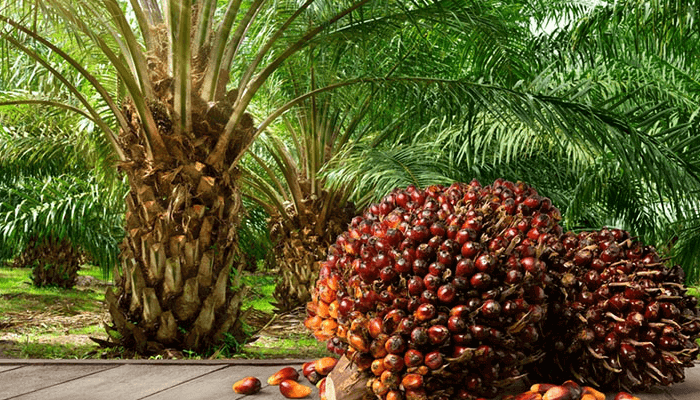
The Federal Government says it will validate a technical committee report geared toward transiting Nigeria from observer status to full membership of the Council of Palm Oil Producing Countries (CPOPC) in April. Senator Abubakar Kyari, Minister of Agriculture and Food Security, stated this when the council’s mission visited him on Saturday in Abuja.
He said the ministry had constituted a technical committee to consider how the country could seamlessly transition from observer to full member of CPOPC, given its strategic importance in palm oil production. “We are conscious of the fact that the palm oil value chain is very strategic for us and have identified it as an export crop that can drive foreign exchange for the country and ensure good health in terms of consumption. We are also conscious of the fact that we need the support of CPOPC countries to avail the country new varieties of climate-smart, resistant seeds that can be produced by farmers in the country,” he said.
Mr. Alphonsus Inyang, President of the National Palm Produce Association of Nigeria (NPPAN), said that as a member of CPOPC, Nigeria would target over 10 million tonnes of oil palm production between 2026 and 2050. “We are also targeting 2.5 million hectares from among Nigerian households who are out to produce one hectare each, geared toward a ₦20 trillion annual economy within this period. We are working side by side with the big players who will be developing plantations,” he said.

The Secretary-General of CPOPC, Izzana Salleh, said the council’s mission to Nigeria was to explore how the country could transition from observer status to full membership, among other objectives. She noted that Nigeria’s status as an observer nation since 2024 would expire in November. Salleh assured the country of the council’s readiness to support its vision to strengthen domestic production, enhance food security, and build a competitive and sustainable palm oil supply chain. She emphasized that full membership would strategically position Nigeria for a greater future in oil palm production and its value chain, as well as exports.
According to her, the visit aims to strengthen the council’s engagement with Nigeria, including potential membership in CPOPC. She said: “The aim of the council’s mission to Nigeria is to advance both Nigeria’s national ambitions and Africa’s collective voice in global agricultural discussions. CPOPC was established to promote cooperation among producing nations, empower smallholders, advance sustainability, and ensure fair, science-based global dialogue on vegetable oils. We are ready to support Nigeria’s vision to strengthen domestic production, enhance food security, and build a competitive and sustainable palm oil supply chain.”