General News
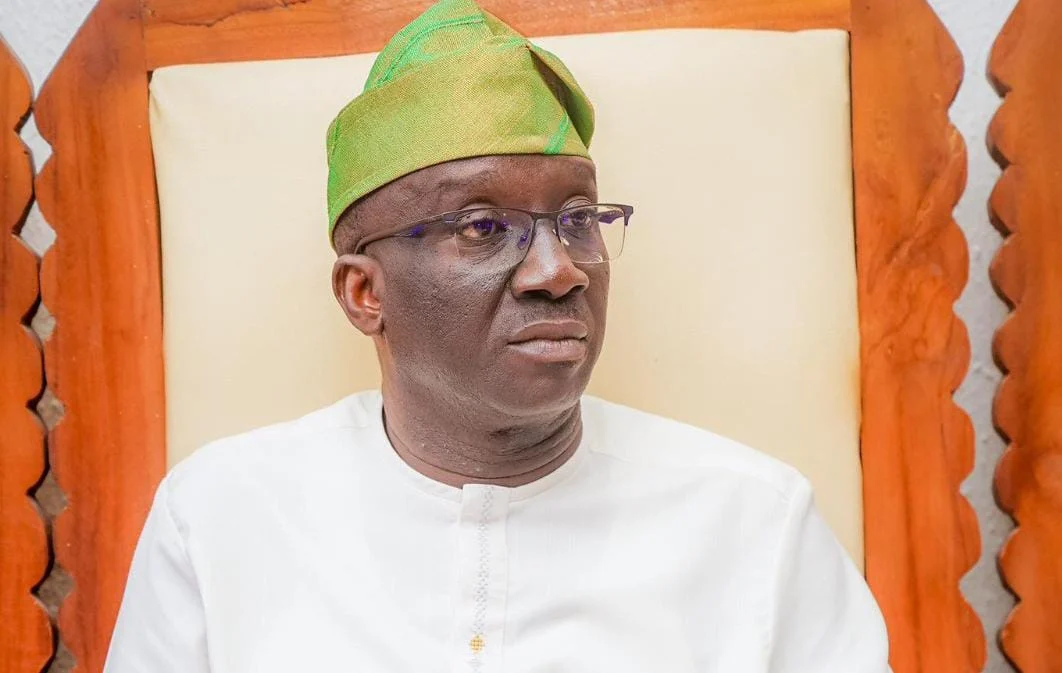
GOVERNOR OKPEBHOLO DECLARES VICTORY OVER VIOLENT CULTISM IN EDO STATE, HIGHLIGHTS FIRST-YEAR ACHIEVEMENTS
Edo State Governor, Senator Monday Okpebholo, has announced that his administration has successfully subdued and defeated violent cultism in the state through a combination of strategic security interventions, intelligence coordination, and political will. He emphasized that under his watch, the commercialization of killing will never be tolerated in Edo.

In a statement by the Chief Press Secretary, Fred Itua, on Thursday, Governor Okpebholo described the battle against cultism as one of the most decisive and uncompromising campaigns of his administration. He stated, “We will not commercialize killing. Every life in Edo matters to me. Our fight against cultism, kidnapping, and all forms of violent crime is total and irreversible.” The governor noted that close collaboration with the police, the DSS, and other security agencies has restored peace across the state, making Edo safer, calmer, and freer than it has been in many years.
Itua quoted the governor explaining that the motivation behind the sustained offensive against violent groups was purely humanitarian, not political. “Serving Edo people is the most important thing to me. What drives us is not the next election but the next generation. We came to change the narrative and restore order after years of fear, neglect, and decay,” Okpebholo said. He highlighted significant progress in tackling insecurity and rebuilding public confidence through community collaboration and professional policing, noting that nightlife has returned to Benin and other parts of the state after coordinated efforts restored calm following multiple cult-related killings before Christmas last year.
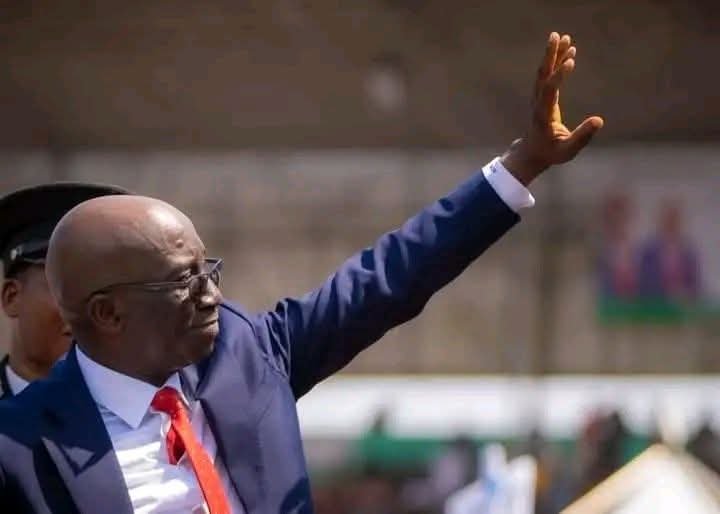
The governor disclosed substantial investments in security operations, including providing vehicles, logistics, and operational support to law enforcement agencies. “We have made Edo safe again. People now walk freely at night. That is what good governance is about; protecting lives and giving citizens confidence in their government,” he affirmed. Itua further reported that the governor decried the state of decay inherited from the previous administration, including dilapidated schools, broken roads, and a collapsing public service, but stated that his team refused to be deterred and immediately began fixing roads, rebuilding schools, and restoring public institutions.
In less than a year, the administration has rebuilt schools across the three senatorial districts, boosting teacher morale and parent trust. “When we took over, public schools had leaking roofs and no chairs or desks. That was the EdoBEST of the last government. Today, we have reconstructed and revitalized schools, and enrollment has surged because people now believe in the system again,” Okpebholo said. On agriculture, he reaffirmed commitment to food security under the S.H.I.N.E. Agenda, pledging to open more farmlands in 2026 and align with the President’s vision to boost food supply and economic growth.
Governor Okpebholo stressed financial prudence, transparency, and accountability, vowing not to borrow recklessly. “Edo’s resources don’t belong to me. We are managing funds prudently, paying debts, and restoring fiscal discipline,” he said, pointing to the Radisson Hotel project as a major financial burden that consumed about ₦30 billion with Edo owning only 20 percent and now paying ₦380 million monthly on that debt. Itua added that the administration has paid outstanding entitlements to teachers, doctors, pensioners, and staff of the College of Education, Ekiadolor, and increased the monthly subvention for Ambrose Alli University, Ekpoma, from ₦41 million to ₦500 million to correct past anomalies.
The governor also revealed that 50 CNG-powered buses have been ordered for distribution across the three senatorial districts to ease transportation, stimulate commerce, and create jobs. “We are creating employment, boosting productivity, and attracting investors. Edo will soon be a model of economic renewal in Nigeria,” he said. Reflecting on his first year, Okpebholo described the achievements as just the beginning, noting, “We have subdued violent cultism, restored safety, revived schools, reawakened agriculture, and reclaimed public trust. But we’re not done yet. We are rebuilding Edo, one step at a time, until every citizen feels the peace, progress, and prosperity we promised.”
He concluded with a message of unity and hope: “We will not go back to the days of fear and bloodshed. Edo belongs to all of us. Together, we will protect it, rebuild it, and make it shine again.”

General News
88 Dead, Thousands Displaced as Rivers Burst Banks in Kenya
Severe flooding in Kenya has worsened after two major rivers burst their banks, pushing the nationwide death toll to at least 88, authorities confirmed on Tuesday.

The latest crisis follows the overflow of the Nyando River in western Kenya and the Tana River in the coastal region, both of which inundated surrounding communities, destroyed farmland, and displaced thousands of residents.

According to government data, more than 34,000 people have been forced from their homes across at least 21 counties since the flooding began earlier this month, raising concerns about a growing humanitarian emergency.
In the worst-hit areas, floodwaters submerged key infrastructure, including parts of the Ahero Bridge along the Kericho–Awasi–Kisumu road, disrupting transportation and economic activity. Authorities have warned motorists to avoid flooded routes, especially at night when visibility is poor.

Emergency response teams, led by the Kenya Red Cross Society, have intensified rescue operations, evacuating hundreds of residents and relocating displaced families to temporary shelters such as schools, churches, and government buildings. Over 900 students from Ahero Girls National School are among those being evacuated as water levels continue to rise.
In Tana River County, the flooding has submerged farms and heightened fears of food shortages, while rising water levels in other regions continue to threaten homes and businesses.
Officials say the situation could worsen if heavy rains persist, urging residents in flood-prone areas to remain vigilant and follow safety advisories.
Kenya experiences seasonal flooding during its long rains, but the scale and intensity of this year’s disaster have renewed concerns about disaster preparedness and the vulnerability of communities living near rivers.
General News
INEC Unveils Revised 2026 Guidelines for Political Parties Ahead of 2027 Elections
The Independent National Electoral Commission (INEC) has unveiled a revised draft of its 2026 Regulations and Guidelines for Political Parties as part of efforts to strengthen Nigeria’s electoral process ahead of the 2027 general elections.
INEC Chairman, Joash Amupitan, disclosed this on Tuesday during a consultative meeting with political party leaders in Abuja, where he called for stakeholder input on the proposed framework.
Amupitan said the revised guidelines were developed to align with the Electoral Act 2026 and to address shortcomings identified in previous regulations, particularly those guiding the 2022 electoral cycle.
He emphasised that credible elections begin with transparent processes within political parties, especially in candidate selection.
“We are not just here to discuss new regulations, but to reaffirm our shared commitment to strengthening Nigeria’s democracy. Credible elections begin long before polling day—they begin with the transparency of candidate emergence,” he said.
According to the INEC chairman, the review followed a comprehensive assessment supported by empirical data, including insights from the Political Party Performance Index developed in collaboration with the Westminster Foundation for Democracy.
He noted that the assessment revealed a significant gap between party constitutions and actual practices at the grassroots level.
The revised guidelines introduce reforms across key areas such as party registration and mergers, internal administration, conduct of primaries, campaign operations, financial transparency, and conditions for party deregistration.
Amupitan said the measures are specifically designed to curb irregularities in party primaries and promote internal democracy.
“These guidelines aim to sanitise party primaries and eliminate opaque processes that impose unpopular candidates, which often lead to voter apathy and avoidable litigation,” he added.
On campaign finance, he explained that the Electoral Act 2026 empowers INEC to set spending limits in consultation with political parties, urging stakeholders to pay close attention to provisions relating to election funding and expenditure.
With the 2027 general elections scheduled for January 16 for presidential and National Assembly polls, and February 6 for governorship and state assembly elections, Amupitan noted that the commission is working within a tight timeline.
“We are operating within a compressed timetable that requires precision and efficiency in implementation,” he said.
He further revealed that the draft guidelines include measurable benchmarks aimed at increasing participation among women, youth, and persons with disabilities in the electoral process.
Calling for constructive engagement, the INEC chairman urged political parties to see the guidelines as protective measures rather than restrictions.
“By strengthening these rules, we are safeguarding the sovereign will of Nigerians from the nomination stage to the final declaration of results,” he stated.
Reaffirming the commission’s neutrality, Amupitan maintained that INEC remains an impartial umpire committed to defending democratic values and ensuring credible elections.
General News
IPAC Slams Electoral Act 2026, Pushes for Immediate Review Before 2027 Polls
The Inter-Party Advisory Council (IPAC) has called for an urgent amendment of the Electoral Act 2026, warning that its current provisions could threaten the integrity of Nigeria’s 2027 general elections.
IPAC National Chairman, Yusuf Mamman Dantalle, made the position known on Tuesday during a meeting with the Independent National Electoral Commission (INEC) and political party leaders in Abuja.
He described the law as regressive, noting that it fails to reflect the expectations of Nigerians despite extensive public consultations during the reform process. According to him, the Act poses significant risks and could undermine democratic stability if not urgently reviewed.
Dantalle further expressed concern that the legislation has already been used as the basis for INEC’s 2027 election timetable, placing political parties—especially those outside government—under undue pressure to comply with challenging requirements.
Among the contentious issues raised by IPAC is the mandatory adoption of direct primaries for candidate selection. The council argued that the provision erodes the independence of political parties and called for the reinstatement of indirect primaries.
IPAC also faulted the requirement for parties to submit detailed membership registers, including National Identification Numbers (NIN), within a limited timeframe in April 2026. It described the directive as impractical and warned that it could exclude many Nigerians who have yet to obtain NIN.
On electoral transparency, the council stressed the need for the full and unconditional electronic transmission of results. It urged INEC to ensure that polling unit results are uploaded to the IReV portal immediately after announcement, referencing challenges experienced during the 2023 presidential election.
The body further raised concerns over what it termed weakened sanctions for vote buying in the new law, reiterating its demand for the establishment of an Electoral Offences Commission to prosecute electoral offenders.
IPAC disclosed that it has formally written to the National Assembly, seeking the repeal of the Electoral Act 2026, and appealed to international partners to support Nigeria’s democratic process through constructive engagement.
As preparations begin for upcoming governorship elections in Ekiti and Osun states, the council urged INEC to enhance its readiness, particularly in deploying critical technologies such as the Bimodal Voter Accreditation System (BVAS) and the IReV portal.
Dantalle emphasised that restoring public confidence in the electoral system is crucial, warning that voter apathy may persist without meaningful reforms.
The meeting also reviewed INEC’s proposed 2026 Regulations and Guidelines for Political Parties, which are yet to be officially released and are separate from the Electoral Guidelines.