World News
MOSCOW ACCUSES UKRAINE AS RUSSIA IDENTIFIES SUSPECTS IN GENERAL’s SHOOTING
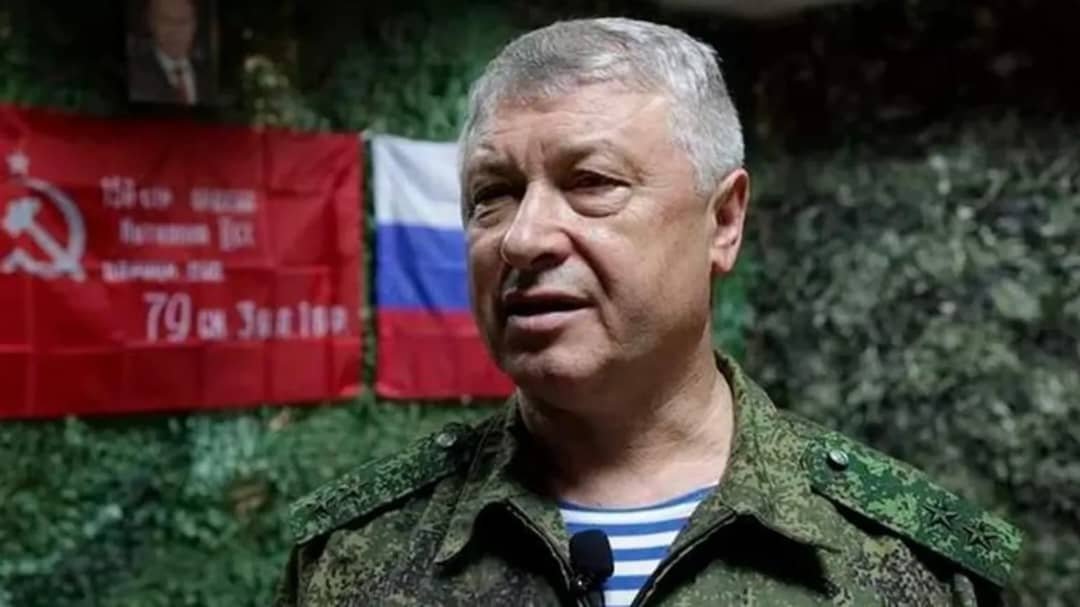
Russian authorities said they have identified three people allegedly involved in the attempted assassination of a senior military intelligence officer, Lt Gen Vladimir Alexeyev, in Moscow.
According to Russia’s Investigative Committee, the primary suspect is Lyubomir Korba, a Ukrainian-born Russian citizen accused of carrying out the shooting. Investigators claim Korba arrived in Moscow in late December after receiving instructions from Ukrainian intelligence services to carry out what they described as a “terrorist attack.” Ukrainian officials have denied any involvement.
Alexeyev, 64, was wounded in the attack on Friday outside a residential apartment block in northwestern Moscow. He was rushed to hospital and has since regained consciousness following surgery, Russian media reported.
Alexeyev serves as the deputy head of Russia’s Main Directorate of the General Staff (GRU) and is the latest high-ranking military figure to be targeted in or around Moscow since Russia launched its full-scale invasion of Ukraine in February 2022.
Investigative Committee spokesperson Svetlana Petrenko said the attacker fired three shots before escaping the scene. Authorities alleged that Korba fled to the United Arab Emirates just hours after the shooting, where he was later detained and extradited back to Russia.
State broadcaster Ru-24 aired footage showing security officers escorting Korba from an aircraft at an undisclosed location.
Petrenko said investigators recovered the suspected weapon at the scene; a Makarov pistol fitted with a silencer along with three rounds of ammunition. Forensic examinations are ongoing.
Russian media reports said President Vladimir Putin personally thanked UAE President Sheikh Mohamed bin Zayed Al Nahyan for assisting in Korba’s arrest, according to Kremlin spokesman Dmitry Peskov.
Ukraine’s Foreign Minister Andriy Sybiha, quoted by Reuters, rejected Moscow’s accusations, saying Kyiv had no connection to the incident and suggesting it was an internal Russian matter.
Russian Foreign Minister Sergei Lavrov, however, accused Ukraine of orchestrating the attack to derail negotiations aimed at ending the war. Alexeyev’s superior, GRU chief Adm Igor Kostyukov, has recently led Russia’s delegation at trilateral talks involving Ukraine and the United States in Abu Dhabi.
Authorities say Korba may not have acted alone. A Moscow resident identified as Viktor Vasin has been arrested and charged as an accomplice. Investigators also named a third suspect, Zinaida Serebritskaya, who is believed to have fled to Ukraine. Officials did not provide further details about her alleged role.
Ukraine has previously acknowledged responsibility for some attacks targeting Russian military figures. Last month, Russian intelligence claimed it had foiled an assassination attempt against a soldier in St Petersburg.
In January, an Uzbek national was sentenced over the 2024 killing of Lt Gen Igor Kirillov, who died in a bomb explosion outside a Moscow apartment building. Ukrainian security sources later said Kyiv’s SBU intelligence service had been behind the operation. Kirillov headed Russia’s nuclear, biological, and chemical protection forces.

Another senior GRU officer, Lt Gen Fanil Sarvarov, was killed in December 2025 when an explosive device detonated beneath his vehicle in Moscow. He oversaw operational training within the armed forces, according to Russian investigators.

World News
PHILIPPINE LAWMAKERS SHUT DOWN IMPEACHMENT BID AGAINST MARCOS
Philippine President Ferdinand “Bongbong” Marcos Jr. has escaped impeachment after the House of Representatives voted overwhelmingly on Tuesday to dismiss complaints filed against him.
The decision followed an earlier move by the House justice committee, which last week threw out two impeachment petitions, ruling that they lacked sufficient legal basis. The complaints accused Marcos of betrayal of public trust, graft and corruption, and violations of the constitution.
Announcing the outcome on the House floor, Deputy Speaker Janette Garin declared that all impeachment complaints against the president had been formally dismissed.
For an impeachment to proceed, at least one-third of the more than 300 members of the lower house would have had to support it. Instead, 284 lawmakers voted to dismiss the complaints, while only eight backed impeachment and four abstained. Under constitutional rules, no new impeachment complaint can be filed against Marcos until next year.
Attention is now shifting to Vice President Sara Duterte, who is facing fresh impeachment efforts after surviving a similar attempt last year.
Marcos, 68, was accused by petitioners of abusing his authority in the use of public funds, particularly in relation to a flood-control project scandal. He was also criticised for allowing his predecessor, former President Rodrigo Duterte, to be arrested and transferred to The Hague to face trial at the International Criminal Court over thousands of deaths linked to his controversial “war on drugs.”
One of the complaints further alleged that Marcos was unfit to govern due to supposed drug use an allegation he has repeatedly denied.
Since the restoration of democracy in 1986, only one Philippine president, Joseph Estrada, has been impeached. His 2001 trial, however, collapsed after prosecutors walked out when senator judges voted against opening an envelope believed to contain key evidence against him.
In the country’s history, five top government officials have been impeached, but only one; a former chief justice was ultimately convicted and removed from office.
General News
NIGERIA’S FOREIGN MINISTER LEADS DELEGATION TO AU EXECUTIVE COUNCIL SESSION IN ADDIS ABABA
Nigeria’s Minister of Foreign Affairs, Ambassador Yusuf Maitama Tuggar, has arrived in Addis Ababa, Ethiopia, to lead the country’s delegation at the 48th Ordinary Session of the African Union (AU) Executive Council, scheduled for February 11–12, 2026.

The Ministry of Foreign Affairs, through spokesperson Kimiebi Imomotimi Ebienfa, said Ambassador Tuggar will participate in ministerial consultations, strategic dialogues, side events, and bilateral meetings aimed at advancing Africa’s unity, peace, security, democratic governance, and sustainable development.
Ambassador Tuggar arrived on Monday, February 9, and was received by Ethiopia’s State Minister of Foreign Affairs, Berhanu Tsegaye, alongside Nigeria’s Chargé d’Affaires in Ethiopia, Ambassador Nasir Aminu, and officials of the Nigerian Mission.
The Executive Council meeting is a precursor to the 39th Ordinary Session of the Assembly of Heads of State and Government of the AU, set for February 14–15, 2026. Nigeria’s engagement at the summit will focus on peace and security, democratic governance, institutional resilience, economic integration, development financing, health security, climate resilience, and the implementation of Agenda 2063.
On the sidelines of the session, Ambassador Tuggar is expected to hold bilateral discussions with counterparts from African and non-African countries to strengthen diplomatic relations and advance shared strategic interests. Nigeria will also lead and participate in high-level side events, including a forum on regional partnerships for democracy, highlighting the country’s ongoing commitment to democratic norms and institutional strengthening in Africa.
The Ministry of Foreign Affairs promised to provide updates on outcomes and key engagements throughout the sessions.
World News
TRUMP ADMINISTRATION MOVES TO DISMANTLE CORE U.S. CLIMATE REGULATION FRAMEWORK
The Trump administration is set to overturn a landmark Obama-era scientific finding that has formed the backbone of the U.S. greenhouse gas regulation for more than a decade, the Environmental Protection Agency (EPA) has confirmed.
The finding, known as the 2009 Endangerment Finding, concluded that greenhouse gases such as carbon dioxide and methane pose a danger to human health and the environment. It provided the legal basis for federal limits on emissions from vehicles, power plants, and industrial facilities under the Clean Air Act.
By revoking the finding, the EPA would significantly weaken the federal government’s authority to regulate climate-warming emissions, clearing the way for a broad rollback of existing climate rules and making future regulations far more difficult to enforce.
The administration argues that the move will ease regulatory pressure on businesses and lower costs for consumers. However, environmental groups, scientists, and several U.S. states that it could lead to increased pollution, worsen public health outcomes, and spark years of legal battles.
Beyond the United States, the decision could have global implications. As one of the world’s largest historical emitters of greenhouse gases, U.S. climate policy plays a major role in international efforts to limit global warming. Analysts say the rollback could undermine global climate targets and weaken the U.S. credibility in climate diplomacy and slow momentum toward meeting temperature-reduction goals set under international agreements.
Some states, including California, are already preparing to strengthen their own climate policies, potentially creating a fragmented regulatory landscape as federal oversight retreats.
The EPA’s proposal is expected to face strong opposition and legal challenges, setting the stage for a high-stakes battle over the future of climate regulation in the United States and its ripple effects worldwide.