Health
Kenya to Roll Out Twice-Yearly HIV Prevention Injection in March
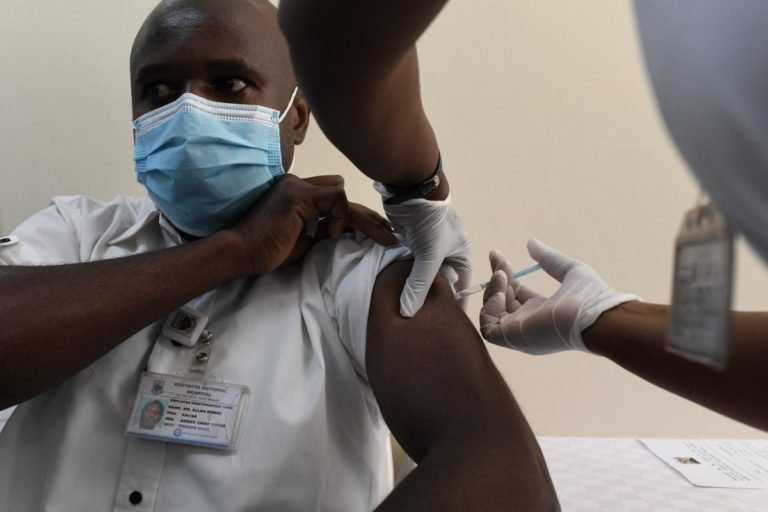
The Kenya government has announced plans to begin nationwide distribution of a new HIV-prevention drug, lenacapavir, starting in March, targeting 15 priority regions in the first phase.
Health Cabinet Secretary Aden Duale confirmed the rollout on Wednesday, describing the injectable treatment as a major step forward in HIV prevention.
Lenacapavir is administered twice a year and clinical trials indicate it can reduce the risk of HIV transmission by more than 99.9 percent.
Unlike vaccines, however, it is a long-acting antiretroviral drug and does not stimulate the immune system.
Kenya is among nine African countries selected in 2025 to introduce the medication. Distribution has already begun in South Africa, Eswatini, and Zambia.
According to data from UNAIDS, eastern and southern Africa account for roughly 52 percent of the world’s 40.8 million people living with HIV.
The first shipment of 21,000 doses arrived Tuesday through a partnership involving manufacturer Gilead Sciences and the Global Fund to Fight AIDS, Tuberculosis and Malaria.
Officials expect an additional 12,000 continuation doses by April, while the United States has pledged a further 25,000 doses.
Kenya’s HIV prevalence currently stands at about 3.7 percent.
The rollout comes as several African countries face reduced foreign health assistance following policy shifts by the administration of Donald Trump, including the dismantling of USAID and scaling back of NGO-led programs.
Despite this, Kenya signed a $2.5 billion bilateral health agreement with Washington in December the first of its kind since those changes under which the US will provide $1.6 billion over five years for health initiatives such as HIV/AIDS treatment, malaria control, and polio prevention.
Nairobi is expected to contribute $850 million and gradually assume greater funding responsibility.
The agreement is currently facing a legal challenge from a Kenyan senator who argues that elements of the deal may violate constitutional provisions.
Government
Delta State Reduces Dialysis Costs to ₦38,000, Boosting Patient Access
Patients at Asaba Specialist Hospital are now benefiting from a more affordable path to life-saving kidney care, thanks to Delta State’s dialysis subsidy programme. The cost per dialysis session has dropped sharply to ₦38,000, down from the previous ₦70,000 and even below the earlier subsidized rate of ₦45,000.
In just over five months, the hospital has conducted more than 200 dialysis sessions, providing crucial support to residents living with chronic kidney disease.
Dr. Peace Ighosewe, Chief Medical Director of the hospital, noted that the government’s intervention has significantly improved access to treatment for patients.
She emphasized that the initiative forms part of Governor Sheriff Oborevwori’s broader strategy to make essential healthcare more affordable and widely available to the people of Delta State.
General News
JOHESU SUSPENDS 84-DAY STRIKE AFTER AGREEMENT WITH FG
The Joint Health Sector Unions (JOHESU) has suspended its 84-day nationwide strike following agreements reached with the Federal Government.
The decision was announced on Friday in a communiqué jointly signed by the JOHESU National Chairman, Kabiru Ado-Minjibir, and National Secretary, Martin Egbanubi, after an emergency expanded National Executive Council (NEC) meeting in Abuja.
JOHESU said the NEC reviewed the outcome of a February 5 conciliation meeting convened by the Ministry of Labour and Employment, where both parties resolved to begin negotiations on a new Collective Bargaining Agreement (CBA) and immediately prioritise unresolved issues surrounding the Consolidated Health Salary Structure (CONHESS) adjustment.
According to the union, the Federal Government also agreed to make budgetary provisions for the CONHESS salary adjustment in the 2026 Appropriation Act, based on an existing technical committee template.
The communiqué added that the government committed to withdrawing the “No Work, No Pay” directive issued against striking members and to the immediate payment of January 2026 salaries.
“No JOHESU member will be victimised, sanctioned or intimidated for participating in the industrial action,” the union stated.
Following the review, the NEC unanimously approved the suspension of the strike and directed all JOHESU members across federal and state health institutions to resume work immediately.
The strike, which began on November 15, 2025, was triggered by the non-implementation of CONHESS adjustments and other outstanding welfare demands.
JOHESU noted that the prolonged industrial action severely disrupted healthcare delivery nationwide, contributing to rising maternal and infant mortality, while the Federal Government reportedly lost nearly ₦1 trillion in revenue.
The union said the conciliation meeting followed a 14-day ultimatum issued by the Nigeria Labour Congress (NLC) and the Trade Union Congress (TUC).
The meeting was attended by the Ministers of Labour, Finance and Health, as well as officials of the National Salaries, Incomes and Wages Commission.
JOHESU commended the intervention of the National Assembly leadership, traditional rulers and professional bodies, urging the Federal Government and states to fully implement the agreements to avert future strikes in the health sector.
Health
TRUMP SIGNS EXECUTIVE ORDER THREATENING TARIFFS ON COUNTRIES DOING BUSINESS WITH IRAN
By Ezinne Obah
U.S. President Donald Trump has signed an executive order threatening to impose tariffs of up to 25 per cent on countries that continue doing business with Iran, signalling a tougher phase in Washington’s economic pressure campaign against Tehran.
The order, signed on Friday, gives the Trump administration the authority to penalize foreign governments and companies that maintain commercial ties with Iran, particularly in sectors considered vital to its economy. While the tariffs are not immediately enforceable, the move serves as a clear warning to the U.S. allies and global trade partners.
The decision comes at a sensitive moment in U.S.–Iran relations. Although officials from both countries engaged in talks earlier this week, long-standing tensions over Iran’s nuclear ambitions, regional influence, and sanctions compliance remain unresolved. Observers say the executive order underscores Trump’s preference for economic pressure as leverage in dealing with Tehran.
According to U.S. officials, the measure is aimed at limiting Iran’s access to international markets and restricting its ability to finance activities the United States views as destabilizing across the Middle East. The administration insists that continued trade with Iran weakens global efforts to rein in the country’s influence.
Critics argue that the order could strain diplomatic and economic relations with countries that maintain strategic trade links with Iran, particularly in Europe and Asia. There are also concerns that the move could undermine ongoing diplomatic efforts and heighten the risk of retaliation.
Iran has yet to issue an official response, but Tehran has previously described similar measures as economic coercion and violations of international trade norms.
As the order takes effect, attention will focus on how strictly the United States enforces the tariff threat and whether it will prompt counter-measures or renewed diplomatic standoffs.