Connect with us

Opinion

Crude Oil Spillage/Pollution Remains One of the Greatest Contributors to Ecosystem Destruction Globally

Published

on

Share


By AVM RTD Akugbe Iyamu MNSA fsi

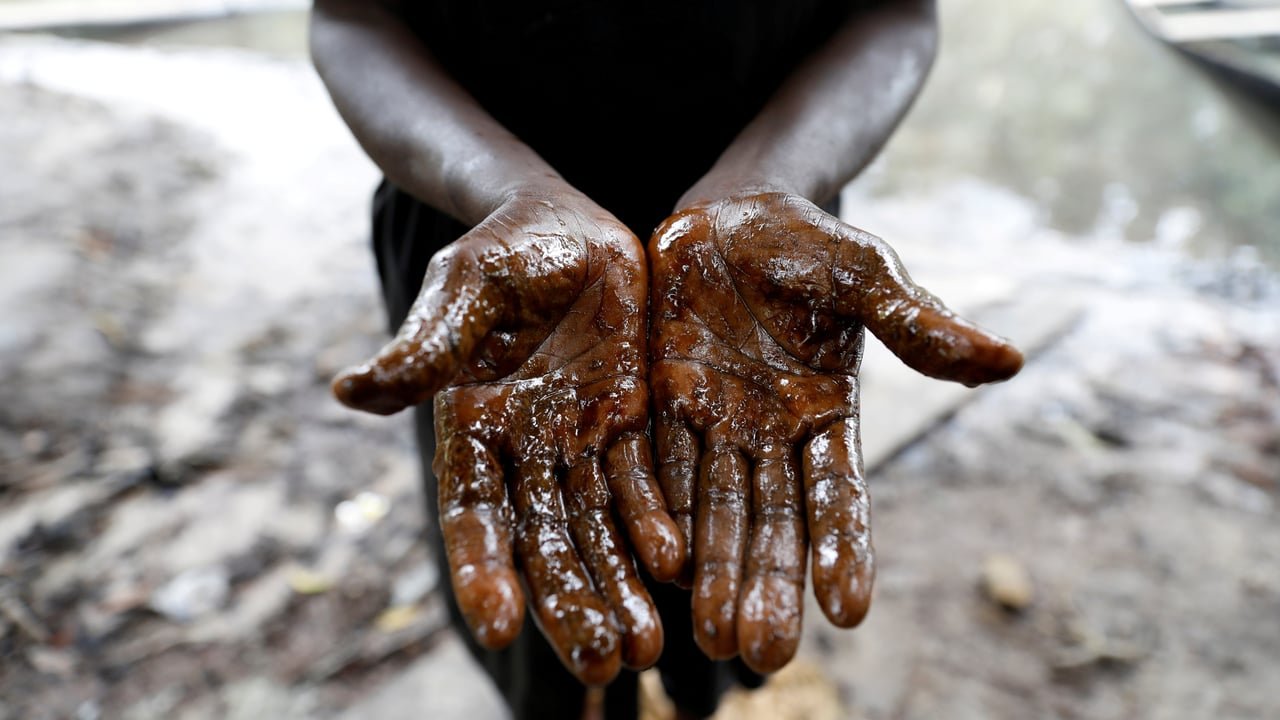
Oil spills in Nigeria, particularly in the Niger Delta have caused extensive, long-term environmental, economic, and health damages, with cleanup costs estimated at over $12 billion.


Frequent spills, often caused by theft and sabotage including ageing infrastructure result in massive economic losses of up to $20 billion annually. These incidents have prompted legal battles, with oil companies like Shell paying millions in compensation. The retinue of oil spillage is frequent with the niger delta with massive oil spillage is happening in Bayelsa.

It is spilling from the well owned by SPDC in Ekeremo area and polluting rivers in Bayelsa and Delta states killing aquatic ecosystems. There has been a good history of oil spillage in recent years starting from 1979 in Ondo state.

Nigeria’s largest spill was an offshore well-blow out in January 1980 when an estimated 200,000 barrels of oil (8.4million US gallons) spilled into the Atlantic Ocean from an oil industry facility and that damaged 340 hectares of mangrove. At this point, it is essential to define the various levels of spills:

Small Spills and Large Spills.

Large spill is considered six (6) gallons or more and a small spill is considered less than six (6) gallons however, consideration must be given to the type of oil that has been spilled (i.e. a hazardous material of a smaller quantity may require HazMat assistance). The oil does not spill itself, it is normally triggered by

accidents involving tankers, barges, pipelines, refineries, drilling rigs, and storage facilities are the most common cause of oil spills, but recreational boats can also release oil out on the water or in marinas. The highest oil spillage in Nigeria history happened in Ondo state in 1979.

See also  LET OUR DISASTER MANAGEMENT NOT BE LOST IN POLITICS AND ELECTIONS.

While oil exploration began in Araromi, Ondo State as early as 1908, the major infamous oil spillage often associated with 1979 in the region refers to the massive Forcados terminal tank failure, the 1979 Forcados Terminal Spill in July 1979 when the Forcados terminal experienced a massive oil spill, estimated at 570,000 barrels.


This incident is recorded as one of the largest in Nigerian history, spilling over a 21-day period and severely affecting aquatic life and surrounding swamps. Nigeria has a fair amount of success in dealing with oil spillage which involves a combination of regulatory oversight by NOSDRA, immediate containment actions (booms, skimmers, burning), and long-term bioremediation in primarily addressing devastation in the Niger Delta.

Despite these efforts, over 10,000 incidents occurred between 2011-2022, driven by sabotage and aging infrastructure, with cleanup costs are estimated in the billions. Globally, oil spillage is of great concern hence oil spill management focuses on rapid containment and cleanup using a tiered approach (local, national, international) to minimize environmental and economic damage.

Key strategies include deploying booms and skimmers for containment, using dispersants, in situ burning, and bioremediation. Modern management integrates satellite tracking, AI for modeling, and stringent, pre-emptive measures. Pollution remains the greatest contribution to social, economic and environmental hazards. Let’s collectively deal with its various types.


AVM RTD AKUGBE IYAMU MNSA fsi

CONSULTANT ON CLIMATE CHANGE AND ANALYST ON ENVIRONMENTAL POLICIES

PRESIDENT ASSOCIATION OF ENVIRONMENTAL PROTECTION AND CLIMATE CHANGE PRACTITIONERS
 

Energy

Ending Fiscal Capture in the Petroleum Sector: A Policy Agenda for Reclaiming Federation Revenues from NNPCL

Published

on

Share


By Nick Agule


On 18 February 2026, President Tinubu signed Executive Order 9 to restore the constitutional revenue entitlements of the Federal, State, and Local Governments that were altered by the 2021 Petroleum Industry Act (PIA), which introduced mechanisms that diverted significant Federation revenues through various deductions and charges.

It is important to distinguish the FEDERATION, which includes all three tiers of government (Federal, State & Local Governments), from the Federal Government (FG) alone for a better appreciation of this article.


The constitutional basis for the President’s decision is explicit in Section 162, which provides that:


_“(1) The Federation shall maintain a special account to be called “the Federation Account” into which shall be paid all revenues collected by the Government of the Federation, except the proceeds from the personal income tax of the personnel of the armed forces of the Federation, the Nigeria Police Force, the Ministry or department of government charged with responsibility for Foreign Affairs and the residents of the Federal Capital Territory, Abuja.”_


Section 162 of the Constitution is emphatic that ALL revenues collected by the Government of the Federation be paid into the Federation Account, except for specific personal income taxes.


The PIA directly contravenes section 162(1) of the constitution by three provisions:


1. The NNPCL to remit profit oil and gas proceeds to the Federation Account after deducting a 30% management fee (Section 64(c));


2. The diversion of 30% of NNPCL’s profit oil and gas under PSCs, profit‑sharing, and service contracts into a frontier exploration escrow account, which the NNPCL could spend on exploration in frontier basins (Sections 9(4)–(5));

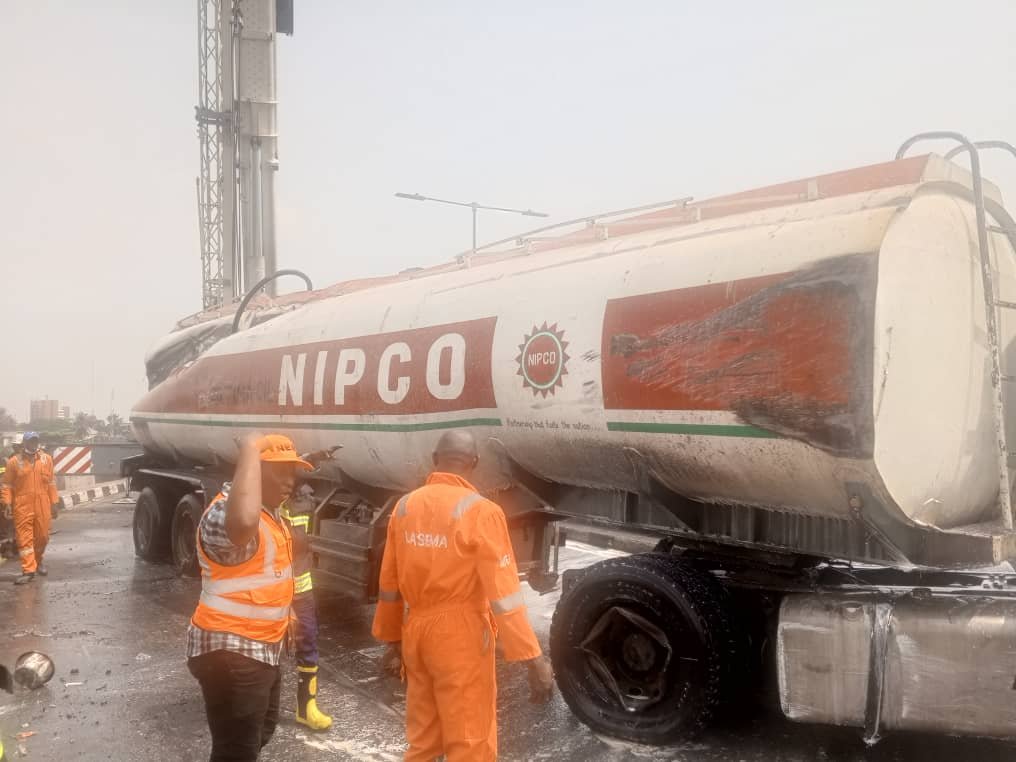
See also  TANKER SALVAGE OPERATION SUCCESSFULLY UNDERWAY AT LAGOS BRIDGE (+VIDEO)


3. The allocation of 10% of licence rents to the Frontier Exploration Fund (Section 9(3)).


These provisions effectively kidnapped Federation revenues before they reached the Federation Account.


The NNPCL’s 30% management fee far exceeded the actual costs of transporting and selling crude, and the company does not fund or produce crude under PSCs, meaning it benefited from production financed by international oil companies.


The frontier exploration fund also enabled extensive spending by the NNPCL without commercial discoveries. Between 2023 and 2024 for example, the NNPCL reportedly spent over $1 billion on exploration in frontier basins with no results, including more than $100 million on an abandoned well (Ebenyi) in Nasarawa State and about $300 million in the Chad Basin. The frontier exploration fund should either be abolished or the funds redirected towards the development of renewable energy.


*Hijack of Joint Venture (JV) Assets by the NNPCL*


A further issue concerns JV assets, which President Tinubu must look into. Historically, JV assets belonged to the Federation and were managed by NAPIMS on its behalf. Although the NNPCL CFO acknowledged this in a National Assembly hearing, he also claimed, incorrectly and contradictorily, that the PIA transferred Federation-owned JV assets to NNPCL. But section 54(1) of the PIA authorises only the transfer of NNPC’s own assets to NNPCL, not Federation assets. Since the NNPCL has not demonstrated that the JV assets were valued, formally transferred, or paid for, the assets legally remain Federation property.


Watch the CFO concede that the JV assets are assets of the Federation here:

See also  WHY NDIGBO MUST UNITE FOR ANIOMA STATE NOW


Arguments that the Federation owns both the NNPCL and the Federation Account overlook the fact that consolidating JV revenues into NNPCL’s loss‑making books exposes the revenues to unrelated operational costs born by the NNPCL like costs including salaries of refineries generating zero revenues, non-functional gas plants and pipelines etc, whereas direct remittance to the Federation Account preserves the revenues for the three tiers of government.


The President has boldly and courageously initiated a critical corrective measure by redirecting Federation revenues from the NNPCL back into the Federation Account, and to fully re-establish constitutional fiscal compliance, the following additional steps are necessary:


1. Return JV assets from NNPCL to the Federation.


2. Redirect the 10% licence rent allocation from the frontier exploration fund to the Federation Account.


3. Scrap the frontier exploration fund or repurpose it for renewable energy.


4. Replace the PIA with a comprehensive Energy Industry Act.


5. Establish an independent petroleum assets management agency for JVs and PSCs, ensuring all revenues go directly to the Federation Account.


6. Privatise the NNPCL by offering its shares on the capital market to Nigerians at home and abroad, enabling it to operate as a fully commercial entity comparable to Shell, Mobil, Total, and Chevron etc.


7. Conduct a forensic audit of all funds associated with the 30% management fee, the 30% frontier exploration fund, the 10% licence rent fees, and JV revenues consolidated into NNPCL’s books from 2021 to 2026.


8. Abolish the 4% Development Levy under the Nigeria Tax Act (2025), which consolidated the Tertiary Education Tax, NITDA levy, NASENI levy, and Police Trust Fund levy and require that all corporate taxes flow straight into the Federation Account instead of being retained by federal agencies.

See also  OPU NEMBE KINGDOM IN BAYELSA STATE HIT BY NEW OIL SPILL AMIDST ONGOING ENVIRONMENTAL STRUGGLES


9. With revenues from oil, taxes, removal of subsidies on petrol, dollar, electricity and other sources now flowing into the Federation Account and shared nationwide, these funds belong to the people. The 37 men – the President and governors – who are in control of these monies must urgently embrace reforms that ensure transparency, efficient spending, and real good governance so that every naira delivers schools, hospitals, and opportunities for citizens.


_Nick Agule is an energy expert._

Twitter: @NickAgule

Email: nick.agule@yahoo.co.uk

Continue Reading

Opinion

Nigeria and Risks of Multi-Power Security Deals

Published

on

Share

By Richard Ikiebe


Lately, Abuja has embarked on signing or deepening defence partnerships with the United States, China, the United Kingdom, Russia, France, India, Saudi Arabia, Pakistan and now Türkiye, often within overlapping time frames and against a backdrop of unrelenting insecurity. On paper, this looks like strategic diversification. But given Nigeria’s weak institutions and fragmented loyalties, these multi-power deals risk multiplying internal vulnerabilities rather than delivering autonomy.

In international relations, hedging is meant to be a sophisticated strategy. Middle powers cultivate ties with rival blocs at the same time, securing trade, weapons, intelligence and diplomatic cover from each without fully joining any camp. Done well, hedging buys room to manoeuvre in a fluid world.

However, successful hedging demands a coherent centre. It assumes the state has a clear hierarchy of national interests, reasonably disciplined security institutions, and a political class that can resist turning every external relationship into a patronage asset. Nigeria does not enjoy those conditions. The federation remains riven by sharp regional, ethnic and religious cleavages. Security agencies are still deeply exposed to politicisation, often shaped by “loyalty clubs” and patron-client networks rather than by doctrine.

When you pile complex, overlapping military partnerships on top of a jaundiced domestic terrain, what you get is a crowded and inflamed marketplace in which foreign and domestic actors bargain over influence with contaminated information.

The recent pattern is revealing. With Washington, Nigeria has moved into a new phase of security cooperation: advanced air platforms, intelligence-surveillance-reconnaissance support, kinetic assistance against extremist camps, and a growing noncombat troop presence focused on training, coordination and operational support.

See also  TANKER SALVAGE OPERATION SUCCESSFULLY UNDERWAY AT LAGOS BRIDGE (+VIDEO)

London has formalised a Security and Defence Partnership with Abuja on doctrine, special operations, maritime awareness and joint planning. Paris, too, is embedding itself through operational training and intelligence cooperation in the Sahel and Lake Chad basins.

At the same time, China has stepped in as a defence-industrial partner, promising technology transfer and local production of ammunition and advanced equipment. Moscow maintains a framework for training and equipment supply, while Riyadh has concluded a renewable defence memorandum covering training, logistics, counter-terrorism and intelligence.

New Delhi and Islamabad both court Abuja with staff talks, courses and high-level visits. For its part, Türkiye has upgraded its role from arms supplier to full-spectrum partner with Nigeria, combining drones, helicopters and naval platforms with special forces training and real-time intelligence.

Add ECOWAS, the African Union, the UN and smaller bilateral channels, and Nigeria’s security ecosystem is now densely populated with external actors, many of whom are rivals among themselves and carry their own regional agendas.

From Abuja’s official podium, this is sold as diversification and a strengthening of “defence architecture.” However, from the vantage point of a fragile bureaucracy, it looks more like a multi-layered web, too complex for the state to see, let alone control.

In its current fragile state, Abuja risks overestimating its capacity to juggle many rival interests at once. Great powers can absorb shocks and play multi-board games; a state with weak institutions and contested loyalties cannot.

When external hedging meets internal fragmentation, rival domestic factions increasingly hitch their loyalties to different external partners. One elite unit becomes the Americans’ partner of choice; another cluster is drawn to Russian or Chinese interests; religious and cultural affinities pull others toward Saudi Arabia, Pakistan or Türkiye; while historic and educational ties still make British links the default home for another group.

See also  BABACHIR DAVID LAWAL AND THE NEW ORANGE IN TOWN

Over time, these alignments risk consolidating Nigeria into a patchwork of “mini-Nigerias,” divided along old ethno-regional and religious fault lines. But the greatest risk would appear in information and intelligence sharing.

What was designed to widen access to intelligence, military equipment and expertise risks degenerating into counter-hedging platforms. Trust dies in the hands of competing layers of interests, and doubts about Nigeria’s ability to prevent leaks of valuable information multiply. Gradually, partners stop treating Nigeria as a trusted ally and instead see her as a contested space to be monitored and managed.

The Horn of Africa offers a cautionary story. Over the past decade, states around the Red Sea and Gulf of Aden have welcomed bases, training missions and facilities from almost every major military actor: the US, China, European navies, Gulf states, Türkiye and others.

It is instructive that external militarisation has not stabilised the region. Parts of Somalia, for example, saw courting foreign interest as a route to de facto independence and recognition. Neighbouring nations and distant powers alike treated ports, coastal enclaves and airfields as instruments in larger rivalries.

Although Nigeria is vastly different from the Horn of Africa, the logic is uncomfortably familiar. When many external actors plug into a fragile political-security ecosystem, they amplify fractures and turn domestic disputes into wildfires.

Certainly, Nigeria should have partners. Isolation is neither realistic nor desirable. Strong, coherent middle-power states can hedge because they possess the institutional spine to decide who does what, where, and on whose terms. Weak, divided states hedge at their peril. For Nigeria today, multiplying security deals without first consolidating doctrine, professionalising institutions and building a minimal national consensus risks crossing that line.

See also  BETWEEN ROTIMI AMAECHI AND JUDAS ISCARIOT, WHO WILL SELL JESUS AGAIN?

Nigeria’s leadership like to speak of strategic autonomy, but sovereignty is not the ability to sign more MoUs than your neighbours. It is the ability to say “yes” and “no” from a position of internal strength. Abuja must now invest seriously in developing its own strength and its multi-power security systems. Diplomacy will remain a dangerous overexposure when we invite the world into our house while our foundations are still visibly cracked.

Dr Richard Ikiebe is a Media and Management Consultant, Teacher and Chairman, Board of BusinessDay Newspaper.

Continue Reading

Opinion

AN OPEN LETTER TO THE LEADERS OF THE PEOPLE’S DEMOCRATIC PARTY (PDP)

Published

on

Share


By Chris Osa Nehikhare


For the Sake of Our History. For the Sake of Our Future.


To the Esteemed Leaders of the People’s Democratic Party, PDP.


I write not in anger, but in pain.

Not in rebellion, but in loyalty.

Not in despair, but in hope.


For nearly three decades, our great party has stood as a pillar in Nigeria’s democratic journey. From the dawn of the Fourth Republic in 1999, when we produced President Olusegun Obasanjo, to the stabilizing years of President Umaru Musa Yar’Adua, and the transformative administration of President Goodluck Jonathan, the PDP was not merely a political party — it was a national movement.


We built institutions.

We strengthened democratic culture. We handed over power peacefully in 2015 — a feat that etched our name in gold in Africa’s democratic history.


Today, however, that same party is bleeding.


For the past three years, we have watched with heartbreak as internal quarrels, endless litigation, suspensions, counter-suspensions, and ego-driven battles have reduced a once-formidable political machine into a spectacle.


We, the ordinary members — the grassroots mobilizers, the polling unit warriors, the faithful who defend the party in marketplaces, campuses, streets, and online spaces — have become the butt of jokes.


Yet we stayed.


When some of those we gave mandates to abandoned us, we stayed.

When factions rose and multiplied, we stayed.

When public confidence waned, we defended the indefensible.

When loyalty became unfashionable, we remained committed.


But let it be said clearly: our loyalty has been tested. Severely.

See also  A COUNTRY IN SLUMBER AND THE IMPERATIVE OF THE UNITED NATIONS AND POPE LEO XIV CALL FOR ACTION


Just days ago, the President assented to a new Electoral Act that will guide the next general elections. The Independent National Electoral Commission (INEC) stands at the brink of releasing a revised timetable. The nation is preparing. Political actors are strategizing. Coalitions are forming.


And we?

We are still fighting ourselves.

This is not sustainable.


Leadership is not merely about titles secured through litigation; it is about responsibility to millions whose political destinies are tied to the decisions taken in conference rooms and courtrooms.


We therefore make this passionate appeal:


Whoever the Appeal Court declares as the legitimate leader of our party must be immediately recognized and supported by all. No parallel structures. No shadow leadership. No ego-driven resistance.


The time for war within must end.

The time for preparation must begin.


If we fail to unite now, we risk not only electoral defeat we risk political irrelevance. And history will not be kind to those who presided over the decline of the very platform that once governed Nigeria for sixteen years.


Our history is illustrious.

Our structures remain the most widespread in the country.

Our membership base is deep and organic.


But history alone cannot win elections. Unity can. Preparation can. Discipline can.


We ask our leaders:

Do not toy with the future of faithful members who have invested years of their lives, resources, and reputations in this party. Do not mortgage the destiny of young aspirants, women leaders, ward executives, and party elders who still believe in the ideals of the PDP.

See also  LAGOS-CALABAR COASTAL ROAD COMMISSIONING SPARKS CRITICISM OVER EXTRAVAGANCE AND LACK OF PLANNING


If the quarrels continue, what message are we sending to the Nigerian people?

If litigation becomes our primary strategy, what campaign shall we run?

If we cannot manage ourselves, how do we convince Nigerians we can manage a nation?


This is a defining moment.


Let us close ranks.

Let us respect the rule of law.

Let us rally behind one leadership.

Let us immediately commence reconciliation, restructuring, mobilization, and preparation for the general elections.


Except, of course, there is no desire for us — the organic supporters and committed members across the country — to participate meaningfully in the coming elections.


It hurts to even suggest that possibility.


But our pain must be heard.


We remain PDP.

We remain loyal.

We remain hopeful.


Now we ask our leaders to remain responsible.


History is watching.

Nigeria is watching.

And the faithful are waiting.


For the sake of our past.

For the sake of our future.


Signed,

Chris Osa Nehikhare

A Loyal and Concerned Member

On behalf of countless faithful across the federation

Continue Reading