Analysis
Climate Change May Be Quietly Reducing Male Births, Oxford Study Suggests
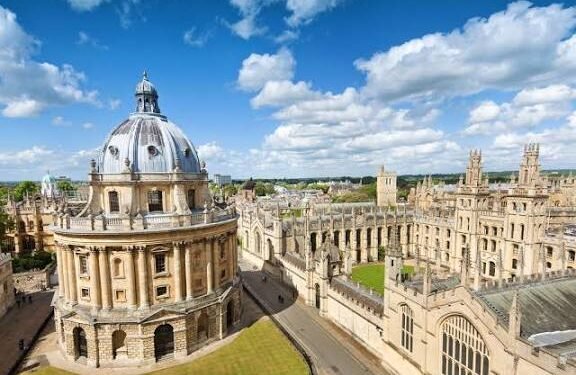
Rising global temperatures may be doing more than triggering heatwaves and droughts. They could be influencing who is born.
Researchers at the University of Oxford have found evidence that exposure to high temperatures during pregnancy is associated with a reduction in the number of male babies born.
The study, published in the Proceedings of the National Academy of Sciences, examined how temperature patterns interact with birth outcomes across different regions and social contexts.
In sub-Saharan Africa, the decline in male births was most strongly linked to heat exposure during the first trimester of pregnancy. Researchers suggest that extreme temperatures may increase prenatal stress, potentially affecting fetal survival with male fetuses appearing more vulnerable under such conditions.
The effect was particularly visible among rural women, mothers with multiple children, and women with limited formal education groups often facing reduced access to healthcare and climate protection measures.
India showed a different trend. There, temperature spikes during the second trimester were associated with fewer male births. In a country where son preference has historically shaped reproductive behaviour, researchers believe extreme heat may temporarily disrupt patterns linked to sex selection.
Lead author Dr. Jasmin Abdel Ghany said the findings highlight a lesser-known consequence of climate change.
According to her, extreme heat is not only a public health crisis but also a biological and social force that may influence reproductive outcomes and long-term population trends.
The researchers warn that as climate change intensifies, vulnerable communities could experience widening health inequalities, especially where access to maternal care is already limited.
The study also points to projections showing that the global population exposed to extreme heat could rise from about 23 per cent in 2010 to 41 per cent in the coming decades.
Countries expected to see significant increases in dangerously high temperatures include Nigeria, the Central African Republic, South Sudan, Laos, and Brazil. Some of the largest affected populations are projected in India, Nigeria, Indonesia, Bangladesh, Pakistan, and the Philippines.
Dr. Jesus Lizana, an Associate Professor in Engineering Science at Oxford, said most energy demand changes linked to heating and cooling will occur before global temperatures reach 1.5°C. He stressed the importance of early adaptation strategies and long-term decarbonisation efforts if net-zero targets by 2050 are to be achieved.
Analysis
Centuries Later, Slave Trade’s Scars Fuel Renewed Demand for Justice
The wounds of the transatlantic slave trade can not heal without meaningful and enforceable reparations, as the centuries-long exploitation of African people continues to cast a shadow over modern claims of global equality and justice.
For more than three centuries, millions of Africans were forcibly removed from their homelands and traded as commodities in one of history’s most inhumane enterprises. The consequences of that era did not end with abolition. Instead, its legacy remains deeply embedded in persistent economic inequality, systemic discrimination, and structural disadvantages confronting Black communities worldwide.
Observers argue that the transatlantic slave trade was not merely a historical tragedy but a foundational injustice whose ripple effects still shape global power structures and wealth distribution. The scars left behind, they say, are visible in the socioeconomic gaps between nations and within societies.
There is now a growing call for African leaders across the continent to take a unified and strategic position on reparatory justice. Advocates stress that governments in Africa must collaborate closely with African-descended communities in the Diaspora, as well as with corporate institutions, international advocacy groups, civil society organisations, and the media.
Such coordinated engagement, they contend, is essential to advancing structured dialogue, accountability, and tangible compensation aimed at addressing the enduring harm caused by centuries of enslavement.
Proponents maintain that without deliberate and consequential reparative measures, genuine reconciliation will remain out of reach.
Analysis
Nigeria Scores Zero on Parenthood Policies in World Bank’s 2026 Gender Report
Nigeria has scored zero out of 100 on supportive parenthood policies in the 2026 Women, Business and the Law report released by the World Bank Group, underscoring deep gaps in the country’s enforcement of gender equality laws.
The report found that while Nigeria achieved 50 out of 100 on the adequacy of legal frameworks promoting gender equality, it recorded only 21.7 out of 100 on policies, budgetary provisions and institutional mechanisms required to effectively implement those laws.
Mrs. Shirley Ewang, Advocacy Lead at Gatefield, disclosed the findings in a statement made available to the News Agency of Nigeria (NAN) on Wednesday in Abuja.
According to the report, only four per cent of women globally live in economies that provide near-full legal equality. Although the average country scored 67 out of 100 on legal provisions supporting women’s economic participation, enforcement scores dropped significantly when implementation systems were assessed.
Ewang said Nigeria’s legal progress was being undermined by weak institutional backing, as reflected in its zero score on parenthood policies.
“The data is clear. Our legal progress is being severely undermined by a lack of institutional support reflected in our zero score on parenthood policies,” she said.
The report noted that Nigeria lacks federal laws mandating at least 14 weeks of paid maternity leave, paid paternity leave, or explicit legal protections against the dismissal of pregnant workers. It also highlighted the absence of structured financial support mechanisms and government-backed childcare systems to enable women remain in the workforce.
Less than half of the 190 economies assessed globally provide financial support for families. In Nigeria, the lack of tax incentives, childcare subsidies or state-administered childcare support further limits women’s participation in the labour force.
The report also flagged restrictive provisions in Nigeria’s Labour Act, particularly Sections 55, 56 and 57, which limit women’s employment in certain industrial roles and night work. It added that the absence of explicit legal guarantees for equal remuneration for work of equal value contributes to persistent wage disparities.
Across states, Nigeria’s gender equality landscape varies significantly. Lagos and Oyo states were cited as leaders in legal gender equality frameworks, with Lagos operating specialised family courts and services for survivors of gender-based violence.
However, states such as Bauchi and Kano were identified as having wider gaps, with some northern states scoring as low as 25 out of 100 on legal frameworks affecting women’s marital and inheritance rights.
Despite the passage of the Violence Against Persons (Prohibition) Act, the report said supportive systems for women’s safety remain underfunded, limiting effective enforcement.
Ewang urged policymakers and private sector leaders to adopt concrete family-friendly measures, including a minimum of 16-week fully paid maternity leave, 14-day paid paternity leave, and robust childcare infrastructure.
“With one of the world’s largest youth populations entering the workforce over the next decade 1.2 billion young people, half of them girls closing Nigeria’s implementation gap is critical. Without it, empowering women remains an illusion and economic growth will be constrained,” she said.
Meanwhile, Indermit Gill, Chief Economist and Senior Vice President for Development Economics at the World Bank Group, said weak enforcement continues to undermine economic growth potential globally.
“On paper, most countries are doing reasonably well. But when it comes to enforcing the laws, the average score drops significantly. These numbers reflect huge opportunity gaps,” Gill said.
Analysts noted that establishing clear institutional mechanisms, updating parental leave policies, and expanding access to childcare services would be key to translating gender equality laws into measurable economic gains.
Analysis
MACHINA: THE CITY THAT REFUSES TO SLEEP
A Homeland Honouring Its Son
By Mualeem Ibrahim
There are cities that exist on maps, and there are cities that live in the bloodstream of their people. Machina—ancient, resilient, and proud—belongs to the latter. Nestled in the northwestern sands of Yobe State, this Emirate has carried its traditions with a devotion that has outlived empires. Its formal leadership, historians remind us, stretches back to 980 AD, when Mai Hariyu Bolo Kandira ascended the throne and began a lineage of guardianship that still stands, unbroken, like a desert baobab defying time.
Machina is not merely a place; it is a pulse. A memory that breathes. A heritage that refuses to dim. Chinua Achebe once wrote that “a people are as strong as the stories they tell about themselves.” Machina’s story is one of endurance, dignity, and a cultural splendour that glows like embers in the Sahel night.

SEVEN DAYS WHEN TIME STANDS STILL
Each year, Machina calls its sons and daughters home—no matter how far their journeys have taken them. For seven radiant days, the city becomes a living tapestry of colour, rhythm, and ancestral pride. The Machina Annual Cultural Festival (MACUF) is not merely an event; it is a homecoming of the spirit. It draws dignitaries, scholars, traditional rulers, journalists, activists, and admirers from across Nigeria and beyond.
Like the festivals in Soyinka’s Death and the King’s Horseman, MACUF reminds us that culture is not a relic to be archived—it is a living force, a heartbeat that binds generations.
But the 2026 edition was touched by something deeper. Something historic.

Dr Kole Ahmed
A FESTIVAL CROWNED BY HONOUR
This year, the desert winds carried whispers of anticipation. Machina was preparing to honour one of its most illustrious sons—Dr. Kole Ahmed Shettima. The city swelled with visitors: activists, civil society leaders, academics, politicians, and cultural custodians converged to witness a moment destined for the Emirate’s chronicles.
On January 31, beneath the watchful eyes of ancestors and the jubilant gaze of his people, the Emir of Machina, His Royal Majesty Mai Bashir Abishir Bukar, OON, L’ONN, turbaned Dr. Kole as Zanna Yuroma. It was the crowning jewel of MACUF 2026.
The Emir spoke with warmth and conviction. This honour, he said, was not merely a recognition of Dr. Kole’s service to Machina, but a tribute to a man whose compassion radiates far beyond the borders of his birthplace. His love for humanity, the Emir declared, is as expansive as the Sahel sky.
And on Sunday, February 1, the festival’s grand finale, Machina seemed to overflow its own boundaries. It felt as though the entire cabinet of Yobe State had migrated to the Emirate. The Executive Governor, His Excellency Hon. (Dr.) Mai Mala Buni, the SSG, former governors, and over 40 Emirs from across northern Nigeria graced the occasion. Security agencies worked tirelessly to guide the sea of humanity—each person eager to witness history.

Buni
One lesson stood out like a desert sunrise: though Machina is an Islamic city, it does not silence its women. Draped in radiant traditional attire, they danced with grace, perfumed the air with sweet fragrances, and infused the celebration with a joy reminiscent of Senghor’s immortal tribute— “Naked woman, black woman… your beauty strikes me to the heart.”
A LIFE OF SERVICE, A LEGACY OF IMPACT
For more than three decades, Dr. Kole Ahmed Shettima has walked the intertwined paths of scholarship, philanthropy, and public service with the quiet dignity of a man who understands that true leadership is measured not in titles, but in lives touched. His journey has been neither loud nor ostentatious; instead, it has been steady—like the desert wind that shapes dunes over centuries, transforming landscapes with patience and purpose.
From the lecture halls of academia to the frontlines of development work, Dr. Kole has carried with him a philosophy rooted in empathy. He believes, deeply, that knowledge must serve humanity, and that privilege must bend toward justice. His work reflects this conviction.
Through the Kole Shettima Trust Fund and the Machina Emirate Development Association, he has built a legacy that stretches across generations:
• Scholarships for hundreds of undergraduates, ensuring that the dreams of young people do not wither for lack of opportunity.
• Feeding the poor, not as charity, but as an affirmation of dignity.
• Clothing orphans, wrapping them not only in fabric but in hope.
• Building places of worship, where communities gather to pray, reflect, and find solace.
• Constructing water points, bringing life to communities where water is a daily struggle.
• Paying medical bills, so that illness does not become a death sentence for the vulnerable.
• Mentoring youth, guiding them with the wisdom of experience and the tenderness of a father.
• Settling fines for the imprisoned poor, freeing men and women whose only crime was poverty.
• Improving learning conditions for secondary school students, because he knows that education is the first step toward liberation.
These are not mere acts of generosity; they are acts of remembrance. They are the gestures of a man who never severed the umbilical cord that ties him to his homeland. “What is probably important,” he often reflects, “is being rooted in my community since my primary school education.” That rootedness is his compass. It is what keeps him grounded even as his influence spans continents.
His leadership has shaped institutions, strengthened governance, and inspired a generation of thinkers, activists, and public servants. His contributions to humanity are not abstract—they are stories. Stories of children who stayed in school because he believed in them. Stories of families who found relief in moments of despair. Stories of communities whose futures were rewritten because one man chose to act.
Ngũgĩ wa Thiong’o reminds us that “writers and scholars are the memory of a nation.” In many ways, Dr. Kole has become part of Machina’s living memory—preserving its values, expanding its possibilities, and embodying its highest ideals.
His life is a testament to a simple truth: service is the most enduring form of greatness.
MACHINA REJOICES

When the turban was tied and the title bestowed, Machina did not simply applaud—it exhaled. A collective breath, held for generations, was released into the desert air. The joy that followed was not the fleeting excitement of a festival; it was the deep, resonant pride of a people witnessing one of their finest sons return home in honour.
The city transformed into a living organism—its streets pulsing with movement, its courtyards humming with anticipation, its skies echoing with the sounds of celebration. Men, women, elders, youth, and children poured into the open spaces as though answering an ancestral call. It felt as if the very soil of Machina had awakened to join the festivities.
The celebration unfolded with the splendour of an epic:
• Drums thundered, their rhythms rolling across the Emirate like distant storms announcing abundance.
• The Kakaki trumpet pierced the air, its regal notes slicing through the crowd with the authority of centuries-old tradition.
• Dancers swirled in vibrant attires, their garments catching the sunlight and scattering it like shards of colour across the sand.
• Wrestlers stepped forward, their bodies glistening with pride, embodying the strength and honour of the land.
• Snake charmers mesmerized the crowd, their movements fluid, ancient, and hypnotic—echoes of a time when magic and culture were inseparable.
• Praise singers chanted genealogies, weaving Dr. Kole’s name into the long tapestry of Machina’s history.
• Music flowed like a river, winding through alleyways, courtyards, and open fields, binding strangers and kin in a shared rhythm.
It was not merely a festival; it was a rebirth.
The Emirate glowed with a unity rarely seen in modern times. Farmers stood shoulder to shoulder with scholars. Traders danced beside civil servants. Children clapped in delight as elders nodded in approval, their eyes shimmering with memories of festivals past. The air was thick with incense, dust, perfume, and the unmistakable scent of celebration—a fragrance that only a city deeply in love with its heritage can produce.
Even the desert seemed to pause. The wind softened, as though listening. The sun lingered a little longer on the horizon, reluctant to set on such a moment. And when night finally draped itself over Machina, lanterns and fires lit up the darkness, turning the Emirate into a constellation on earth.
It was a scene reminiscent of the grand communal gatherings in Achebe’s Arrow of God—a people united not by necessity, but by pride, memory, and shared destiny.

Machina did not merely celebrate a title; it celebrated a legacy, a lineage, a reaffirmation of who it is and what it stands for. In honouring Dr. Kole, Machina honoured itself.
A Tribute to a Worthy Son
In honouring Dr. Kole Ahmed Shettima, Machina honoured the values it cherishes most—service, humility, scholarship, and humanity. The title of Zanna Yuroma is not just a recognition; it is a covenant between a son and his homeland.
And so, with pride and admiration, we join millions across Nigeria in celebrating High Chief Dr. Kole Ahmed Shettima. May his reign as Zanna Yuroma bring wisdom, compassion, and progress to Machina and beyond.
Long may he serve.
Long may Machina flourish.

Mualeem Ibrahim is Human Rights commentator and advocate. He writes from Abuja