Energy
Fuel Price Rises and the Direct Consequences on the Impoverished Citizens of Nigeria: A Clear Case of Dirge in a Naming Ceremony
By AVM (RTD) AKUGBE IYAMU

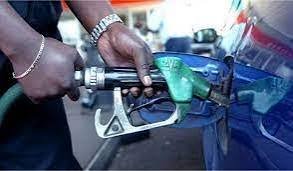
Petroleum products prices are a lifeline for many citizens especially those operating SMEs and those in the rural communities. But in Nigeria, a lifeline should never be a death sentence that is why government actions and policies should make the life of citizens more productive with energy security and safer with energy efficiency and not perilous.
Oil price has risen to about $84/barrel and the pump price for PMS has responded by increasing to almost N1000/Litre. This is the case of an economy that loathe buffer, no shock absorbers and not safety net for the citizens. In the United States and Israel that are championing the war, PMS is at all time low. Additionally, in Iran where the effects of the war is most pronounced, the citizens are still served with stable power supply. This is not the best way to repay the citizens of Nigeria who trusted their lives to a mode of economic reform that is operated with scanty regards for the economic support and survival of the citizens. In most countries, shock of this nature and scale prompt intervention, policy overhaul, regulatory action and address by the leadership to assure the country of government efforts to address the shock. The direct impact of the petroleum prices on the streets and economic consequences shows that regulatory response are not only weak but disjointed and often indifferent. This case show uneven response that is too slow to absorb any shock. Framing the price increase as response to war and crude oil price surge is not just inaccurate, it is harmful to an already struggling economy and her struggling citizens. It showed human inefficiency and economic regulatory anticipatory failures. Additionally, It rubs grieving citizens of the hard truth they deserve to hear from the government of inadequate assessment and poor management of the economy. This must not be borne by Nigerians because society that neglect the cost of energy and the consequences for it citizens betray humanity. These energy tragedies and economic consequences are not act of God but act of negligence, complacency, policy failure and stark reminder that until the government take the economy and life of its citizens seriously, energy shocks like this will continue to be conduit for sorrows rather than progress.
AVM (RTD) AKUGBE IYAMU
CONSULTANT ON CLIMATE CHANGE AND ANALYST ON ENVIRONMENTAL POLICIES
PRESIDENT ASSOCIATION OF ENVIRONMENTAL PROTECTION AND CLIMATE CHANGE PRACTITIONERS
Energy
Dangote Refinery Hikes Diesel Price to ₦1,050/Litre Amid Crude Rally
Nigeria’s diesel market has taken another upward turn after the Dangote Refinery reviewed its pricing structure, raising the ex-depot rate of Automotive Gas Oil (AGO) to ₦1,050 per litre.
The new price reflects a ₦170 increase from the previous ₦880 gantry rate, a move that industry players say mirrors growing pressure in the global oil market.
The development comes as Brent crude trades at $84.74 per barrel, climbing by 9 per cent amid escalating tensions in the Middle East. Rising crude prices have significantly increased feedstock costs for refiners, narrowing margins, and prompting adjustments at the depot level.
Even before this revision, diesel prices across several private depots had been trending upward, with average ex-depot rates approaching ₦1,150 per litre. Market watchers believe the Dangote adjustment will now serve as a new reference point for pricing nationwide.
The announcement briefly disrupted loading activities, as marketers paused operations to assess the impact of the new template. Truck-out movements have since resumed under the updated pricing regime.
Energy analysts say the market is clearly entering a stronger pricing phase. Should crude oil maintain its current trajectory, further increases along the distribution chain remain a possibility.
For operators and bulk buyers, the message is clear: global oil volatility continues to shape domestic fuel economics.
BREAKING NEWS
BREAKING: Dangote Refinery Raises Petrol Price to N875 Per Litre
The Dangote Petroleum Refinery has increased its Premium Motor Spirit (PMS) gantry price by N101, raising the ex-depot rate from N774 to N875 per litre.
The new pricing, which took effect on Monday, is expected to spark fresh concerns over a possible rise in pump prices nationwide as marketers adjust to the revised benchmark.
A senior official of the refinery confirmed that the adjustment followed recent volatility in global crude oil prices. According to the official, changes in international crude fundamentals and rising replacement costs made the review necessary.
Industry sources indicated that the updated rate has already been reflected on downstream pricing platforms, signalling an immediate impact on product lifting and depot transactions.
The development comes shortly after the refinery suspended petrol loading operations effective midnight on March 2, 2026, amid a surge in global crude prices, which reportedly climbed above $80 per barrel.
Data from industry trackers showed that PMS loading halted at exactly midnight, with the issuance of Proforma Invoices temporarily paused. However, Automotive Gas Oil (diesel) loading operations were said to have continued without disruption.
The situation also prompted several private depot owners to suspend petrol sales during the trading day to avoid selling below replacement cost in a volatile market environment.
Energy analysts have warned that sustained geopolitical tensions particularly in the Middle East could drive crude oil prices even higher.
Should crude exceed the $90 per barrel mark, experts say Nigeria may witness further increases in petrol and diesel prices despite the country’s growing local refining capacity.
Stakeholders across the downstream sector are closely monitoring global oil market trends and domestic supply dynamics as the situation unfolds.
Energy
Nigerian Court Orders Oil Firm to Pay Indimi Daughters $43.51m in Dividend Dispute
A Nigerian court has ordered Oriental Energy Resources Limited to pay $43.51 million to twins Ameena and Zara Indimi following a long-running dividend disagreement involving their father, Muhammadu Indimi.
The ruling stems from a dispute in which the twin sisters alleged that their combined 10% shareholding in the oil company was reduced without their consent, effectively denying them access to dividends from a distribution pool estimated at about $435 million.
Court documents indicated that the share adjustment prevented the sisters from receiving their rightful earnings linked to the company’s offshore operations.
The decision, delivered by a Federal High Court, marked a significant development in the family business conflict, which had largely remained private until the high-value financial dispute became public.
While the precise breakdown of the $43.51 million award and the payment timeline were not disclosed, the judgment confirmed that the company owes the amount.
The case has drawn widespread attention in Nigeria’s business community, highlighting governance issues in privately owned firms where ownership structures and dividend arrangements are often not transparent.
Observers say the dispute could continue if an appeal is filed or if enforcement proceedings are pursued, though the ruling has already shifted the internal dynamics within the family-controlled enterprise.