Analysis
FFK Raises Fresh Questions Over El-Rufai’s Actions, Security Allegations
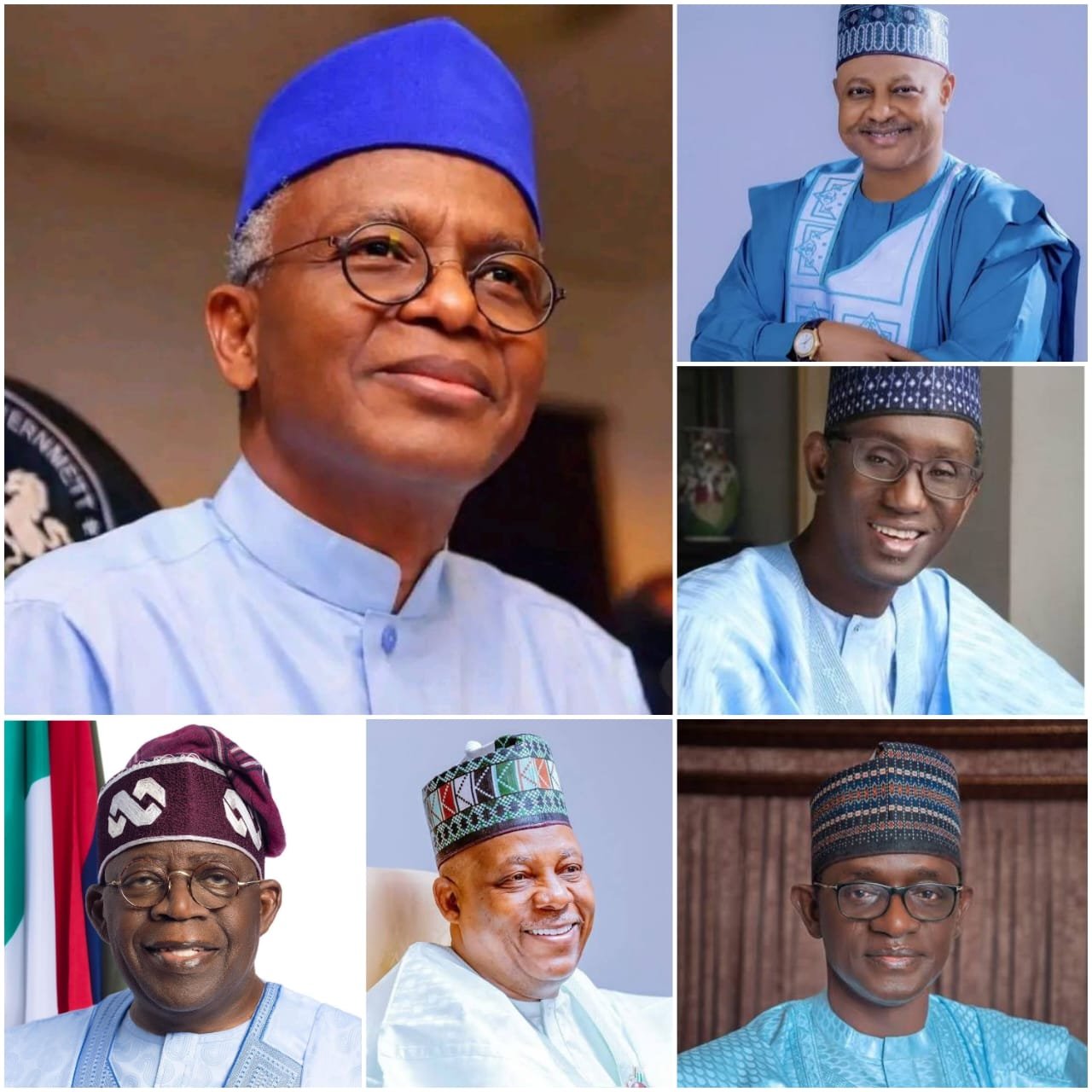
Former Minister of Aviation, Femi Fani-Kayode, has again raised concerns about the actions and statements of former Kaduna State Governor, Nasir El-Rufai, describing some of them as matters that require clarification in the interest of national security.

In a lengthy statement titled “More Questions for Nasir El-Rufai,” Fani-Kayode said he was still awaiting answers to several issues he had previously raised regarding El-Rufai’s conduct while serving in public office.
He also expressed sympathy after reports that El-Rufai allegedly suffered a nosebleed while in detention, noting that he hoped the former governor would soon respond directly to the questions raised.
Fani-Kayode accused the former governor of carrying out several demolition exercises during his tenure as Minister of the Federal Capital Territory and later as governor of Kaduna State, claiming that the actions affected residential buildings, communities and facilities, including some used by vulnerable groups.
He further alleged that some of the demolitions occurred close to the end of El-Rufai’s tenure in May 2023, including operations reportedly conducted by the Kaduna State Urban Planning and Development Authority in areas such as Gbagyi Villa and other communities.
According to him, critics had described the demolitions as vindictive, while affected residents alleged that some structures were removed despite legal disputes over the properties.
The former aviation minister also raised issues relating to policies implemented during El-Rufai’s administration in Kaduna State, including restrictions on certain religious activities and the suspension of state-sponsored pilgrimages at the time.
Fani-Kayode additionally referenced tensions between El-Rufai and some political figures, including Kaduna State Governor Uba Sani, claiming the relationship deteriorated after the former governor left office.
Beyond the political issues, the statement also touched on security-related concerns, particularly allegations surrounding the bugging of phones and claims involving the possible importation of a toxic substance.
Fani-Kayode said such matters, if true, could pose serious national security implications and called for relevant security agencies to investigate thoroughly.
He expressed confidence that institutions such as the Department of State Services, the Nigerian Police Force, and other intelligence bodies would look into the allegations and determine the facts.
Fani-Kayode maintained that his remarks were intended to raise questions and encourage transparency, emphasizing the need for clarity on issues that could affect national stability and public confidence.
Analysis
“The Real Tragedy Of Life Is Not Death; It Is The Dreams We Kill While We Are Alive.” -Obasanjo
Letter-writing Olusegun Obasanjo, who served as Nigerian Military Head of State from 1976 to 1979 and as the country’s civilian President from 1999 to 2007, in what is believed to be his final letter to Nigerians declared, inter-alia:

President Matthew Olusegun Aremu Obasanjo
“the real tragedy of life is not death; it is the dreams we kill while we are alive.”
Read the full letter:
My fellow Countrymen,
People tell you that life is very long. “Live easily,” they say. “There’s still plenty of time.”
I am ninety-four years old as I write these lines, and I say with complete certainty: that is not true. Life is not long; it is as brief as the blink of an eye. Now that I am about to le@ve this world, my heart wishes to entrust a few truths to you.

I earned wealth, saw respect, built a name but tonight all of it feels like dust lying in the corner of my room. If I stretch out my hand, nothing will go with me. The things I held close to my chest all my life now feel like sand slipping through my fingers.
Before I go, I want to lighten my heart. Some things have remained buried inside me for seventy years. I do not want you to lie on a bed one day, remembering your past life, and feel a sting in your heart with every memory.
The first truth: Stop living in the waiting room.

A large part of my life passed in waiting.
In school, I thought life would begin once I got my certificate.
When I got a job in the army, I waited for the weekend.
After marriage, I waited for my children to grow up.
When they grew up, I waited for retirement.
I treated every present moment as just a phase, as if real life was waiting somewhere ahead. I kept staring at the distant horizon and never felt the ground beneath my feet. Today I understand there is no final destination. The journey itself is life and instead of living it, I merely passed through it.

I still remember a rainy Tuesday. I was thirty years old, sitting in my office, staring at the clock. Rain was pouring outside, and inside my heart was restless. I wanted time to pass quickly. I wanted to escape that day.
Today, if someone asked me, I would give all my earnings to relive just that one day the chair, the silence, the sound of rain against the glass, and the strength in my legs.

Perhaps you are doing the same. You say, “I’ll be happy when I get promoted. I’ll feel peace when I have more money. My life will be complete when I find the right person.” You are selling today in exchange for tomorrow and that tomorrow may never come.
Do not waste your days like this. One day you will realize those ordinary days were the most precious.
The second truth: Gold cannot be eaten.
I spent fifty years building an empire. Long hours of work. Missed my children’s birthdays. Even during festivals, my mind was stuck at the office. I saw the waiting in my wife’s eyes and comforted myself by saying, “I’m doing this for them.”
I bought a big house, an expensive car, fine clothes. I believed these things increased my worth, made me appear bigger in the eyes of others.
Now that my departure is near, I realize none of it will go with me. The house will belong to someone else. The walls will be painted according to someone else’s taste. The car will end up in a junkyard. The money will remain just a number. Tonight it cannot hold my hand or tell me not to be afraid.
I remember a day when my daughter called me into the garden. She had found a tiny insect and wanted me to sit with her and watch it. There was joy in her eyes. I said, “Not now, I’m busy. I’m earning money.”
She quietly turned away. The sadness in her eyes still burns my heart. I lost a precious moment with my daughter in exchange for a few paper notes.
If you are exhausting yourself only for a paycheck, pause. Your workplace will replace you quickly but your home will never forget you. Gather wealth of memories, not possessions.
The third truth: Tear down the walls around your heart.
When I was young, I thought I was strong. I never apologized first. I hesitated to speak what was in my heart.
I believed that if a man softened, people would see him as weak. I rarely expressed love perhaps afraid my image of toughness would break.
I had a brother. We grew up together. Played in the same courtyard. Sat at the same table. Shared joys and sorrows. One day, we became upset over something trivial.
Today, honestly, I do not even remember what it was. Maybe money. Maybe an argument. But at that time I was certain I was right. I decided he would come first.
Days passed, then months, then years. On every festival my heart wanted to pick up the phone but ego stood in the way. I kept telling myself there was still time.
One day the phone rang but it wasn’t him. The news came that he had suffered a sudden stroke and passed away. I stood before his cold face, and my insistence on being right felt meaningless.
I was right but I was alone. Ten years of laughter, ten years of conversations, ten years of festivals I had laid them all at the feet of ego. That day I understood: some relationships are saved not by logic, but by love.
If you love someone, say it today. If you are wrong, apologize today. There is no promise of tomorrow.
The fourth truth: Fear is a false shadow.
At twenty-two, I wanted to become a writer. I had a notebook filled with ideas, dreams, stories. But I never wrote a book about those dreams and stories. I was afraid people would laugh, that I would fail, that I would not be taken seriously.
I chose the safe path and spent my life fulfilling other people’s dreams. Today my hands tremble. Even if I want to, I cannot hold a pen properly. My eyes have grown dim.
That book is still inside me and perhaps it will be buried in silence with me. Instead of it, I wrote “My Command”, and “Under My Watch”.
The real tragedy of life is not death; it is the dreams we kill while we are alive.
Perhaps the cemetery is the richest place in the world because buried there are all the unwritten novels, unsung songs, and unstarted dreams.
Do not add to that silent treasure. Do not keep postponing the desire in your heart. Take a step. Even if you stumble, at least you will be able to say, “I tried.”
Better to step into the river once than to stand on the shore forever thinking about it. “If only” is the most painful phrase. In old age, it wakes a person in the silence of the night.
The ticking of my clock now sounds clearer. I have laid down the stones of worry, ego, and fear. I am now just a helpless human being—just as I was on the day I was born—empty-handed.
You are still alive. You have another day. Do not waste it. Look at your hands. Move your fingers. Feel your breath. It is all a miracle.
Do not wait until you are ninety-four to realize how beautiful life is. Feel it now.
I am about to close my eyes. I hope my words find a place in your heart like a seed.
Live not for me, but for truth. Live from the heart. Live fully for yourself. Live for your loved ones.
Live now.
Goodbye…
Summary:
Life is not long; it is as brief as a blink. Stop living in the waiting room. Gold cannot be eaten, and relationships sacrificed at the feet of ego never return.
Do not bury your dreams in the graveyards of fear live today.
Analysis
Centuries Later, Slave Trade’s Scars Fuel Renewed Demand for Justice
The wounds of the transatlantic slave trade can not heal without meaningful and enforceable reparations, as the centuries-long exploitation of African people continues to cast a shadow over modern claims of global equality and justice.
For more than three centuries, millions of Africans were forcibly removed from their homelands and traded as commodities in one of history’s most inhumane enterprises. The consequences of that era did not end with abolition. Instead, its legacy remains deeply embedded in persistent economic inequality, systemic discrimination, and structural disadvantages confronting Black communities worldwide.
Observers argue that the transatlantic slave trade was not merely a historical tragedy but a foundational injustice whose ripple effects still shape global power structures and wealth distribution. The scars left behind, they say, are visible in the socioeconomic gaps between nations and within societies.
There is now a growing call for African leaders across the continent to take a unified and strategic position on reparatory justice. Advocates stress that governments in Africa must collaborate closely with African-descended communities in the Diaspora, as well as with corporate institutions, international advocacy groups, civil society organisations, and the media.
Such coordinated engagement, they contend, is essential to advancing structured dialogue, accountability, and tangible compensation aimed at addressing the enduring harm caused by centuries of enslavement.
Proponents maintain that without deliberate and consequential reparative measures, genuine reconciliation will remain out of reach.
Analysis
Nigeria Scores Zero on Parenthood Policies in World Bank’s 2026 Gender Report
Nigeria has scored zero out of 100 on supportive parenthood policies in the 2026 Women, Business and the Law report released by the World Bank Group, underscoring deep gaps in the country’s enforcement of gender equality laws.
The report found that while Nigeria achieved 50 out of 100 on the adequacy of legal frameworks promoting gender equality, it recorded only 21.7 out of 100 on policies, budgetary provisions and institutional mechanisms required to effectively implement those laws.
Mrs. Shirley Ewang, Advocacy Lead at Gatefield, disclosed the findings in a statement made available to the News Agency of Nigeria (NAN) on Wednesday in Abuja.
According to the report, only four per cent of women globally live in economies that provide near-full legal equality. Although the average country scored 67 out of 100 on legal provisions supporting women’s economic participation, enforcement scores dropped significantly when implementation systems were assessed.
Ewang said Nigeria’s legal progress was being undermined by weak institutional backing, as reflected in its zero score on parenthood policies.
“The data is clear. Our legal progress is being severely undermined by a lack of institutional support reflected in our zero score on parenthood policies,” she said.
The report noted that Nigeria lacks federal laws mandating at least 14 weeks of paid maternity leave, paid paternity leave, or explicit legal protections against the dismissal of pregnant workers. It also highlighted the absence of structured financial support mechanisms and government-backed childcare systems to enable women remain in the workforce.
Less than half of the 190 economies assessed globally provide financial support for families. In Nigeria, the lack of tax incentives, childcare subsidies or state-administered childcare support further limits women’s participation in the labour force.
The report also flagged restrictive provisions in Nigeria’s Labour Act, particularly Sections 55, 56 and 57, which limit women’s employment in certain industrial roles and night work. It added that the absence of explicit legal guarantees for equal remuneration for work of equal value contributes to persistent wage disparities.
Across states, Nigeria’s gender equality landscape varies significantly. Lagos and Oyo states were cited as leaders in legal gender equality frameworks, with Lagos operating specialised family courts and services for survivors of gender-based violence.
However, states such as Bauchi and Kano were identified as having wider gaps, with some northern states scoring as low as 25 out of 100 on legal frameworks affecting women’s marital and inheritance rights.
Despite the passage of the Violence Against Persons (Prohibition) Act, the report said supportive systems for women’s safety remain underfunded, limiting effective enforcement.
Ewang urged policymakers and private sector leaders to adopt concrete family-friendly measures, including a minimum of 16-week fully paid maternity leave, 14-day paid paternity leave, and robust childcare infrastructure.
“With one of the world’s largest youth populations entering the workforce over the next decade 1.2 billion young people, half of them girls closing Nigeria’s implementation gap is critical. Without it, empowering women remains an illusion and economic growth will be constrained,” she said.
Meanwhile, Indermit Gill, Chief Economist and Senior Vice President for Development Economics at the World Bank Group, said weak enforcement continues to undermine economic growth potential globally.
“On paper, most countries are doing reasonably well. But when it comes to enforcing the laws, the average score drops significantly. These numbers reflect huge opportunity gaps,” Gill said.
Analysts noted that establishing clear institutional mechanisms, updating parental leave policies, and expanding access to childcare services would be key to translating gender equality laws into measurable economic gains.