Government
Tinubu Moves Safety Investigation Bureau to Presidency
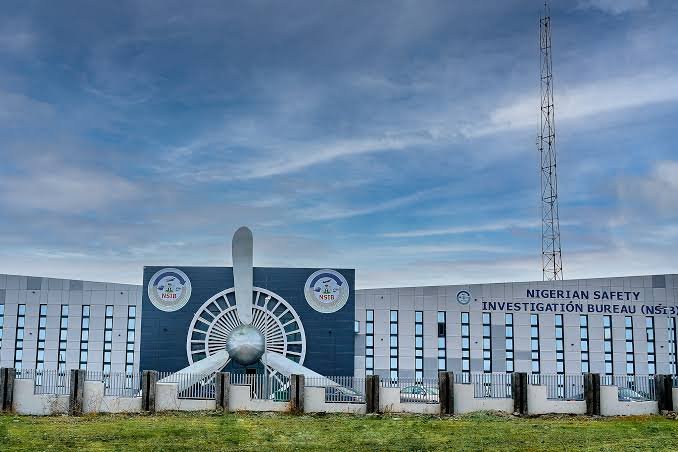
President Bola Ahmed Tinubu has approved the repositioning of the Nigerian Safety Investigation Bureau (NSIB) to report directly to the Presidency.
The decision removes the bureau from the supervision of the Federal Ministry of Aviation and Aerospace Development and places it under the Presidency for closer national policy oversight.
The approval was conveyed in a State House correspondence dated March 5, 2026, and transmitted to the aviation ministry on March 11 for immediate implementation. As part of the directive, the Office of the Attorney-General of the Federation has been instructed to amend the Nigerian Safety Investigation Bureau Establishment Act 2022 and forward the proposed changes to the National Assembly of Nigeria.
The move effectively removes the bureau from the control of the aviation ministry and integrates it more closely with the central governance structure.
The NSIB was created under the 2022 establishment act to replace the Accident Investigation Bureau (AIB), which previously handled aviation accident investigations alone.
With the establishment of the NSIB, the bureau’s mandate was expanded beyond aviation to cover accident investigations across multiple modes of transportation.
The agency now investigates incidents involving aviation, marine transport, rail systems and tracked vehicle operations as part of Nigeria’s broader transport safety framework.
Industry stakeholders had long called for the bureau to be moved out of the aviation ministry, arguing that its responsibilities now extend beyond the aviation sector.
Observers say the transition reflects a major shift in Nigeria’s transport safety philosophy, positioning the bureau as a multimodal accident investigation authority with a broader national oversight role.
General News
Gowon Commends Tinubu’s Efforts to Tackle Nigeria’s Economic, Security Challenges
Former Nigerian Head of State, Yakubu Gowon, has praised President Bola Ahmed Tinubu for what he described as the administration’s efforts to improve Nigeria’s economy and address the country’s security challenges.
Gowon made the remarks while speaking with journalists after visiting the president at the Presidential Villa on Saturday.
The former military leader said President Tinubu was doing his best to move the country forward across political, economic and social sectors.
He also expressed confidence in the federal government’s ongoing efforts to manage and improve the nation’s security situation.
Gowon noted that while Nigeria faces complex challenges, the current administration appears committed to addressing them and steering the country toward stability and development.
Education
Outrage as FG Approves ₦2bn Each for Epe University, Tinubu Polytechnic
The federal government has approved ₦2 billion each as take-off grants for two newly established institutions; Epe University and Tinubu Polytechnic, sparking widespread debate among Nigerians on social media over the timing and priorities of the decision.
The funding approval was disclosed in a post circulating on X (formerly Twitter), where the announcement quickly drew mixed reactions from users questioning the rationale behind creating new institutions while many existing universities and polytechnics struggle with deteriorating infrastructure and underfunding.
Critics particularly raised concerns over the naming of Tinubu Polytechnic after Nigeria’s sitting president, Bola Ahmed Tinubu.
Several commentators argued that naming public institutions after a current leader could be perceived as politically motivated and premature.
Others questioned the government’s spending priorities, suggesting that the ₦4 billion combined take-off grant could have been directed toward revitalizing older federal institutions facing infrastructure decay, overcrowded classrooms, and inadequate funding.
Some social media users also expressed skepticism about the establishment of new institutions at a time when discussions have emerged about slowing down the proliferation of tertiary institutions in the country. Critics said Nigeria already has hundreds of universities and polytechnics, many of which struggle with funding, staffing, and accreditation challenges.
“There are universities with abandoned projects and poor facilities. Why not invest in fixing those before building new ones?” one user wrote on X, reflecting a sentiment widely echoed in the comment sections.
Others went further, alleging that new institutional projects sometimes become avenues for political patronage or mismanagement of public funds, although no evidence was presented to support those claims in the current case.
However, supporters of the initiative argued that establishing new institutions can expand access to higher education, especially in rapidly growing areas where demand for university and technical education continues to rise.
Nigeria has seen a steady increase in tertiary institutions over the past two decades as governments attempt to address the growing number of students seeking admission each year. Education experts note that millions of qualified candidates are unable to secure university placements annually due to limited spaces.
Despite the criticism, government officials have not yet issued a detailed explanation regarding the selection of the institutions or the rationale behind the take-off grant allocation.
General News
Tinubu Hails Media’s Role in Nation-Building, Commends Obaigbena’s Lekelekke Platform
President Bola Ahmed Tinubu has praised the Nigerian media for its critical role in informing and educating citizens, stating that constructive criticism from journalists strengthens democracy and contributes to national development.

The President made the remarks during an interfaith breaking of fast with media executives, as well as members of the Newspaper Proprietors’ Association of Nigeria and the Nigerian Guild of Editors.

Tinubu also commended Nduka Obaigbena, Chairman of THISDAY Media Group and ARISE Media Group, for creating the Lekelekke platform, describing it as an initiative that amplifies Nigerian perspectives and challenges global dominance in the social media space.
Reflecting on his administration’s economic reforms, the President said Nigeria is steadily recovering from the economic difficulties his government inherited, particularly following key policy decisions such as the removal of fuel subsidy.

He urged Nigerians to support government efforts aimed at rebuilding the economy, emphasizing that national progress requires collaboration between leadership and citizens.