Energy
Iran Expands Energy War, Strikes Key Kuwaiti Oil Refinery
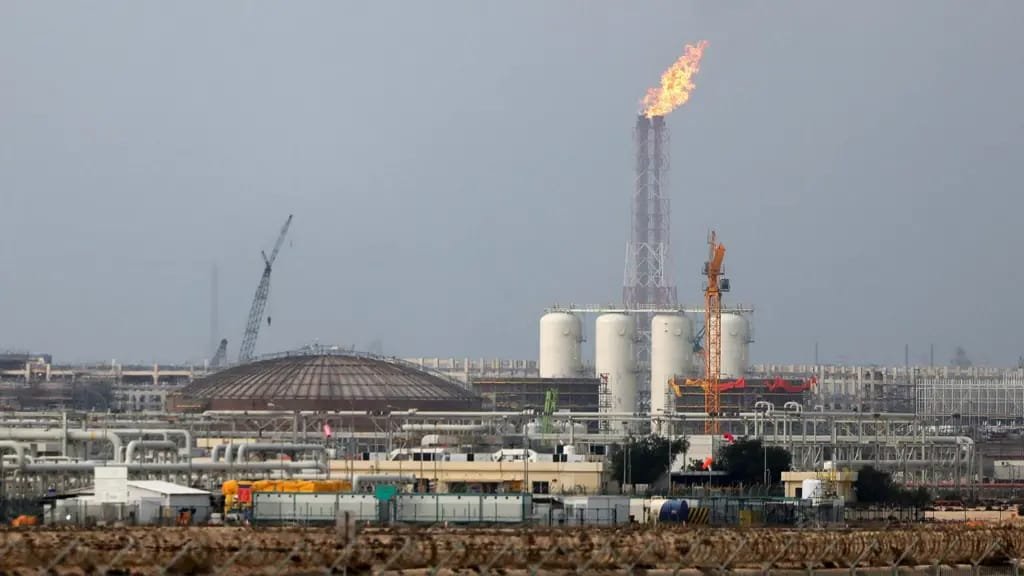
Kuwait’s key oil facility, the Mina Al-Ahmadi refinery, has been struck by Iranian drones, triggering fires in parts of the plant and raising fresh concerns over the security of energy infrastructure in the Gulf region.

According to Kuwaiti authorities and multiple international reports, the attack hit operational units within the refinery, igniting fires that emergency teams quickly moved to contain. No immediate casualties were reported, though damage assessments are ongoing.
The strike is part of a broader escalation in the Middle East, with Iran targeting energy facilities across several Gulf countries, including Qatar and Saudi Arabia. Analysts say the attacks are in retaliation for recent Israeli strikes on Iran’s South Pars gas field, a critical component of the country’s energy sector.
Kuwait’s state oil authorities confirmed that safety protocols were activated promptly, and firefighters were able to bring the blaze under control. However, the repeated targeting of the refinery reportedly struck more than once within days has heightened fears of prolonged disruption to oil production and exports.
In response to the attacks, Kuwait has temporarily suspended operations at some of its refineries, including Mina Al-Ahmadi, to assess damage and ensure safety. The move is expected to impact the country’s refining capacity and could have ripple effects on global oil supply.
The wider conflict has already begun to affect global markets, with oil prices surging amid fears of supply disruptions. Brent crude has reportedly climbed above $119 per barrel following the wave of attacks on energy infrastructure across the Gulf.
Security analysts warn that continued strikes on critical oil facilities could further destabilize the region and intensify geopolitical tensions, particularly as global powers respond to the growing crisis.
Energy
Iran War: NESG Projects Up to N30.2trn Oil Windfall for Nigeria
The Nigerian Economic Summit Group (NESG) has projected that Nigeria could earn between N2.3 trillion and N30.2 trillion in additional oil revenue if the ongoing tensions in the Middle East continue to push global crude oil prices above the country’s 2026 budget benchmark.
In a policy brief released on Friday, the economic think tank said the escalating crisis involving the United States, Israel and Iran since late February 2026 has triggered one of the most significant global energy shocks since the Russia–Ukraine War, sending international oil prices sharply upward.
According to NESG, crude oil prices rising above the 2026 budget benchmark of $64.9 per barrel could result in a major fiscal windfall for Nigeria. However, the group noted that the magnitude of the gains will largely depend on the duration and scale of the conflict, as well as the government’s policy responses.
The report outlined three possible scenarios.
Under a short-lived crisis lasting four to six weeks, with oil prices averaging $90 per barrel, Nigeria could earn about $1.62 billion (approximately N2.27 trillion) in additional revenue.
If the conflict spreads across the Gulf region and lasts up to three months, with oil prices averaging $110 per barrel, the country’s additional earnings could increase to about $7.48 billion (N10.47 trillion).
In a worst-case scenario, where the crisis escalates globally and oil prices average $130 per barrel for six months, Nigeria could generate as much as $21.58 billion (N30.21 trillion) in extra oil revenue.
NESG added that in the most severe scenario, the Federal Government’s share—estimated at about N15.9 trillion—could be sufficient to cover Nigeria’s annual debt-servicing obligations or finance nearly 60 percent of the capital budget.
The group explained that Nigeria’s position as an Atlantic oil exporter provides a strategic advantage in the current crisis. Unlike producers in the Gulf region, Nigeria’s crude exports do not pass through the Strait of Hormuz, a critical shipping route that handles roughly one-fifth of global oil supply and sits at the centre of the tensions.
Because Nigerian crude shipments leave the Gulf of Guinea directly, the country can benefit from rising global prices without facing the immediate supply disruptions affecting Middle Eastern producers.
Despite the potential gains, NESG warned that higher global energy prices could also increase domestic inflation through rising fuel, transportation and logistics costs.
Its simulations suggest that the oil price shock could push Nigeria’s headline inflation up by between 1.3 and 5.2 percentage points over the next two to three quarters, depending on the intensity of the crisis.
However, the group said the inflationary impact may be partly cushioned by improved local refining capacity, particularly from the Dangote Refinery, which has reduced Nigeria’s reliance on imported petroleum products.
NESG also noted that stronger oil export receipts could boost foreign exchange inflows and support the naira. Under moderate crisis conditions, the exchange rate could strengthen toward N1,200–N1,300 per dollar, while allowing the Central Bank of Nigeria to rebuild external reserves.
Nevertheless, the think tank cautioned that Nigeria risks repeating its historic boom-and-bust cycle if the potential windfall is not carefully managed.
NESG advised the government to save excess oil revenues, sustain fuel subsidy reforms, reduce public debt and expand targeted social protection programmes, rather than resorting to excessive public spending or broad price controls.
According to the group, the crisis presents both risks and opportunities, warning that weak policy responses could undermine Nigeria’s recent economic reform efforts.
Energy
IEA to Release 400 Million Barrels of Oil to Tackle Iran War Supply Shock
The International Energy Agency (IEA) has announced the largest release of emergency oil reserves in its history as global crude prices surge due to the escalating war involving Iran and disruptions to shipping routes in the Middle East.
The Paris-based energy watchdog said its 32 member countries will collectively release about 400 million barrels of oil from strategic reserves in an effort to stabilize global energy markets and ease supply shortages.
The unprecedented move comes after the conflict between Iran, the United States, and Israel disrupted oil flows through the Strait of Hormuz, a critical maritime passage that normally carries roughly 20 percent of the world’s oil supply.
IEA officials said the coordinated release is intended to calm markets and offset the sharp supply losses triggered by attacks on vessels and heightened security risks in the Gulf region. The release is more than double the 182 million barrels released in 2022 following Russia’s invasion of Ukraine, making it the agency’s largest emergency intervention since its creation in the 1970s.
Several countries have already begun tapping their reserves. Japan announced plans to release around 80 million barrels, while Germany and the United Kingdom are also expected to contribute significant volumes as part of the coordinated effort.
Despite the massive intervention, analysts say oil markets remain volatile as the ongoing conflict continues to threaten shipping lanes and energy infrastructure across the region. Oil prices have surged sharply since the outbreak of the war, raising fears of a prolonged global energy shock.
Energy
Global Oil Market on Edge as Iran Threatens $200 Per Barrel
Iran has warned that global oil prices could surge to as high as $200 per barrel as tensions escalate in the Middle East and attacks on commercial vessels increase in the Gulf region.
Iran’s military command issued the warning on Wednesday, saying instability in the region could severely disrupt global energy supplies. A spokesperson for the command, Ebrahim Zolfaqari, said the world should prepare for a major spike in oil prices, blaming the situation on escalating military confrontations involving the United States and Israel.
The warning comes as several merchant ships were struck by projectiles in the Strait of Hormuz, a vital maritime corridor for global oil shipments. Reports indicate that at least three additional vessels were recently hit, bringing the number of affected ships in the region to more than a dozen since the conflict intensified.
The Strait of Hormuz is one of the world’s most critical oil transit routes, handling roughly 20% of global oil supply, and disruptions there have already led to sharp volatility in energy markets. Shipping traffic through the waterway has dropped dramatically as companies avoid the area due to safety concerns.
Iran has also warned that oil shipments destined for the United States, Israel, and their allies could be targeted, further heightening fears of a prolonged disruption to global energy supplies.
In response to the growing crisis, the International Energy Agency (IEA) has ordered the release of about 400 million barrels of emergency oil reserves from member countries in an attempt to stabilize global markets and prevent further price spikes.
The ongoing conflict between Iran, the United States, and Israel has intensified in recent weeks, with missile strikes, attacks on military bases, and disruptions to shipping routes raising concerns about wider economic consequences worldwide.