General News
Trump Claims Progress in Iran War, Offers No Clear Exit Timeline

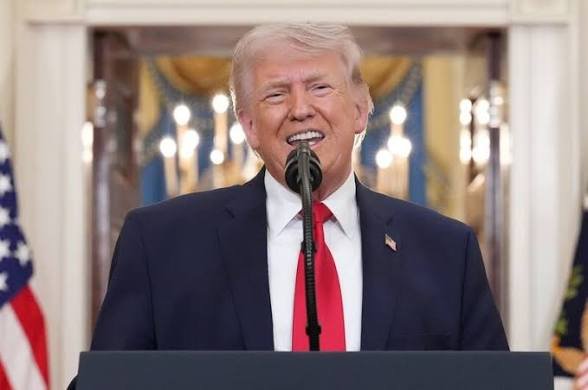
U.S. President Donald Trump has declared that American military operations against Iran are nearing their objectives, but stopped short of providing a clear timeline for ending the ongoing conflict, now in its fifth week.
In a televised national address on Wednesday, Trump asserted that U.S. forces had significantly weakened Iran’s military capabilities, claiming the destruction of its navy and air force, as well as major setbacks to its missile and nuclear programmes.
Despite these claims, the president did not outline a concrete plan for de-escalation, instead saying the war would be concluded “very fast.”
“We have all the cards. They have none,” Trump said from the White House, in his first primetime address since the war began on February 28.
The president warned that the U.S. could intensify its offensive if negotiations fail, including possible strikes on Iran’s energy and oil infrastructure. He added that further attacks could continue over the next two to three weeks if Tehran does not meet U.S. expectations at the negotiating table.
Trump’s remarks avoided key unresolved issues, including the fate of Iran’s enriched uranium stockpile and the status of the Strait of Hormuz a critical global oil route that has been effectively shut during the conflict. He suggested the waterway would reopen “naturally” once hostilities end.
While acknowledging concerns over rising fuel prices in the United States, Trump attributed the surge largely to Iran and expressed optimism that costs would soon decline. He also urged U.S. allies, particularly in Europe, to take the lead in securing vital oil routes in the Gulf region.
The speech, however, appeared to do little to reassure markets or the public. Financial markets reacted with falling stocks, a stronger dollar, and rising oil prices, signaling expectations of a prolonged conflict.
Public sentiment in the U.S. has also turned increasingly cautious. Recent polling indicates a majority of Americans disapprove of the war, with many calling for a swift end to U.S. involvement—even if key military objectives are not fully achieved.
Despite portraying Iran as severely weakened, Trump maintained a hardline stance, warning of intensified attacks if diplomatic efforts stall. Air raid sirens reported in cities such as Doha and Tel Aviv during his address underscored the ongoing volatility in the region.
As the conflict continues, uncertainty remains over Washington’s next move, with the administration reportedly considering a range of options from expanded military operations to efforts aimed at securing Iran’s nuclear materials.
The address ultimately offered limited new details, leaving both allies and observers without a clearer picture of how or when the war might end.