Editorial
CTN SPECIAL REPORT: THE THREE FRONTS — KANO, ADC, AND HORMUZ

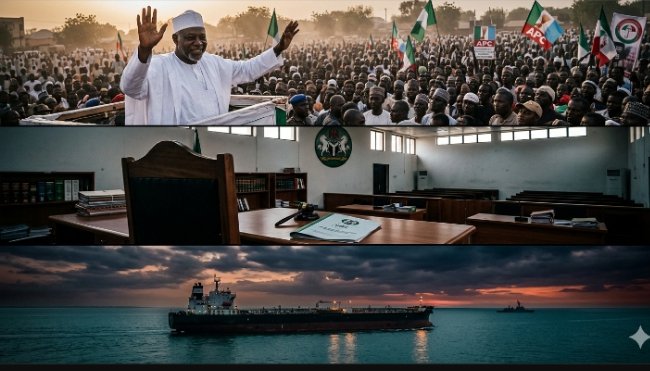
Week of Monday Editorial Promise – Tracking the Fallout


1. THE SHEKARAU EFFECT: KANO SHAKEN AS FORMER GOV RETURNS TO APC
What happened:
On Monday, former Kano State Governor Ibrahim Shekarau officially defected from the PDP back to the APC, completing a full-circle return 18 months after leaving the ruling party.
Fallout so far:
· Immediate political realignments: At least three PDP ward chairmen in Kano Central have resigned in solidarity with Shekarau. Sources say more defections are expected by week’s end.
· Ganduje–Shekarau cold war heats up: The APC is not celebrating as one bloc. Shekarau’s return unsettles Former Governor and Ex-APC National Chairman, Abdullahi Ganduje’s grip on the state structure. Insiders report that Ganduje’s camp is trying to limit Shekarau’s influence over local government appointments.
· Northern sentiment for 2027: Shekarau is already holding strategy meetings with northern elders. While he hasn’t declared presidential interest, his return to APC is widely seen as positioning — either as a kingmaker or a dark horse candidate, especially if the party faces internal fractures ahead of 2027.
What it means for 2027:
Kano remains Nigeria’s largest voting bloc. A united APC in Kano is formidable; a fractured one benefits the PDP. Shekarau’s move introduces a third power centre inside APC North-West. Watch for whether Tinubu’s camp embraces or sidelines him — that will determine if this shakeup leads to a merger of forces or a primary bloodbath.
CTN tracking: We are monitoring defection lists, Ganduje’s next move, and any quiet meetings between Shekarau and opposition figures.
2. THE ADC LEGAL WAR: INEC DID NOT MONITOR THE CONVENTION — COURTS TO DECIDE
The core dispute:
The African Democratic Congress (ADC) held a national convention that the Independent National Electoral Commission (INEC) says it did not monitor because proper notice was not given. The faction that emerged from that convention elected new national officers, while a rival faction insists the exercise was invalid.
Court developments this week:
· An Abuja Federal High Court reserved judgment on whether INEC can recognise any convention it did not monitor. The commission argues that unmonitored conventions have no legal standing under the Electoral Act.
· The Ralphs Okey Nwosu-led faction (which conducted the disputed convention) has filed an urgent motion to compel INEC to upload its candidates’ names for ongoing bye-elections.
· The rival Igwe Ude-Umanta faction has asked the court to declare the convention void, citing video evidence that accreditation was chaotic and that no INEC officials were present.
Why this matters beyond ADC:
If the court rules that INEC’s physical monitoring is mandatory for a valid convention, it will affect every minor party in Nigeria. Many smaller parties hold parallel conventions; a strict ruling could disenfranchise their candidates in 2027. If the court rules that INEC’s absence does not automatically nullify a convention, it opens the door for parties to bypass the commission’s oversight.
CTN tracking: We will be in court on the next adjourned date. Also tracking if INEC uses this case to push for new regulations requiring prior approval of convention venues.

3. THE HORMUZ CEASE-FIRE: IS IT REAL OR JUST A BREATH BEFORE THE STORM?
What was announced:
Following weeks of tanker seizures and naval skirmishes, Iranian and Western-backed Gulf mediators announced a “temporary maritime ceasefire” in the Strait of Hormuz. The deal: Iran will stop harassing commercial tankers for 30 days; in exchange, certain frozen oil payment channels will be quietly unblocked.
What we have verified this week:
· Tanker tracking data (TankerTrackers & MarineTraffic):
· Six VLCCs (very large crude carriers) that were loitering off Fujairah have now entered the Persian Gulf without interception.
· No new reported boardings by Iranian Revolutionary Guard Corps (IRGC) naval units since Monday.
· London insurance market: War risk premiums for Hormuz transit have dropped by 12–15% — a tangible sign that insurers believe the ceasefire holds, at least for now.
· Iranian posture: IRGC commanders have not officially endorsed the ceasefire; they have only said they are “suspending certain operations.” This ambiguity is crucial.
Is it real?
Yes — for now. The tanker movements and insurance rates do not lie. But a 30-day pause is tactical, not structural. Iran is buying time to complete military drills and to see how U.S. elections-related rhetoric evolves.
Or a breath before the storm?
Likely both. Iranian proxies in Iraq and Yemen have not changed posture. Two U.S. destroyers remain in the Gulf of Oman. CTN sources in regional intelligence say the real test will be days 25–30 of the ceasefire, when both sides will test the other’s red lines again.
CTN tracking: We are watching for any “grey zone” incidents — cyberattacks on tanker logistics, or minesweeping activity. Next update if any VLCC changes course abruptly without explanation.
—
CLOSING NOTE
The editorial promise from Monday stands. This special report tracks all three fronts as of Friday week’s end. CTN will issue a mid-week addendum if any of these stories break significantly — especially the ADC court ruling or a Hormuz violation.
CTN — Tracking what shapes the next election cycle, and the world it happens in.