General News
Senate Passes Police Trust Fund Bill for Second Reading, Moves to Strengthen Security Financing

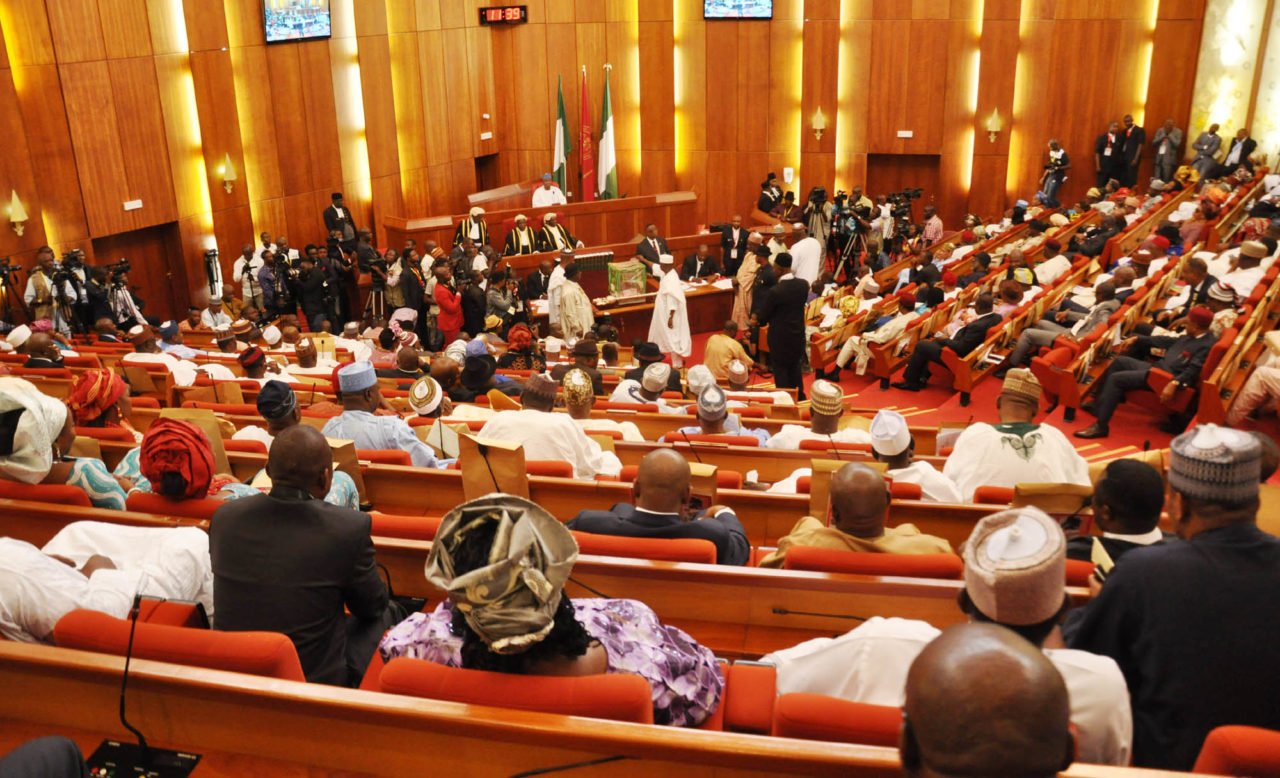
The Nigerian Senate on Tuesday passed for second reading a bill seeking to repeal the Nigerian Police Trust Fund Establishment Act, 2019 (as amended) and replace it with the Nigeria Police Trust Fund Bill, 2026, aimed at strengthening funding, welfare, and operational capacity of the Nigeria Police Force.
The proposed legislation, presented by Senate Leader, Sen. Opeyemi Bamidele (APC–Ekiti), was debated at plenary and referred for further legislative consideration.


Leading debate on the general principles of the bill, Bamidele said the initiative was driven by Nigeria’s rising security challenges, including insurgency, banditry, kidnapping, cybercrime, and communal violence, which have placed enormous pressure on the police.
He said the force remains constrained by inadequate funding, obsolete equipment, weak infrastructure, poor training systems, and welfare deficits, all of which have continued to affect morale and operational efficiency.
According to him, the bill is an executive-backed intervention designed to address systemic deficiencies through a more sustainable and structured funding framework.
While noting that the existing Trust Fund law was a commendable initiative, Bamidele said implementation experience had exposed gaps in funding sustainability, project execution, transparency, and accountability mechanisms.
He explained that the new proposal seeks to align the framework with current realities and global best practices, with the objective of creating a more robust and accountable Police Trust Fund.
The bill proposes a diversified funding structure, including one per cent of total revenue accruing to the Federation Account, development levies under relevant tax laws, and contributions from federal, state, and local governments.
It also provides for donations, grants, international support from development partners, private sector contributions, and endowments.
Bamidele said the model would ensure sustainability and reduce over-reliance on annual budgetary allocations.
He listed priority areas for intervention to include procurement of modern security equipment, deployment of digital surveillance systems and forensic technology, rehabilitation and construction of police facilities, strengthening of training institutions, and capacity building programmes.
Others include enhanced intelligence gathering, improved operational efficiency, emergency response during internal security crises, and better welfare packages for personnel.
Sen. Abba Moro, who seconded the motion, described the bill as timely, noting that inadequate funding remains a major challenge facing security agencies.
Sen. Abdul Ningi (PDP–Bauchi) said the proposal represents a significant boost to Nigeria’s security framework but stressed the need for strict accountability in the management of the fund.
He warned that the scale of funding proposed demands strong oversight to prevent misuse.
Sen. Adamu Alero (APC–Kebbi) supported private sector participation in the fund but cautioned that failure to secure buy-in from state and local governments could trigger legal disputes.
He urged lawmakers to ensure compliance with constitutional provisions governing the Federation Account, warning against enacting laws that could be challenged in court.
Senate President Godswill Akpabio assured lawmakers that the National Assembly would not pass any legislation inconsistent with the Constitution.
He said the bill would undergo further scrutiny at the public hearing stage, with emphasis on transparency, accountability, and proper management of resources.
The Senate thereafter referred the bill to the Committee on Police Affairs for further legislative work and directed it to report back within two weeks.