Football
FIFA Approves Two Yellow Card Amnesty Stages for 2026 World Cup in Major Rule Shake-Up

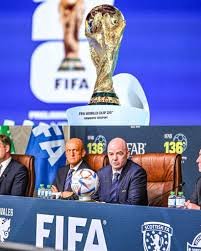
Fifa has announced a drastic change to its yellow card suspension rules for the 2026 World Cup, introducing a second amnesty period that will wipe all cautions after the group stage. The decision was made at a Fifa Council meeting in Vancouver on April 28, 2026, as part of sweeping reforms to accommodate the tournament’s expanded 48-team format.

Under the new system, yellow cards will be cleared at two key points: at the end of the group stage and again after the quarter-finals. This marks a significant departure from previous tournaments, where bookings were only reset after the last eight. The rule change aims to prevent star players from missing crucial knockout matches, particularly semi-finals and the final, due to accumulated cautions.
Fifa has been considering this adjustment because the expanded format introduces an additional knockout round, the round of 32. With players now facing more matches to reach the latter stages, the risk of suspensions stacking up has grown considerably. “If FIFA doesn’t find a way to change this, a player receiving two yellow cards in five matches before reaching the quarter-finals will result in a suspension,” The Athletic reported ahead of the council’s decision. “This is very likely to happen, as the 2026 World Cup will have a round of 32”.

Under the approved system, a player would need to receive two yellow cards within either the group stage alone or across the three knockout rounds leading up to the semi-finals to trigger a one-match ban. This effectively splits the tournament into phases, reducing the likelihood of high-profile absences that have plagued past World Cups. Paul Gascoigne infamously missed the 1990 World Cup final due to suspension, and Germany captain Michael Ballack suffered the same fate in 2002 after receiving a second booking in the semi-finals.
The Vancouver meeting also confirmed other major rule changes aimed at speeding up play and reducing time-wasting. Players being substituted will now have just 10 seconds to leave the pitch. If they exceed that limit, the incoming player must wait an additional minute before entering, temporarily leaving the team with ten players . Throw-ins and goal kicks will have a five-second limit, with failure to comply resulting in a turnover of possession for throw-ins or a corner kick awarded to the opposition for goal kicks.
Medical treatment rules have also been tightened. Any player receiving on-field treatment must leave the pitch and wait at least one minute before returning, unless the injury resulted from a card-worthy foul. Additionally, only the team captain will be allowed to speak with the referee, with other players risking a yellow card if they protest . Var has been expanded to review second yellow cards and obvious errors in corner kick decisions.

The 2026 World Cup, co-hosted by the United States, Canada, and Mexico, will feature 48 teams divided into 12 groups of four. The top two teams from each group, along with the eight best third-placed teams, will advance to a new round of 32, raising the total number of matches to 104. The tournament kicks off on June 11, 2026, with the final scheduled for July 19 in East Rutherford, New Jersey.
Separately, Fifa has also finalised hosting arrangements for future tournaments. The 2030 World Cup will be co-hosted by Spain, Portugal, Morocco, Argentina, Paraguay, and Uruguay, with the three South American nations each hosting one centenary match. This decision effectively removed Europe, Africa, and South America from the 2034 bidding contest, leaving only Asia and Oceania eligible. Saudi Arabia has since emerged as the favoured and likely sole candidate to host the 2034 World Cup.
A Fifa spokesperson confirmed the yellow card rule change following the Vancouver council meeting, stating that the governing body believes the adjustment will create fairer competitive balance while maintaining discipline across the tournament. The new rules will take effect when the 2026 World Cup begins in just over six weeks.