Africa
Museveni Sworn in for Seventh Term as Uganda’s Longest-Serving President, Declares ‘No More Sleeping’

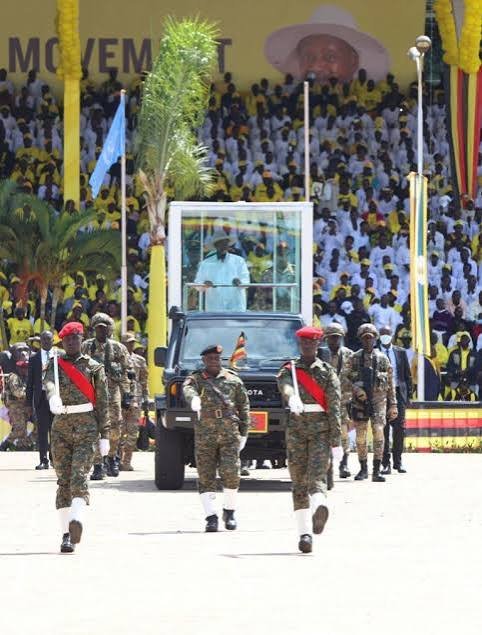
Ugandan President Yoweri Museveni was sworn in for a seventh consecutive term on May 12, 2026, in a ceremony at Kololo Independence Grounds in Kampala, extending his four-decade rule to at least 2031. The 81-year-old leader, first taking power in 1986, secured 71.65 percent of the vote in the January 15 presidential election, while opposition candidate Robert Kyagulanyi, widely known as Bobi Wine, received 24.7 percent.
The inauguration, themed “Protecting the Gains, Making a Qualitative Leap to Higher Middle Income Status,” drew at least 35 heads of state and regional leaders, including Kenya’s Deputy President Kithure Kindiki and former President Uhuru Kenyatta. Authorities deployed heavy security, including armoured vehicles, across the capital to manage crowds and ensure smooth proceedings.
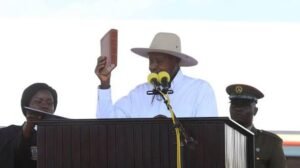
In his inaugural address, Museveni declared that the 2026-2031 term would be a “Kisanja of no more sleeping” and “no more corruption,” urging Ugandans to actively participate in transforming the country’s economy. “We are now entering a Kisanja of no more sleeping. We are entering a Kisanja of no more corruption,” Museveni said in his closing remarks.
The president focused heavily on economic transformation, emphasizing wealth creation through commercial agriculture, manufacturing, ICT, and services. He lashed out at African countries for exporting raw materials without processing them, calling it a “strategic blunder” . “If the gold is processed to 99.9 percent purity, you get US dollars 168,000. If you export unprocessed gold, you get only around US dollars 60,000,” Museveni explained . He reiterated Uganda’s commitment to banning the export of unprocessed minerals and promoting local industrialisation.
Museveni also used part of his speech to showcase testimonies of wealth creators benefiting from commercial agriculture, citing a poultry farmer from Serere whom he said was earning over 6 million shillings daily from egg sales alone. He pointed to industrial parks employing thousands of youth and highlighted initiatives such as the Parish Development Model for expanding participation in the money economy.
“The challenge of the NRM is that there is peace, there is infrastructure, there are services in schools and health centres. But you must be engaged in wealth creation as an individual, as a family or a company,” he said.
Opposition leader Bobi Wine rejected the election outcome, alleging widespread ballot stuffing, electoral malpractice, and voter suppression. Wine, who fled Uganda after the vote claiming fear for his safety, accused the government of targeting opposition figures . Human rights groups and international observers criticized the election, noting a government-imposed internet blackout two days before voting, restrictions on opposition campaigning, and reports of deadly violence.
Museveni has ruled Uganda for four decades, becoming one of Africa’s longest-serving leaders after the country removed presidential term limits in 2005 and later abolished the presidential age limit in 2017. Attention has increasingly turned to his son, Muhoozi Kainerugaba, who serves as military chief and is widely viewed as a potential successor . Museveni has not indicated any plans to step down . On regional integration, the president praised the East African Community and the African Continental Free Trade Area, stating, “You cannot talk about development without a market. We must unite East Africa and Africa”.