Politics
Ghana 2024 Elections, ECOWAS And AES Juntas, By Paul Ejime.

Ghana has pulled off another feat in democratic consolidation after successfully conducting a ninth round of generally peaceful Presidential and Parliamentary Elections. While democratic elections have become a norm in the country, the 2024 General Elections were distinct in various aspects that challenged the resilience of democracy, yet, Ghanaians rose to the occasion
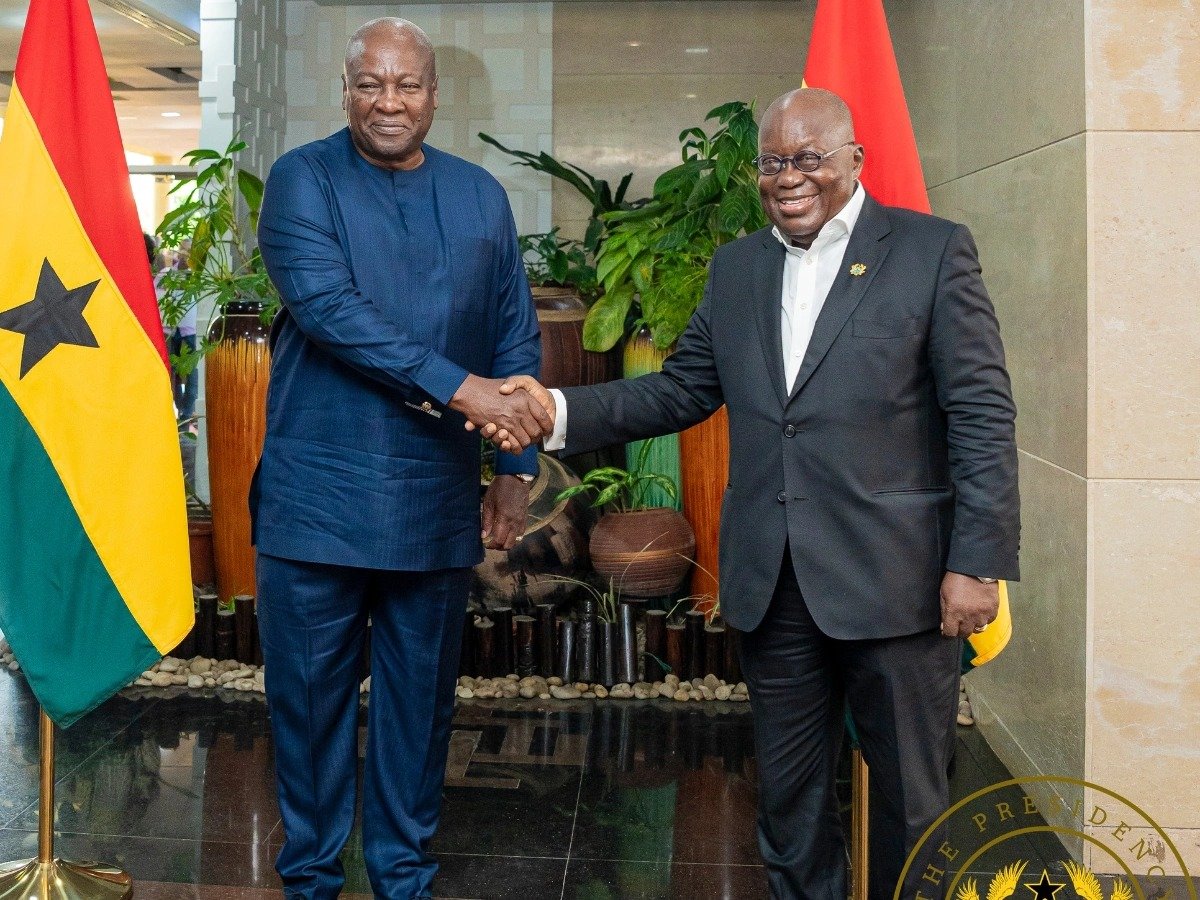
Forty-eight hours after the poll, the Electoral Commission (EC) announced processed results from 267 out of 276 constituencies, and declared former President John Dramani Mahama, candidate of the opposition National Democratic Congress (NDC), as the winner and President-elect with 56.55% of the votes against 40.61% scored by the out-going Vice President Mahamudu Bawumia, the presidential fag-bearer of the ruling New Patriotic Party (NPP).
Indeed, less than 24 hours from the close of balloting, Vice President Bawumia had telephoned President-elect Mahama to concede defeat.
Also, following the declaration of the official results by EC, out-going President Nana Akufo-Addo congratulated Mahama on “his decisive victory” and invited him to a meeting to initiate the transition process.
There was no rocket science to it, but a matter of political actors respecting the will of the people.
The two dominant political parties had agents in almost all the more than 40,000 polling stations, who monitored process and relayed polling results to their party data system for parallel vote collation/tabulation.
Like in most elections, the run-up to Ghana 2024 was not without political tension, misinformation, disinformation, fake news and hate speech, culminating in violent incidents in some Regions/Districts, with at least one or two reported deaths and injuries.
Even after the results of the presidential race were announced, shootings, looting and destruction of public and private properties were still reported in some volatile regions. Police reported some arrests and promised prosecution of culprits.
Similar post-election violence is not uncommon in Ghana, but it reached a crescendo in the 2020 elections when eight people were killed.
Some critics believe that the “unsatisfactory” handling of the 2020 election killings and the lack of public confidence in some public institutions, might have contributed to the government’s defeat at the poll.
The other factors include economic hardship, allegations of official corruption, nepotism and “political arrogance” exhibited by some public officials.
Also, artisanal illegal gold mining, locally called “galamsey,” and its negative environmental consequences (including degradation of water bodies and destruction of forest reserves) have become a major political issue, with the two major political parties trading allegations over complicity.
Equally concerning were the menace of violent extremism and vigilantism or the use of thugs/private security agents by politicians, despite the existence of the Anti-Vigilantism and Related Offences Act 999 of 1999.
The combined effects of the COVID-19 pandemic, which caused severe economic disruptions across the globe, currency fluctuation and the Russia-Ukraine conflict, which has impacted food security for many African countries, have left the Ghanaian economy reeling out of control amid high inflation and unemployment, especially among the youth. Also, the country’s debt crisis and engagement with the International Monetary Fund (IMF) for economic recovery might have played a significant role in the outcome of the elections.
Akufo-Addo and Mahama, who will become Ghana’s 13th President since the country’s independence from Britain in 1957, have now locked horns in four presidential battles with both emerging victorious on two occasions – (2012 and 2024 Mahama) and (2016 and 2020 Akufo-Addo).
The 2020 race produced a hung parliament with the two dominant parties having an equal number of MPs in parliament, and the opposition NDC producing the parliamentary Speaker for the first time in the country’s political history. The decision by four MPs to quit their parties and the Supreme Court’s order stopping the Speaker from declaring the MPs’ seats vacant had aggravated the political tension.
Ghana has 24 registered political parties.
Thirteen (13) fielded presidential candidates, while fifteen (15) had candidates for the parliamentary elections, complemented by independents. Nonetheless, the ruling NPP and the opposition NDC remain the dominant parties, alternating control of political power three times in 32 years (2000, 2008 and 2016) and now in 2024.
According to the EC, 900,000 new eligible voters were added to the national voter’s register in 2024 bringing the total to 18,774.159 (15% higher than in 2020), in an estimated national population of 34.42 million.
In a marked departure from tradition, the 2024 political campaigns were more of a door-to-door affair than public rallies. The NDC’s stronghold is the Volta Region and parts of the North and Muslim community, while the NPP draws its majority following from the Akan ethnic group, mainly from the Ashanti and other Southern Regions.
Religion is not overly contentious in Ghana, but the 2024 poll tested the country’s religious tolerance.
It was the first time in Ghana’s history that two candidates from the two major political parties, professing different faiths came from the same region, the North. Mahama is Christian and Bawumia a Muslim.
In the end, Mahama recorded a sweeping victory with a more than 1.5 million majority vote margin, the highest since 1992.
There is no perfect election. However, Ghana has demonstrated that an electoral process, which is a multi-stakeholder responsibility is integral to the entrenchment of democratic culture, nurtured by strong and resilient institutions.
As the icing on the cake, Ghana, for the first time, also has its first elected female Vice President, Prof Nana Opoku-Agyemang, Mahama’s running mate in the 2024 elections.
Local and international election observers, including from ECOWAS, the African Union and the Commonwealth, and civil society organisations, were unanimous in their positive assessment of the outcome of Ghana’s latest elections, the professionalism of most actors, and the transparency of the electoral process bar the isolated violent incidents, which they captured in their reports with recommendations particularly on collation and results management for the relevant authorities to address.
Incidentally, the ECOWAS Election Observation Mission to Ghana was led by Nigeria’s former Vice President Namadi Sambo, while the West African Elders’ Forum was headed by his boss, former President Goodluck Jonathan. The fact that President Jonathan, with Sambo as his deputy, also telephoned then-candidate Muhammadu Buhari to concede defeat in Nigeria’s 2015 presidential election, just as Bawumia has done in Ghana, was not lost on the international community.
By and large, after the successful and peaceful presidential and parliamentary elections in Senegal and Liberia, the outcome of Ghana’s elections is a strong message that democracy, with all its flaws, is the way to go, by providing the people with the mechanism to periodically change leaders who fail to deliver.
The conversation on the credibility or transparency of elections remains open-ended, but a flawed election is not enough reason to jettison democracy.
With the January 2025 deadline fast approaching on the notice issued by the junta leaders of the Alliance of Sahel States, AES, to pull their countries – Mali, Burkina Faso and Niger from ECOWAS, the message from Accra is that it is never too late for a patriotic leader to do the right thing in the interest of the people.
The citizens of AES countries are going through severe socioeconomic hardship, insecurity and political isolation, which could only worsen, with an avoidable humanitarian disaster if their countries should unceremoniously quit ECOWAS.
ECOWAS might have made some mistakes in its approach to halt the wave of military incursions into politics in West Africa, but that is no justification for military coups or unconstitutional change of governments.
Since their withdrawal announcement, the junta leaders have made little to no progress on constitutional rules or implementation of their transition programmes. They should not vindicate the notion that they are opportunistic power grabbers.
For their part, ECOWAS leaders must put their house in order at the national and regional levels by ending bad governance, corruption, human rights violations, election rigging as well as “constitutional and ballot box coups.”
Ejime Is A Global Affairs Analyst And Consultant On Peace & Security And Governance Communications