
General News
‘Money Is Not the Problem’: OPS-WASH Reveals Why Billions in Private Capital Are Bypassing Africa’s Water Sector

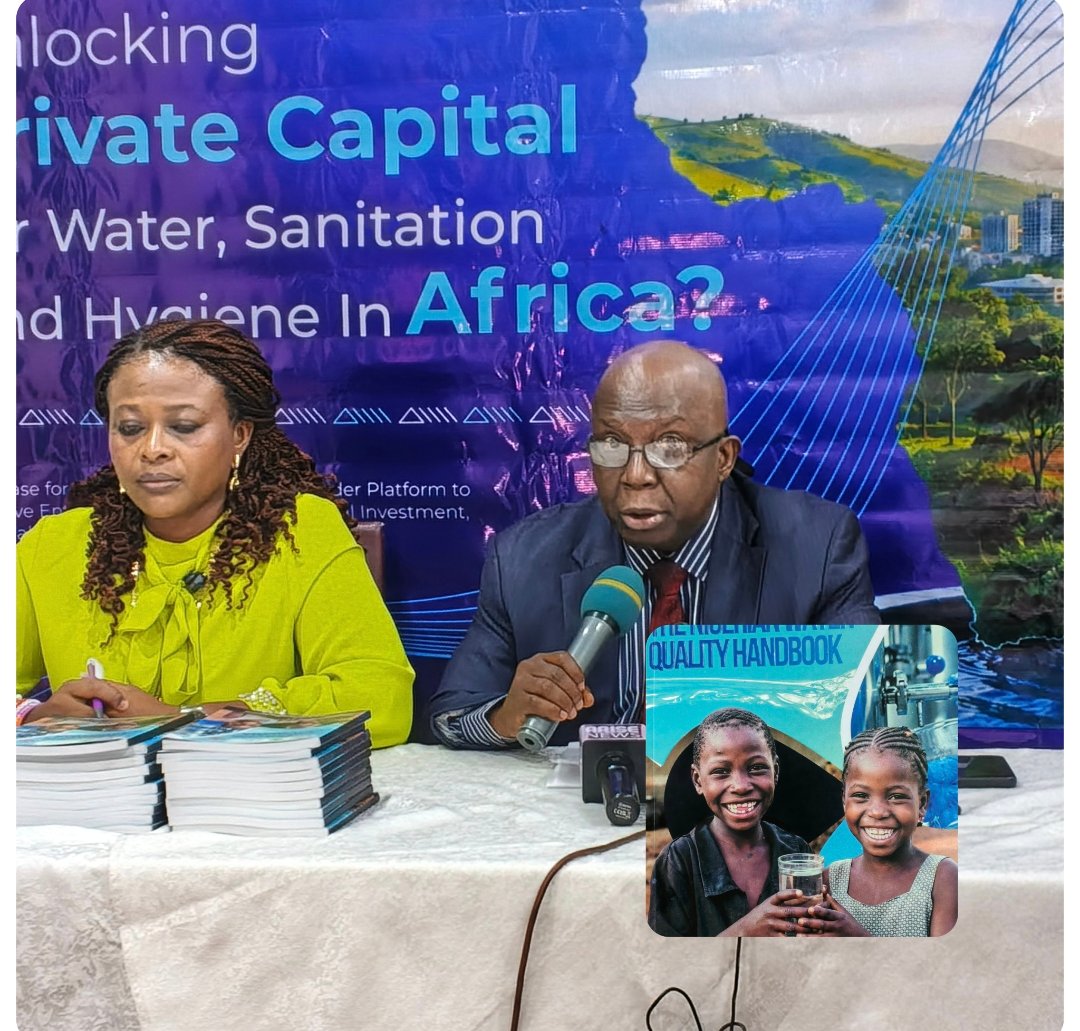
The Organized Private Sector in Water, Sanitation and Hygiene (OPS-WASH) has declared that Africa’s water and sanitation crisis is being worsened by the inability of governments to create conditions that attract private investment, despite the availability of billions of dollars in global capital seeking infrastructure opportunities.
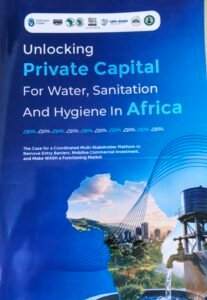
Speaking at a press conference in Abuja, the Global Head and National Coordinator of OPS-WASH, Dr. Nicholas Igwe, said the continent’s challenge is not a lack of funding but the absence of strong institutions, predictable regulations and commercially viable frameworks that can inspire investor confidence.
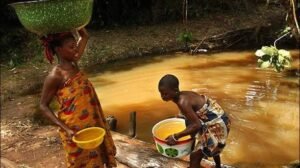
According to him, private investors continue to avoid the Water, Sanitation and Hygiene (WASH) sector because of policy inconsistencies, political interference, weak regulatory oversight and uncertainty over contract enforcement.
“Money is available globally for infrastructure investments, but investors will not commit funds where policies can change overnight or where regulatory institutions are vulnerable to political influence,” he said.
Dr. Igwe identified six major constraints discouraging private participation in the sector: weak revenue-generation systems, poor allocation of risks, long investment payback periods, unstable regulatory environments, inadequate project preparation and the lack of standardised legal frameworks.
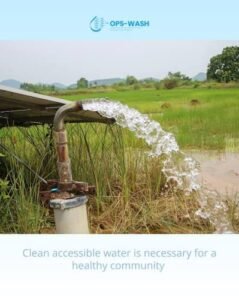
He noted that while sectors such as telecommunications and energy experienced remarkable growth after reforms opened the door to private capital, similar progress has not occurred in the WASH sector.
“The telecom sector changed after liberalisation allowed companies like MTN and Globacom to invest billions. The same thing happened in the energy sector after reforms. But the WASH sector still lacks that enabling environment,” he said.
The OPS-WASH coordinator argued that the sector remains heavily dependent on donor funding and development agencies because governments have yet to establish structures that guarantee sustainable returns and reduce investment risks.
He cited countries such as Kenya, Rwanda, South Africa and Uganda as examples where institutional reforms have helped improve investor confidence in infrastructure and public service sectors.
According to him, Nigeria and many other African countries must urgently adopt similar reforms if they hope to close the continent’s widening water and sanitation gap.
OPS-WASH further warned that achieving Sustainable Development Goal 6 — universal access to safe water and sanitation by 2030 — would be impossible through public financing alone.
The organisation estimated that approximately $114 billion is required annually worldwide to meet the target, while current levels of Official Development Assistance account for only a small portion of the funding needed.
Dr. Igwe stressed that Africa already possesses the technical expertise, innovative solutions and private sector interest required to transform the WASH sector.
“What is missing is the architecture — the institutional structure that allows all these elements to work together in a stable and scalable way,” he said.
He called on governments across the continent to strengthen regulatory independence, provide long-term legal safeguards for investors and expand public-private partnerships to unlock critical investments in water and sanitation infrastructure.
The organisation maintained that without urgent reforms, Africa risks missing global water access targets while billions of dollars in potential private investment continue to flow elsewhere.