
Tech news
Anthropic Claims Alibaba Used Thousands of Fake Accounts to Access Claude AI

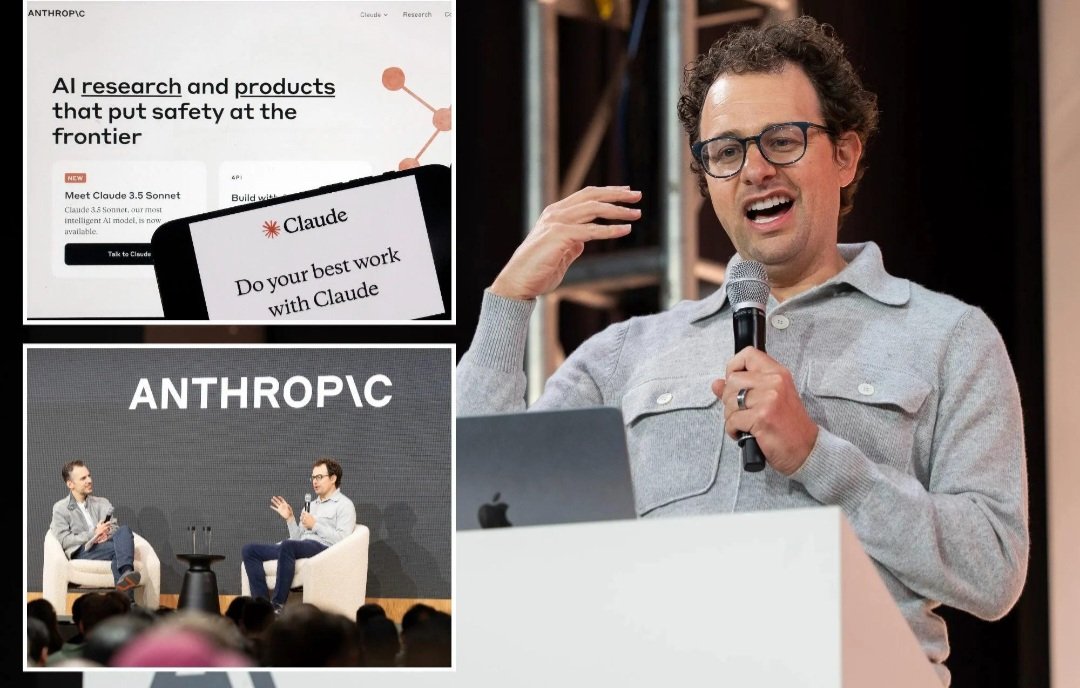
Artificial intelligence company Anthropic has accused Chinese technology giant Alibaba of conducting what it describes as the largest known effort to unlawfully extract capabilities from its Claude AI model, escalating tensions in the increasingly competitive global AI industry.
According to a letter sent by Anthropic to senior U.S. lawmakers and White House officials, operators allegedly linked to Alibaba’s Qwen artificial intelligence division carried out a large-scale “distillation” campaign aimed at replicating advanced Claude capabilities. Anthropic claims the operation involved approximately 28.8 million interactions with Claude through nearly 25,000 fraudulent accounts between April and June 2026.
The company alleges that the campaign specifically targeted some of Claude’s most advanced features, including software engineering, coding assistance, and agentic reasoning capabilities. Anthropic argues that the effort was designed to accelerate the development of competing AI models without incurring the substantial research and development costs required to build such systems independently.
Distillation is a common technique in artificial intelligence development, where a smaller or less capable model learns from the outputs of a more advanced system. While the practice is widely used within organizations to improve efficiency, Anthropic contends that using fraudulent accounts to extract proprietary capabilities from a competitor violates its terms of service and constitutes unauthorized access.
In its letter, Anthropic described the alleged operation as a systematic effort to harvest American AI innovations and repackage them into competing products. The company warned that such activities could accelerate the development of rival AI systems while undermining the competitive advantage of U.S. technology firms.

The allegations arrive amid growing concerns in Washington over China’s efforts to gain access to advanced American artificial intelligence technologies. U.S. officials have increasingly focused on AI as a matter of national security, introducing export controls and restrictions intended to limit foreign access to cutting-edge AI hardware and software.
Anthropic’s accusations also follow earlier claims by the company involving other Chinese AI developers. Earlier this year, the firm alleged that several Chinese laboratories, including DeepSeek, Moonshot AI, and MiniMax, used thousands of fraudulent accounts to generate millions of interactions with Claude in efforts to improve their own AI systems.
Alibaba has not publicly responded in detail to Anthropic’s allegations and declined to comment on several media reports regarding the matter. The company has previously emphasized its commitment to developing advanced AI technologies through its Qwen large language model initiative, which has become one of China’s leading AI platforms.

The controversy has added another layer of tension to the growing technological competition between the United States and China. Analysts note that as AI systems become increasingly valuable economically and strategically, disputes over intellectual property, model security, and unauthorized access are likely to become more frequent.
Industry experts say the case highlights a broader challenge facing AI companies worldwide: protecting proprietary model capabilities while still providing public access to powerful AI tools. Many leading AI developers, including Anthropic, OpenAI, and Google, have reportedly increased cooperation in detecting and preventing large-scale distillation attempts.
As lawmakers review Anthropic’s claims, the dispute is expected to fuel ongoing debates about AI regulation, export controls, cybersecurity, and the protection of intellectual property in an increasingly competitive global AI landscape.