General News
Tinubu Takes South Africa’s Xenophobic Attacks to AU, Demands Urgent Action

President Bola Ahmed Tinubu has taken the recurring xenophobic and Afrophobic attacks against Africans and other foreign nationals in South Africa to the African Union (AU), demanding urgent continental action to protect the safety and dignity of Africans.
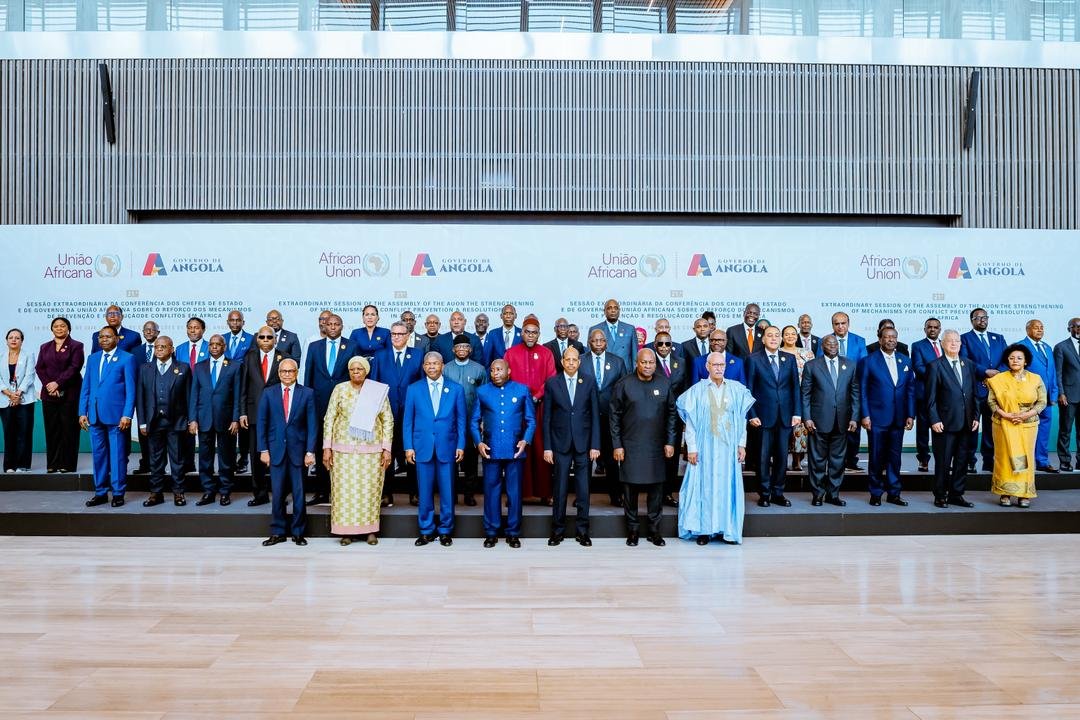
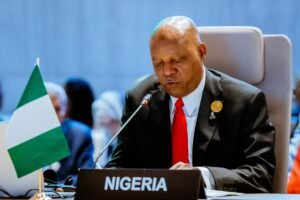
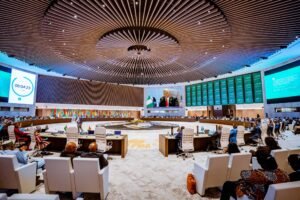
Tinubu made Nigeria’s position known at the 21st Extraordinary Session of the Assembly of the African Union in Luanda, Angola, where he was represented by Vice President Kashim Shettima.
The President urged African leaders to place the issue on the agenda of the 40th Ordinary Session of the AU Assembly scheduled for January 2027 for consideration and appropriate action.
He said the continued attacks undermine African solidarity, unity and peaceful coexistence, stressing that the continent could not afford to remain silent in the face of such incidents.
“Nigeria wishes to express its concern over the recurring xenophobic and Afrophobic attacks against Africans and other nationals in South Africa,” Tinubu said.
While acknowledging South Africa’s sovereign right to enforce its immigration laws and its contributions to the continent, the President maintained that such attacks were unacceptable and required collective attention.
“While recognising South Africa’s sovereign right to enforce its immigration laws and acknowledging its contributions to the continent, Nigeria stresses that such attacks undermine African solidarity, unity and peaceful coexistence, and require urgent collective attention,” he said.
Tinubu therefore called on the AU Assembly to formally consider the matter at its next ordinary session.
“It is on this note that Nigeria calls on this august Assembly to place the matter on the agenda of the upcoming 40th Ordinary Session of the AU Assembly, scheduled for January 2027, for consideration and appropriate action,” he declared.
The President also called for stronger continental mechanisms to combat xenophobia and Afrophobia, advocating dialogue, preventive diplomacy and collective action as tools for preserving African unity.
Tinubu backs Luanda Action Plan
Beyond the South Africa issue, Nigeria also threw its weight behind the adoption of the Luanda Action Plan as a practical framework for strengthening conflict prevention across Africa.
Tinubu argued that preventing conflicts remained more cost-effective and sustainable than managing them after they had erupted.
“For Nigeria, conflict prevention remains more cost-effective and sustainable than conflict management,” he said.
The President expressed concern over fragmented peace initiatives and growing external interference in African conflicts, warning that the increasing involvement of foreign military forces, mercenaries and private defence contractors could undermine the AU’s conflict-prevention mechanisms and the principle of African ownership.
He called on arms-producing and exporting countries to strengthen cooperation with African governments and ensure that weapons and ammunition produced within their territories were not diverted to terrorists and other non-state armed groups.
According to Tinubu, although the AU has developed mechanisms for preventing and resolving conflicts, their effectiveness continues to be hampered by limited trust and inconsistent implementation by member states.
“The growing reliance on external actors risks weakening African institutions and the principle of African ownership,” he warned.
The President consequently urged African countries to take greater collective responsibility for addressing the continent’s peace and security challenges.
Nigeria also supported sustainable and predictable financing for AU peace operations and called for the full operationalisation of United Nations Security Council Resolution 2719 to enhance the AU’s capacity to respond to conflicts and crises.
Tinubu urged African leaders to renew their commitment to home-grown solutions, stronger cooperation and shared responsibility in confronting the continent’s security challenges.
“Let us therefore renew our collective commitment to solidarity, cooperation, and shared responsibility as we build the Africa we want,” the President said.