
Business
China’s Exports Surge 25% in August as Autos, AI and High-Tech Goods Drive Growth

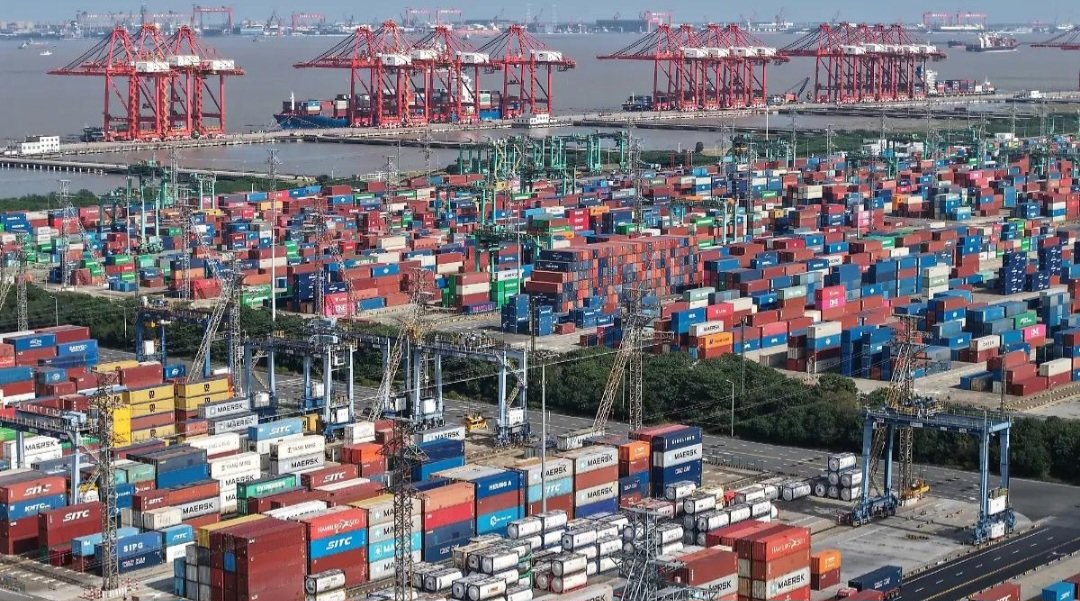
China’s export machine accelerated sharply in August, with overseas shipments jumping 25% year-on-year, as strong global demand for automobiles, semiconductors and other high-tech products helped offset weakness in the country’s domestic economy.
The latest customs figures, released Tuesday, showed exports reaching about $401.44 billion, up from a 23.9% annual increase in July and stronger than economists had expected.
Imports also expanded rapidly, rising 28.2% year-on-year to about $282.36 billion. As a result, China recorded a monthly trade surplus of approximately $119.1 billion, compared with $112.5 billion in July.
A major driver of the August performance was China’s increasingly sophisticated manufacturing sector.

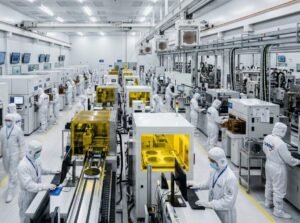
High-tech exports have benefited from booming global demand for artificial intelligence infrastructure, semiconductors, electric vehicles, solar cells and lithium-ion batteries. During the first eight months of the year, the value of China’s high-tech exports rose by about 42.9%, while semiconductor export values more than doubled.
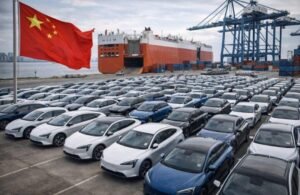
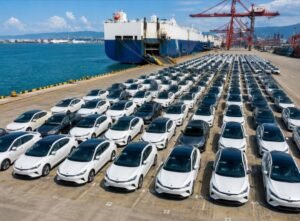
Automobile exports were another major source of momentum, with the value and volume of car exports both rising by more than 50% during the period, according to reports based on the customs data.

The performance also reflects the growing international reach of Chinese electric-vehicle manufacturers. BYD, for example, reported a 134.5% year-on-year increase in overseas shipments in August, helping compensate for weaker demand in its home market.
The strong export figures provide an important source of support for China’s economy at a time when domestic demand remains relatively weak.
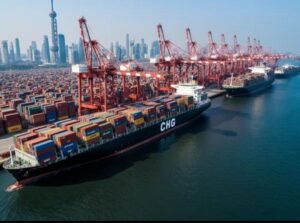
China’s economy grew 4.3% in the second quarter, below Beijing’s full-year growth target of 4.5%-5%. Industrial production, retail sales and investment have also faced pressure, while the property sector continues to struggle.
That makes foreign demand increasingly important to Beijing’s efforts to maintain economic momentum.
Analysts, however, warn that the export boom may face challenges if trade tensions intensify or demand for AI-related technology weakens. The United States and European Union have both expressed concerns about China’s growing trade surplus and the competitiveness of Chinese manufactured goods.
The latest figures put China’s cumulative trade surplus for the first eight months of 2026 at roughly $805.5 billion, putting the country on course to potentially exceed $1 trillion for the full year.
Exports to the United States also remained strong despite continuing trade tensions. Chinese exports to the U.S. jumped 34.4% in August, while imports from the U.S. increased 17.8%, according to trade data reported by the Business Times.
The figures come ahead of an expected meeting between U.S. President Donald Trump and Chinese President Xi Jinping later this month, where trade, tariffs and China’s expanding trade surplus are likely to feature prominently.
For Beijing, the numbers offer a powerful demonstration of the competitiveness of its manufacturing and technology sectors. But they also underline a growing challenge: China is selling more to the world at a time when many of its trading partners are becoming increasingly concerned about the scale of those exports.