
Opinion
Former Nigeria International Footballers: From The Dusty Field to The Corporate World — Footballeurs Have Brains Too

By Paul Lucky Okoku
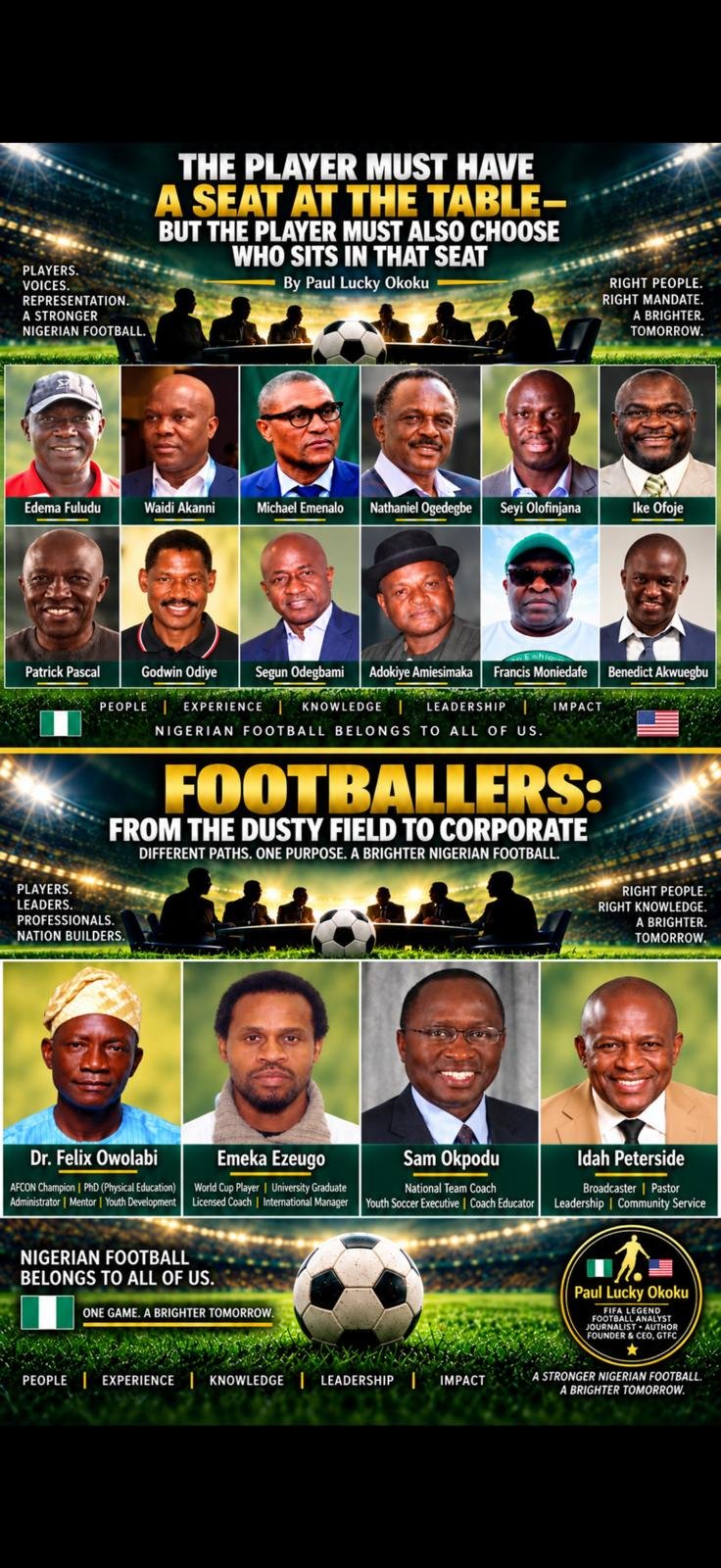
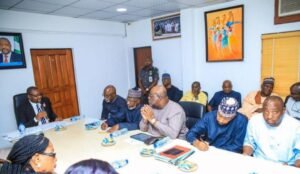
The names in this photograph were not chosen at random. They represent education, leadership, management, law, engineering, coaching, business, administration, ministry, community service and decades of professional experience beyond the final whistle.
For generations, Nigerian footballers have been celebrated for what they could do with their feet. Yet an assumption has lingered: once the boots came off, their usefulness to football somehow ended with them.
Perhaps it is time to say the quiet part out loud:
𝐅𝐨𝐨𝐭𝐛𝐚𝐥𝐥𝐞𝐫𝐬 𝐡𝐚𝐯𝐞 𝐛𝐫𝐚𝐢𝐧𝐬 𝐭𝐨𝐨.
Some became lawyers. Some became engineers. Some earned advanced degrees. Some built businesses, founded schools and academies, entered public service, coached at universities, led congregations and worked inside major football institutions.
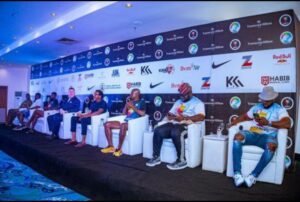
Many accumulated decades of professional experience after the crowd stopped chanting their names.
𝐓𝐇𝐄𝐒𝐄 𝐍𝐀𝐌𝐄𝐒 𝐖𝐄𝐑𝐄 𝐍𝐎𝐓 𝐂𝐇𝐎𝐒𝐄𝐍 𝐀𝐓 𝐑𝐀𝐍𝐃𝐎𝐌
This is not a popularity contest, a ranking or an appointment list.
No one on this list knows I am conducting this exercise. I have not contacted any of them, sought endorsements or discussed their inclusion. This is an independent, voluntary effort based on public records.
Nobody commissioned it. I simply saw a gap and started doing the work.
President Bola Tinubu’s August 27, 2026 directive for comprehensive football reform created an opening for a broader conversation about governance, administration, stakeholder representation, development and accountability.
So why wait until somebody asks, “Where are the former players with relevant education, experience and leadership records?”
The information should already be on the table.
𝐓𝐡𝐚𝐭 𝐢𝐬 𝐛𝐞𝐢𝐧𝐠 𝐩𝐫𝐨𝐚𝐜𝐭𝐢𝐯𝐞 𝐢𝐧𝐬𝐭𝐞𝐚𝐝 𝐨𝐟 𝐫𝐞𝐚𝐜𝐭𝐢𝐯𝐞.
𝐏𝐔𝐓𝐓𝐈𝐍𝐆 𝐎𝐍 𝐃𝐈𝐅𝐅𝐄𝐑𝐄𝐍𝐓 𝐇𝐀𝐓𝐒
Football gives me one perspective. My professional life gives me others.
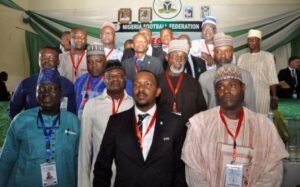
I have worked across recruiting, interviewing, hiring, onboarding, project coordination, organizational responsibility, financial management and profit-and-loss accountability, among other areas. So I approached this exercise the way a serious organization should approach talent: define the criteria, examine the record and let the evidence guide the assessment.
The former footballer understands the game.
The recruiter examines the candidate.
The project-management professional looks for structure, execution and accountability.
The writer searches for documentation.
These names have been researched and reviewed through public records covering education, employment, coaching, administration, business and community service.
Friendship cannot be the qualification.
Football fraternity cannot be the qualification.
𝐄𝐯𝐢𝐝𝐞𝐧𝐜𝐞 𝐡𝐚𝐬 𝐭𝐨 𝐜𝐚𝐫𝐫𝐲 𝐭𝐡𝐞 𝐧𝐚𝐦𝐞.
𝐋𝐎𝐎𝐊 𝐀𝐓 𝐓𝐇𝐄 𝐏𝐇𝐎𝐓𝐎𝐆𝐑𝐀𝐏𝐇 𝐀𝐆𝐀𝐈𝐍
Look beyond the jerseys they once wore.
Among the men in this photograph are former internationals who became lawyers, engineers, educators, executives, administrators, licensed coaches, academy founders, broadcasters, pastors, project professionals and community leaders.
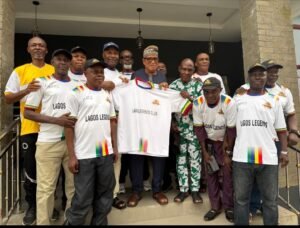
Some managed people and institutions. Some worked inside universities, built businesses, developed young players and moved into professional football operations at home and abroad.
Their careers did not follow one path.
That is precisely the point.
Football did not define the limit of their capacity. It was only one chapter of their lives.
Different journeys. Different professions. Different personalities.
One unmistakable lesson:
𝐓𝐡𝐞 𝐛𝐨𝐨𝐭𝐬 𝐜𝐚𝐦𝐞 𝐨𝐟𝐟. 𝐓𝐡𝐞 𝐝𝐞𝐯𝐞𝐥𝐨𝐩𝐦𝐞𝐧𝐭 𝐝𝐢𝐝 𝐧𝐨𝐭 𝐬𝐭𝐨𝐩.
𝐓𝐇𝐄 𝐎𝐍𝐄𝐒 𝐖𝐇𝐎 𝐂𝐀𝐑𝐑𝐈𝐄𝐃 𝐓𝐇𝐄 𝐓𝐎𝐑𝐂𝐇
For decades, Nigerians have rightly pointed with pride to men like Segun Odegbami, Adokiye Amiesimaka and Dr. Felix Owolabi.
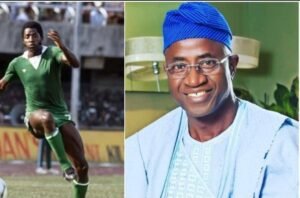
They carried the torch publicly, and they carried it consistently.
For 30, 40 and, in some cases, nearly 50 years, they remained visible examples of what a footballer could become after the final whistle — educated, accomplished, articulate, involved and willing to serve.
They helped give former footballers credibility in rooms where many of us were not yet present and helped keep the door open for the generations that followed.
For that, they deserve our gratitude.
𝐖𝐞 𝐚𝐫𝐞 𝐬𝐭𝐚𝐧𝐝𝐢𝐧𝐠 𝐨𝐧 𝐠𝐫𝐨𝐮𝐧𝐝 𝐭𝐡𝐞𝐲 𝐡𝐞𝐥𝐩𝐞𝐝 𝐩𝐫𝐞𝐩𝐚𝐫𝐞.
The torch was never extinguished.
They carried it in public. Now the light is revealing how many others were carrying it too.
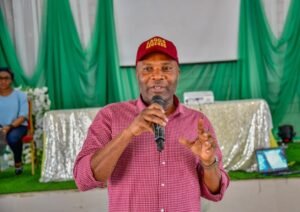
𝐓𝐇𝐄 𝐎𝐍𝐄𝐒 𝐖𝐄 𝐃𝐈𝐃 𝐍𝐎𝐓 𝐒𝐄𝐄
Beyond the public spotlight, another generation was also building.
Across America and elsewhere, former Nigerian footballers were earning degrees, building businesses and becoming engineers, academics, executives, coaches and professionals.
They simply kept building.
They were not absent.
𝐓𝐡𝐞𝐲 𝐰𝐞𝐫𝐞 𝐝𝐞𝐯𝐞𝐥𝐨𝐩𝐢𝐧𝐠 𝐪𝐮𝐢𝐞𝐭𝐥𝐲.
This is a growing list, not a closed club.
𝐓𝐇𝐈𝐒 𝐈𝐒 𝐍𝐎𝐓 𝐀𝐁𝐎𝐔𝐓 𝐌𝐄
Some people have suggested that my own name should appear in the photograph. I appreciate that, but I deliberately left myself out.
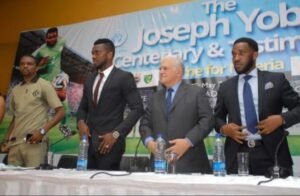
Others can examine my record and decide what I may contribute. I should not be the person appointing myself.
My role is simpler: research the names, identify overlooked people, document what can be documented and bring credible records into the conversation.
Sometimes useful work begins simply because someone sees a need and decides to do something about it.
𝐍𝐨 𝐢𝐧𝐬𝐭𝐫𝐮𝐜𝐭𝐢𝐨𝐧. 𝐍𝐨 𝐜𝐨𝐦𝐦𝐢𝐭𝐭𝐞𝐞. 𝐍𝐨 𝐭𝐢𝐭𝐥𝐞 𝐫𝐞𝐪𝐮𝐢𝐫𝐞𝐝.
𝐖𝐇𝐘 𝐖𝐑𝐈𝐓𝐈𝐍𝐆 𝐌𝐀𝐓𝐓𝐄𝐑𝐒
I am not a journalist by academic training; my degree is in Finance. I learned writing through reading, research and practice, giving me another way to document and preserve our history.
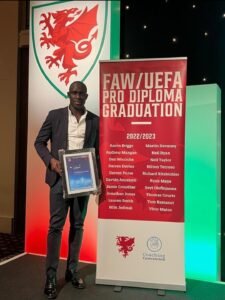
It also gave me a way to ask questions, examine records and contribute with evidence rather than noise.
𝐒𝐓𝐄𝐖𝐀𝐑𝐃𝐒𝐇𝐈𝐏 𝐈𝐒 𝐍𝐎𝐓 𝐎𝐏𝐓𝐈𝐎𝐍𝐀𝐋
Football administration is not merely about formations, team selection or hiring coaches.
It is management.
People.
Budgets.
Negotiation.
Governance.
Accountability.
And ultimately, stewardship.
That word matters because Nigerian football has lived through repeated controversies over how money intended for the game has been managed.
In 2018, three NFF finance officials were arraigned over the alleged misappropriation of $9.5 million in FIFA and CAF grants intended for football development. They pleaded not guilty. In a related proceeding, a court later refused an attempt to add then-NFF President Amaju Pinnick and General Secretary Mohammed Sanusi to that case, noting that they had previously been discharged in another matter.
Then, in August 2026, the NFF acknowledged that the EFCC and ICPC were investigating the utilisation of a ₦12 billion Federal Government intervention fund connected to outstanding player wages, bonuses and other national-team obligations.
These are not small numbers.
And they are not abstract numbers.
FIFA development money is intended to build football.
FIFA’s own Forward Programme describes its mission in terms of infrastructure, operations, equipment, travel, grassroots development and player development.
That is why financial stewardship reaches far beyond an accounting ledger.
When development money does not produce development, the consequences are felt on the field.
They are felt in grassroots football.
They are felt in player development.
They are felt in facilities and infrastructure.
They are felt in unpaid obligations.
They are felt in the trust Nigerians place in the institution.
The NFF says FIFA and CAF funds are purpose-specific and subject to auditing, compliance and monitoring.
That is precisely why transparency matters.
If the money is tied to a purpose, the public should be able to understand whether that purpose was achieved.
And this is where the conversation about leadership becomes larger than former players.

I am not arguing that every ex-international should be handed an office.
I am arguing for competent people.
People who have managed businesses.
People who have managed projects.
People who understand budgets.
People who have been accountable to boards, institutions, clients, employees and communities.
Some of those people happen to be former internationals.
Others may not be.
The standard should be the same:
Competence. Integrity. Stewardship. Accountability. Football knowledge where relevant.
President Bola Tinubu’s 2026 football reform directive created an opening for a broader discussion about governance, representation and accountability in Nigerian football.
That opening should be used to widen the leadership pool, not narrow it.
For too long, former internationals have often been seen mainly through the lens of what they did on the pitch.
Now their professional records are coming into view.
Engineers. Lawyers. Executives. Academics. Coaches. Administrators. Business owners. Project professionals.
People who have spent decades managing responsibility away from the stadium.
That should at least earn them a fair look.
Not preferential treatment.
Not automatic appointment.
A fair look.
Because when a system has faced recurring questions over stewardship, the answer should not be to keep drawing leadership from the same narrow circle.
The answer should be to widen the search.
And let the records speak.
𝐋𝐄𝐓 𝐓𝐇𝐄 𝐑𝐄́𝐒𝐔𝐌𝐄́𝐒 𝐒𝐏𝐄𝐀𝐊
I am not arguing that someone deserves a football-management position merely because he once played for Nigeria.
Some former players will qualify.
Some will not.
The same standard should apply to everyone else.
Examine education.
Examine management experience.
Examine leadership.
Examine integrity.
Examine financial stewardship.
Examine what people have built, what responsibilities they have carried and how they have treated the people and resources entrusted to them.
Then examine football knowledge.
When professional qualifications are comparable, genuine football knowledge should count as an additional asset.
Not because former players are automatically better.
But because someone who already meets the professional standard and also understands the game from the inside brings an additional body of knowledge to the table.
Football experience should never replace competence.
But neither should competence become invisible because the person once wore football boots.
These men played football.
Then they built lives.
They became professionals. Leaders. Educators. Engineers. Lawyers. Coaches. Executives. Pastors. Mentors. Community builders.
Some managed businesses.
Some managed institutions.
Some managed people.
Some managed budgets and projects.
Their playing careers ended.
𝐓𝐡𝐞𝐢𝐫 𝐝𝐞𝐯𝐞𝐥𝐨𝐩𝐦𝐞𝐧𝐭 𝐝𝐢𝐝 𝐧𝐨𝐭.
This is not a declaration that we know everything or that former players alone can solve Nigerian football’s problems.
It is simply a reminder that among them are men with education, professional experience, institutional knowledge, management responsibility and a willingness to serve.
𝐓𝐡𝐞𝐢𝐫 𝐫𝐞𝐜𝐨𝐫𝐝𝐬 𝐝𝐞𝐬𝐞𝐫𝐯𝐞 𝐭𝐨 𝐛𝐞 𝐜𝐨𝐧𝐬𝐢𝐝𝐞𝐫𝐞𝐝 𝐚𝐥𝐨𝐧𝐠𝐬𝐢𝐝𝐞 𝐞𝐯𝐞𝐫𝐲𝐨𝐧𝐞 𝐞𝐥𝐬𝐞’𝐬.
Perhaps Nigerian football is finally ready to look again.
𝐅𝐨𝐨𝐭𝐛𝐚𝐥𝐥𝐞𝐫𝐬 𝐡𝐚𝐯𝐞 𝐛𝐫𝐚𝐢𝐧𝐬 𝐭𝐨𝐨.
And we are only beginning to discover how many.
𝐏𝐚𝐮𝐥 𝐋𝐮𝐜𝐤𝐲 𝐎𝐤𝐨𝐤𝐮
FIFA Legend | Former Nigeria Flying Eagles Vice-Captain | Former Super Eagles International | AFCON Silver Medalist | Football Historian | Football Analyst | Investigative Football Writer | Journalist-at-Large | Founder & CEO, Greater Tomorrow Children’s Fund (GTCF)
For feedback, comments, corrections, or documented contributions, please write to: PaulOkokuMediaHub@gmail.com
Feedback, comments, corrections, or documented contributions submitted in response to these public posts may be quoted or shared in future follow-up articles or discussions.