
Opinion
Technical Glitch Yesterday, Register Questions Today: Can INEC Close the Trust Gap Before 2027 Election?

By Kenneth Eze,
An Election Observer and Lead Director Speak Out Africa Initiative.
Abuja – Nigeria’s Independent National Electoral Commission (INEC) is approaching the 2027 general elections under a cloud of renewed public suspicion. The controversy surrounding suspected artificial intelligence (AI)-generated photographs, duplicate voter records, questions about the accessibility and integrity of the preliminary Register of Voters, and disputes over the omission of political candidates has revived an uncomfortable question: has the commission done enough to restore public confidence since the disputed management of the 2023 presidential election?

The recent voter register controversy is particularly troubling because it concerns the foundation of credible elections: knowing who is registered to vote, ensuring that every eligible citizen is properly documented, and preventing fraudulent entries from compromising the process. On October 26, 2026, INEC reluctantly published its preliminary register online after the public outcry. Nigerians examining the records subsequently raised concerns about suspicious photographs, duplicate entries and questionable registration details. INEC acknowledged the irregularities and said some registration officers had allegedly introduced questionable records using their official login credentials. Its ICT director also disclosed that automated biometric screening had flagged 268 records for review.

This admission raises a fundamental accountability question. If officers could introduce questionable photographs and records into a national electoral database, what safeguards failed, who supervised those responsible, and what consequences will follow? Identifying irregularities is necessary, but it is not sufficient. Nigerians deserve a transparent investigation, documented corrective action and appropriate disciplinary or legal proceedings where evidence establishes wrongdoing.

The controversy is intensified by the apparent contradiction between INEC’s earlier explanations of its biometric registration process and photographs now being questioned in the published register. The commission must clarify how these images entered its system, whether they were generated, manipulated or merely poorly captured, and whether the affected records represent genuine citizens. The commission should not expect citizens to dismiss evidence that warrants independent verification.

In the latest, the alleged creation of 453 additional polling units without adequate public disclosure has introduced another troubling dimension. Reports published on November 3 and 4 claim that Nigeria’s polling unit total increased from 176,846 to 177,299, with Delta State reportedly gaining 453 units. As of November 4, INEC had not publicly addressed the specific allegation. The commission must publish the relevant records, locations, authorisation documents and consultation history rather than allow unanswered questions to fuel speculation about electoral manipulation.
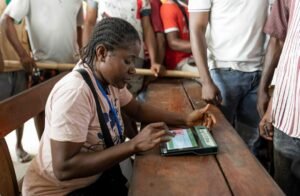
Equally concerning is the difficulty some Nigerians living abroad have reportedly experienced accessing the preliminary register online. Although INEC eventually yielded to public pressure and uploaded the register on October 26, accessibility complaints remain. Citizens abroad retain constitutional rights, including the right to seek information through lawful means and to participate in public affairs subject to applicable electoral laws. INEC should explain the restrictions, provide accessible alternatives and ensure that administrative barriers do not prevent eligible citizens from checking their records.
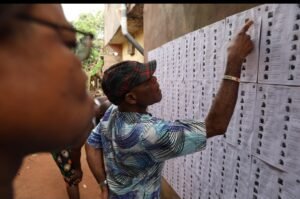
The timing of publication also deserves scrutiny. Following concerns about the statutory timetable and demands for broader access, INEC published the preliminary register online after its controversial physical display. However, publication of a preliminary register is not equivalent to certification of an accurate final register. It must demonstrate that verification, claims and objections are completed lawfully, with sufficient time for corrections before the commission scheduled certification for December 15, 2026 toward January 16, 2027 presidential and National Assembly elections.

Candidate omissions have compounded these credibility concerns. INEC’s review of petitions has resulted in changes to candidate lists, including the exclusion of prominent candidates following disputes over party membership registers, nominations and compliance with electoral law. The commission maintains that its decisions follow legal requirements, including relevant court judgments. Nevertheless, affected candidates and parties deserve clear explanations, consistent standards and accessible remedies. Strict enforcement must not become selective enforcement, while political pressure must not override statutory requirements.
These controversies inevitably revive memories of 2023, when INEC’s Result Viewing Portal failed to upload presidential polling-unit results as expected, even though National Assembly results were uploaded successfully. INEC subsequently attributed the presidential upload failure to a system configuration problem and explained that the problem affected the mapping of presidential results to polling units. That explanation did not eliminate public suspicion, particularly given delayed uploads, inconsistent communication and doubts about transparency. The absence of the same reported technical problem for National Assembly results intensified questions and creates alleged deliberate interference suspicion.
Other recurring concerns include vote buying, electoral violence, intimidation of opposition supporters, logistical failures, compromised officials, result discrepancies and the limited accountability that follows credible allegations of misconduct. The emerging voter register controversy adds another test: will officials implicated by verified evidence face appropriate disciplinary or criminal proceedings under applicable law, or will investigations end with promises of corrective action?
If these questions remain unresolved, the consequences for 2027 could be serious. Citizens may lose confidence in the register, disengage from voting, reject declared outcomes or resort to prolonged litigation. Political actors may interpret institutional silence as permission to challenge electoral decisions outside lawful channels. Most dangerously, unresolved suspicions could deepen polarisation and undermine the legitimacy of whoever emerges victorious.
INEC still has an opportunity to reverse this trajectory. It must publish a comprehensive audit of questionable voter records, explain the polling-unit allegations, guarantee accessible register inspection, disclose the reasons for candidate exclusions case-by-case, and demonstrate impartial enforcement. Independent observers, political parties, civil society organisations and citizens should monitor these corrective measures closely.
The central issue is no longer whether INEC can explain another technical glitch. It is whether the commission can demonstrate that its systems, officials and decisions are subject to transparent, verifiable accountability. Nigerians do not need assurances alone; they need evidence. Before 2027, INEC must close the trust gap through openness, fairness and enforceable consequences for wrongdoing. Otherwise, the next election could inherit a crisis of confidence more damaging than any technical failure.