
Opinion
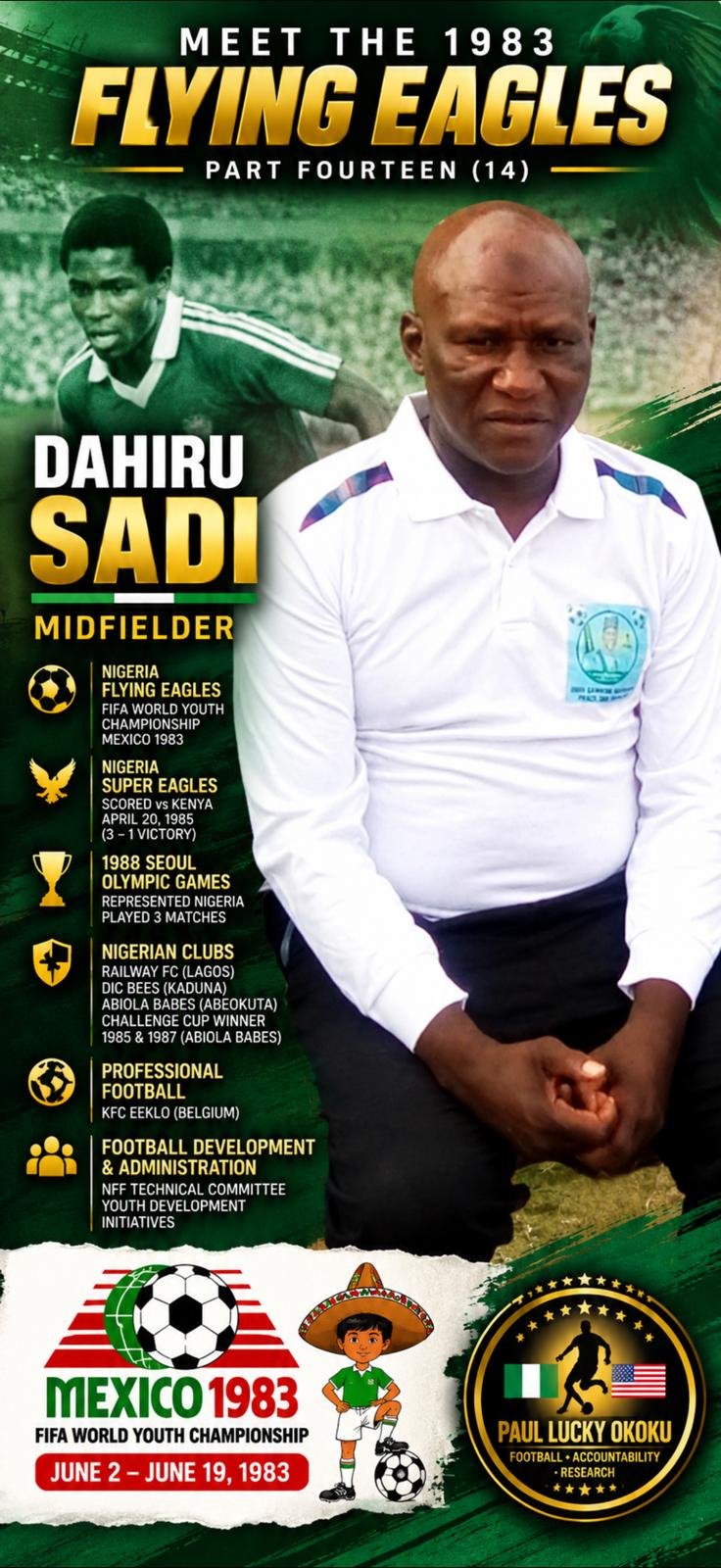
Meet The 1983 Flying Eagles: Part 14 — Meet Dahiru Sadi

𝗕𝘆 𝗣𝗮𝘂𝗹 𝗟𝘂𝗰𝗸𝘆 𝗢𝗸𝗼𝗸𝘂
𝗙𝗥𝗢𝗠 𝗠𝗘𝗫𝗜𝗖𝗢 ‘𝟴𝟯 𝗧𝗢 𝗧𝗛𝗘 𝟭𝟵𝟴𝟴 𝗦𝗘𝗢𝗨𝗟 𝗢𝗟𝗬𝗠𝗣𝗜𝗖𝗦: 𝗔 𝗠𝗜𝗗𝗙𝗜𝗘𝗟𝗗𝗘𝗥’𝗦 𝗥𝗘𝗠𝗔𝗥𝗞𝗔𝗕𝗟𝗘 𝗝𝗢𝗨𝗥𝗡𝗘𝗬
Some football careers are defined by one memorable tournament. Others unfold across several important chapters of a nation’s sporting history.
Dahiru Sadi’s journey belongs to the second category.
He was part of our historic 1983 Flying Eagles generation, which secured Nigeria’s first qualification for a FIFA World Cup tournament at any level.
But his football journey continued.
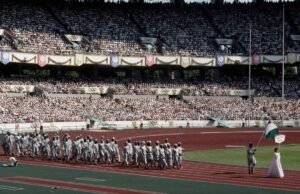
Five years after Mexico, Dahiru represented Nigeria at the 1988 Olympic Games in Seoul, South Korea.
Between those two international milestones, he played for respected Nigerian clubs, scored for the senior national team in a World Cup qualifier and established himself in a competitive generation of Nigerian midfielders.
His story deserves to be remembered.
𝗙𝗥𝗢𝗠 𝗭𝗔𝗥𝗜𝗔 𝗧𝗢 𝗟𝗔𝗚𝗢𝗦 𝗔𝗡𝗗 𝗧𝗛𝗘 𝗡𝗔𝗧𝗜𝗢𝗡𝗔𝗟 𝗧𝗘𝗔𝗠
Dahiru was born in Zaria, in present-day Kaduna State, on December 10, 1963.
He developed into a talented footballer capable of operating in midfield and contributing to attacking play.
In the early 1980s, his football journey brought him to Railway Football Club in Lagos.
Those were years when Nigerian football was fiercely competitive, with talented young players emerging from school competitions, state teams, railway clubs, financial institutions and other established football organizations.
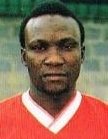
A young footballer needed more than ambition to earn recognition.
He needed ability, commitment and consistency.
Dahiru possessed the qualities that eventually brought him into our national youth team.
𝗧𝗛𝗘 𝟭𝟵𝟴𝟯 𝗙𝗟𝗬𝗜𝗡𝗚 𝗘𝗔𝗚𝗟𝗘𝗦: 𝗢𝗨𝗥 𝗛𝗜𝗦𝗧𝗢𝗥𝗜𝗖 𝗚𝗘𝗡𝗘𝗥𝗔𝗧𝗜𝗢𝗡
Under our late coach, Christopher Udemezue, Dahiru joined a group of young footballers determined to make history.
Our ambition was straightforward: qualify Nigeria for the FIFA World Youth Championship in Mexico.
On January 8, 1983, Nigeria defeated Guinea 2–0 in Lagos to secure qualification.
We became the first Nigerian team to qualify for a FIFA World Cup tournament at any level.
That achievement brought together young footballers from different parts of the country.
We came from different communities, spoke different languages and had developed our abilities in different football environments.
Yet when we wore Nigeria’s colours, we represented one nation.
Dahiru was part of that historic team.
Our participation in Mexico, from June 2 to June 19, 1983, introduced our generation to international competition against some of the world’s most promising young footballers.
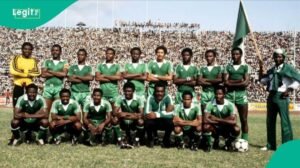
It also opened doors for several of us to progress into senior international football.
Dahiru was among those who continued that journey.
𝗔𝗕𝗜𝗢𝗟𝗔 𝗕𝗔𝗕𝗘𝗦 𝗔𝗡𝗗 𝗧𝗛𝗘 𝗚𝗢𝗟𝗗𝗘𝗡 𝗘𝗥𝗔 𝗢𝗙 𝗡𝗜𝗚𝗘𝗥𝗜𝗔𝗡 𝗖𝗟𝗨𝗕 𝗙𝗢𝗢𝗧𝗕𝗔𝗟𝗟
Following his early playing years, Dahiru continued his domestic career with DIC Bees of Kaduna, later associated with the Ranchers Bees name, and Abiola Babes of Abeokuta.
Abiola Babes became one of Nigeria’s formidable football clubs during the 1980s.
The team attracted outstanding players and competed successfully in national competitions.
Dahiru was part of the Abiola Babes era that produced victories in the Nigerian Challenge Cup in 1985 and 1987.
Those triumphs were significant.
The Challenge Cup carried enormous prestige, bringing together clubs from across Nigeria in pursuit of one of the country’s most cherished football trophies.
For Dahiru, those achievements added important domestic honours to his international experience.
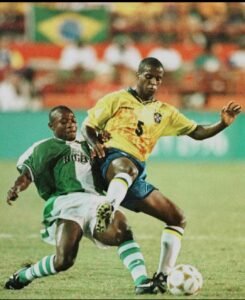
He was also entrusted with leadership responsibilities, including serving as captain of Abiola Babes.
That recognition reflected the confidence placed in him by those who worked alongside him.
𝗔 𝗚𝗢𝗔𝗟 𝗙𝗢𝗥 𝗡𝗜𝗚𝗘𝗥𝗜𝗔 𝗔𝗚𝗔𝗜𝗡𝗦𝗧 𝗞𝗘𝗡𝗬𝗔
On April 20, 1985, Nigeria faced Kenya in Lagos during qualification for the 1986 FIFA World Cup.
Dahiru scored in Nigeria’s 3–1 victory.
It was an important individual contribution in a competitive international qualifying campaign.
For a footballer who had represented Nigeria at youth level only two years earlier, scoring for the senior national team provided another meaningful milestone.
His involvement continued through Nigeria’s World Cup qualifying campaigns, demonstrating his place within the national-team setup.
𝗦𝗘𝗢𝗨𝗟 𝟭𝟵𝟴𝟴: 𝗔𝗡 𝗢𝗟𝗬𝗠𝗣𝗜𝗖 𝗗𝗥𝗘𝗔𝗠 𝗥𝗘𝗔𝗟𝗜𝗭𝗘𝗗
One of the most distinguished chapters of Dahiru’s football career came in 1988.
He was selected to represent Nigeria at the Summer Olympic Games in Seoul, South Korea.
The Olympic football tournament brought Nigeria into competition with Brazil, Yugoslavia and Australia.
Dahiru featured in all three matches.
Although Nigeria did not progress beyond the group stage, participation in the Olympic Games was an important achievement.
Only a small proportion of footballers have the opportunity to represent their countries at the Olympics.
For Dahiru, it meant that his international career had extended from the historic Flying Eagles of 1983 to another major global sporting competition five years later.
𝗙𝗥𝗢𝗠 𝗡𝗜𝗚𝗘𝗥𝗜𝗔 𝗧𝗢 𝗕𝗘𝗟𝗚𝗜𝗨𝗠
Dahiru also experienced professional football outside Nigeria.
He played for KFC Eeklo in Belgium, where historical club records place him across several seasons from the late 1980s into the early 1990s.
He was part of the generation that pursued opportunities abroad before international transfers became as common for Nigerian footballers as they are today.
Competing overseas brought new demands, including adapting to different playing conditions, professional expectations and football cultures.
Those experiences added another dimension to his career.
𝗕𝗘𝗬𝗢𝗡𝗗 𝗛𝗜𝗦 𝗣𝗟𝗔𝗬𝗜𝗡𝗚 𝗗𝗔𝗬𝗦
Dahiru’s involvement in Nigerian football continued after his playing career.
He served on the Nigeria Football Federation’s Technical Committee, participating in discussions concerning national-team coaching and football development.
He has also spoken publicly about the importance of grassroots football, proper youth development and preserving the competitiveness of Nigeria’s domestic league.
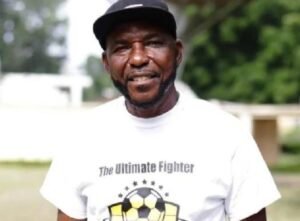
In 2023, he was appointed to the technical committee of the Governor Uba Sani Unity Cup in Kaduna State, an initiative connected with identifying and developing talented young footballers.
These responsibilities show that his contribution to the game did not end with his final appearance as a player.
His experience as a youth international, senior international, Olympian and professional footballer gave him perspectives worth sharing with another generation.
𝗗𝗔𝗛𝗜𝗥𝗨 𝗦𝗔𝗗𝗜: 𝗔 𝗟𝗘𝗚𝗔𝗖𝗬 𝗔𝗖𝗥𝗢𝗦𝗦 𝗚𝗘𝗡𝗘𝗥𝗔𝗧𝗜𝗢𝗡𝗦
When we look back at the history of our 1983 Flying Eagles, it is important to remember that Mexico represented the beginning of many remarkable individual journeys.
Dahiru’s achievements included:
• Representing Nigeria at the historic 1983 FIFA World Youth Championship in Mexico.
• Progressing into the senior national team and scoring against Kenya in 1985.
• Winning the Nigerian Challenge Cup with Abiola Babes in 1985 and 1987.
• Representing Nigeria at the 1988 Summer Olympics in Seoul.
• Playing professional football for KFC Eeklo in Belgium.
• Contributing to football administration and youth development after his playing career.
These achievements deserve recognition as part of Nigerian football history.
Dahiru, we shared a historic experience in 1983, when our generation achieved something Nigeria had never accomplished before.
Your football journey continued through important domestic and international competitions, including the Olympic Games.
Your subsequent involvement in Nigerian football development reflects another valuable aspect of your contribution.
𝗙𝗿𝗼𝗺 𝗭𝗮𝗿𝗶𝗮 𝘁𝗼 𝗟𝗮𝗴𝗼𝘀, 𝗳𝗿𝗼𝗺 𝗠𝗲𝘅𝗶𝗰𝗼 𝘁𝗼 𝗦𝗲𝗼𝘂𝗹, 𝗮𝗻𝗱 𝗳𝗿𝗼𝗺 𝗡𝗶𝗴𝗲𝗿𝗶𝗮𝗻 𝗰𝗹𝘂𝗯 𝗳𝗼𝗼𝘁𝗯𝗮𝗹𝗹 𝘁𝗼 𝗕𝗲𝗹𝗴𝗶𝘂𝗺, 𝘆𝗼𝘂𝗿 𝗰𝗮𝗿𝗲𝗲𝗿 𝗰𝗮𝗿𝗿𝗶𝗲𝗱 𝘁𝗵𝗲 𝗽𝗿𝗶𝗱𝗲 𝗼𝗳 𝗼𝘂𝗿 𝗴𝗲𝗻𝗲𝗿𝗮𝘁𝗶𝗼𝗻.
And your place in our historic 1983 Flying Eagles story remains secure.
𝗣𝗮𝘂𝗹 𝗟𝘂𝗰𝗸𝘆 𝗢𝗸𝗼𝗸𝘂
FIFA Legend | Former Nigeria Flying Eagles Vice-Captain | Former Super Eagles International | AFCON Silver Medalist | Football Historian | Football Analyst | Investigative Football Writer | Journalist-at-Large | Founder & CEO, Greater Tomorrow Children’s Fund (GTCF)
𝗙𝗼𝗿 𝗳𝗲𝗲𝗱𝗯𝗮𝗰𝗸 𝗮𝗻𝗱 𝗰𝗼𝗺𝗺𝗲𝗻𝘁𝘀:
PaulOkokuMediaHub@gmail.com
𝗣𝗹𝗲𝗮𝘀𝗲 𝗳𝗲𝗲𝗹 𝗳𝗿𝗲𝗲 𝘁𝗼 𝘀𝗵𝗮𝗿𝗲 𝘁𝗵𝗶𝘀 𝗮𝗿𝘁𝗶𝗰𝗹𝗲. 𝗪𝗲 𝗮𝗿𝗲 𝗮𝗹𝗹 𝗶𝗻 𝘁𝗵𝗶𝘀 𝘁𝗼𝗴𝗲𝘁𝗵𝗲𝗿.