
Opinion
INEC Violation of 2027 Voters’ Register and The Question of Double Standard.

By Kenneth Eze,
an Election Observer.
…Is the 2027 Elections Credibility Threatened?
Abuja, Nigeria – There is a question the Independent National Electoral Commission (INEC) can no longer afford to dodge: Why has the Commission not made the 2027 Register of Voters publicly accessible online as enshrined in the Electoral Act 2026? This is not a minor administrative disagreement. It is a question about the credibility of the institution entrusted with conducting Nigeria’s elections.
INEC has demonstrated, quite rightly, that it expects political parties and candidates to obey the Electoral Act. In recent weeks, the Commission has sanctioned erring political parties and candidates for failing to meet statutory requirements relating to the submission of party registers within the 21 days stipulated timeframe before party’s primaries and congresses. Some had their names missing as a consequence.
Fair enough. But the same principle must apply to INEC itself. An electoral umpire cannot demand strict compliance from political actors while appearing to treat its own statutory obligations as optional.
The ancient principle that he who comes to equity must come with clean hands is particularly relevant here.
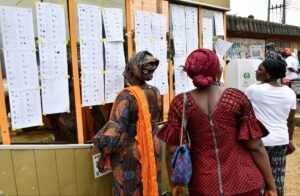
Section 19(1) of the Electoral Act 2026 provides that, not later than 90 days before a general election, INEC shall designate seven days during which the voters’ register for each Local Government, Area Council or Ward is displayed for public scrutiny at every Registration Area and published same on the Commission’s official website or another website established by it. The following subsection provides an opportunity for citizens to raise objections concerning omissions, inclusions and errors.

The logic is simple: show Nigerians the register, let them inspect it, let them identify errors, let them challenge questionable entries, and let INEC correct them before Election Day.
Yet, despite INEC’s claim that the physical display exercise took place between 9 and 15 October 2026 which is also surrounded in contention, its online Preliminary Register portal has reportedly continued to indicate that there are no preliminary registers available for display. That should concern every Nigerian who cares about credible elections.
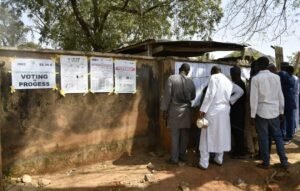
INEC’s reported position, as communicated by its spokesperson, is that the physical display was conducted and that the Commission is currently cleaning the register for another publication exercise expected later in the year.
But that response raises a more fundamental question: Where does the law permit INEC to substitute one statutory requirement for another?
If Section 19 requires public display and online website publication, then the Commission should explain clearly how it has complied with both obligations.
Physical inspection and online publication serve different purposes. A physical display at Registration Areas may assist citizens who live close to those locations. But Nigeria is a country of enormous population movement. People relocate for employment, education, business, marriage, security and other reasons. Many registered voters may not be living where they originally registered. Others may be travelling or residing temporarily outside their registration areas.
Online publication would provide an additional and powerful mechanism through which citizens can verify their details before Election Day.
That is precisely why the apparent reluctance to publish the register online is troubling.
The Commission has reportedly put the national register at approximately 103 million voters. That is an extraordinary number of electoral records.
With a register of that magnitude, errors are possible. Names can be omitted. Personal details can be misspelled. Polling units can be wrongly assigned. Gender or other identifying information can be inconsistent. Transfers may not be properly reflected. Duplicate or questionable registrations may require scrutiny.
The whole purpose of public inspection is to catch these problems before millions of Nigerians arrive at polling units.
Imagine a citizen discovering on Election Day that his or her name has been wrongly entered, transferred to another polling unit or omitted from the relevant register. By then, the opportunity for meaningful correction may have disappeared.
That is not a theoretical concern. It is precisely why electoral laws provide mechanisms for public scrutiny before elections.
There is another troubling dimension. The October exercise was publicly associated, to a significant extent, with PVC collection. Many Nigerians heard more about collecting their PVCs than about their statutory opportunity to inspect the voters’ register. These are not the same thing.
PVC collection is about obtaining the physical means of voting. Register display is about verifying the integrity of the electoral roll itself . One cannot simply be allowed to swallow the other.
A media investigation had also raised questions about how the register was displayed in parts of Lagos, reporting that in two Local Government Areas it encountered circumstances in which individuals were required to provide their names for officials to search rather than having an openly accessible register available for public inspection. Although INEC Lagos rejected the report and maintained that the register was displayed across the relevant Registration Areas. If INEC’s position is correct, there should be nothing difficult about demonstrating it.

The contradiction becomes even more striking when considered against INEC’s own public messaging.
The Commission has assured Nigerians that it is preparing for a credible 2027 election and has spoken about deploying sophisticated technologies, including artificial intelligence, to strengthen electoral processes.
But how do we reconcile an electoral commission preparing to deploy advanced artificial intelligence with an apparent difficulty in providing Nigerians with online access to a basic electoral document?
How can INEC expect Nigerians to trust complex technological systems when it is unwilling—or unable—to make the most fundamental underlying electoral data available for lawful public scrutiny?
Technology does not replace transparency. Technology must serve transparency.
And this is where INEC must be especially careful.
The Commission is still working to rebuild the confidence that was damaged by controversies surrounding the 2023 elections. The European Union Election Observation Mission identified significant shortcomings in electoral administration and transparency following those elections and noted their effect on public trust.
Nigeria cannot afford to repeat the same mistakes in 2027. Every avoidable controversy creates another crack in public confidence.
The voters’ register belongs, in a democratic sense, to the electoral process and ultimately to the Nigerian people. INEC is its custodian—not its owner.
The Commission should therefore stop treating legitimate questions about transparency as attacks on its authority. If the register has been properly compiled, publish it. If there are errors, let Nigerians identify them.
If INEC has complied with Section 19, show Nigerians the evidence.
If the Commission needs additional time to clean the register, explain the legal basis, the timeline and the safeguards being applied.
What Nigerians should not be asked to do is simply trust and wait.
As an election observer, I believe the greatest danger to the 2027 elections may not necessarily come from technology, political parties or even election-day violence. It may come from the gradual erosion of public confidence before Nigerians ever cast their ballots.
An election whose processes cannot be independently scrutinized will always struggle to command confidence in its outcome.
INEC cannot demand that political parties obey the law while appearing to treat statutory transparency obligations as matters of administrative convenience.
The Commission must be held to the same standard it imposes on everyone else.
The 2027 election is too important for Nigeria to enter it under a cloud of unanswered questions.
The issue is therefore simple: Where is the register? Why can Nigerians not see it online?
And if there is nothing to hide, why should INEC be reluctant to let Nigerians look?
The credibility of the 2027 elections is being built now—not on Election Day.
INEC must obey the law it enforces. Nigerians deserve nothing less.
_You can reach me via engrchukeze2014@gmail.com_