
Opinion
Meet The 1983 Flying Eagles: Part 2 — Meet Paul Lucky Okoku

𝐁𝐲 𝐏𝐚𝐮𝐥 𝐋𝐮𝐜𝐤𝐲 𝐎𝐤𝐨𝐤𝐮
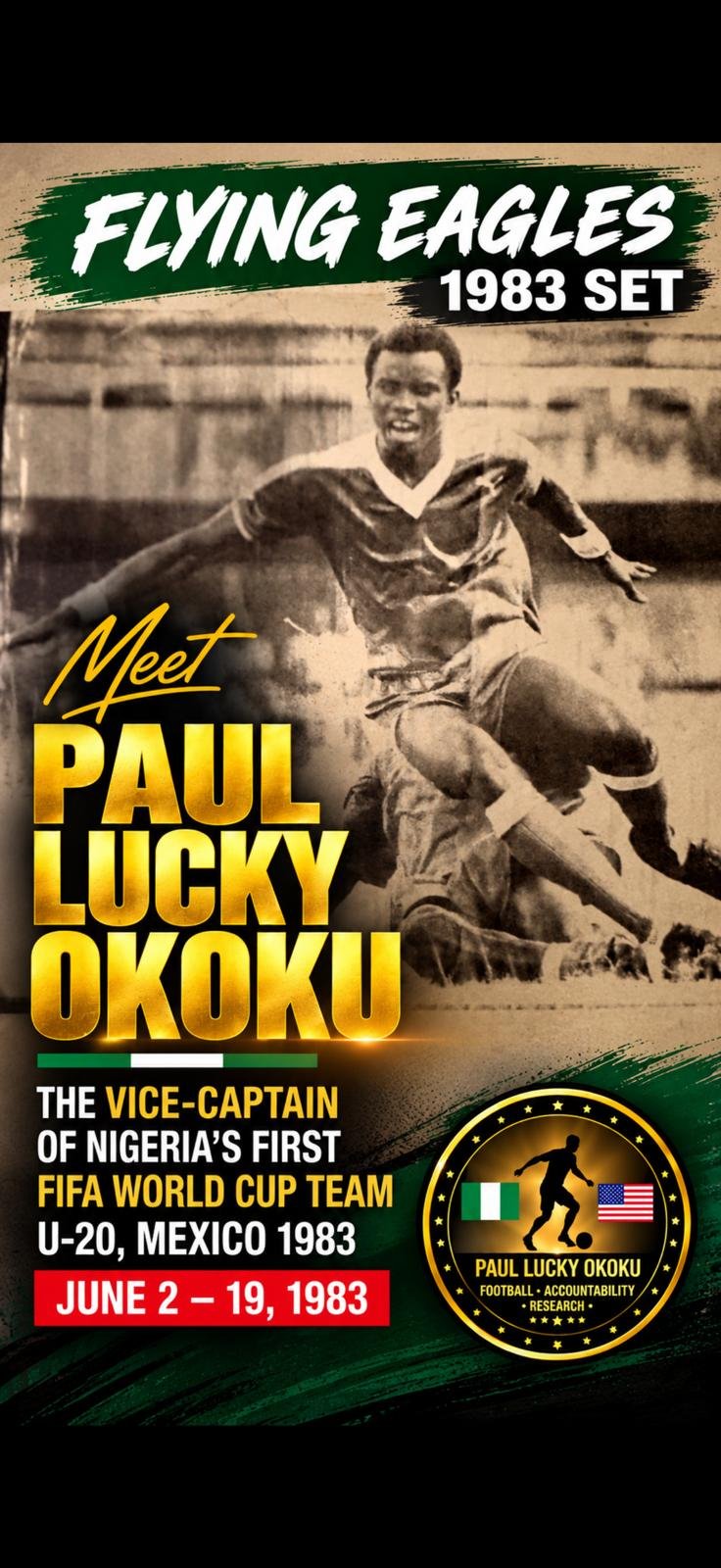
𝐓𝐇𝐄 𝐕𝐈𝐂𝐄-𝐂𝐀𝐏𝐓𝐀𝐈𝐍 𝐎𝐅 𝐍𝐈𝐆𝐄𝐑𝐈𝐀’𝐒 𝐅𝐈𝐑𝐒𝐓 𝐅𝐈𝐅𝐀 𝐖𝐎𝐑𝐋𝐃 𝐂𝐔𝐏 𝐓𝐄𝐀𝐌 — 𝐔-𝟐𝟎, 𝐌𝐄𝐗𝐈𝐂𝐎 𝟏𝟗𝟖𝟑
In the history of Nigerian football, some journeys begin in famous stadiums. For Paul Lucky Okoku, the journey began on the streets of Lagos, where a small rubber ball and a childhood ambition would eventually open doors far beyond Nigeria.
In 1983, Okoku served as vice-captain of the Flying Eagles, alongside the late captain Ali Jeje. Together with their teammates and coaches, they became the first Nigerian national football team, at any level, to participate in a FIFA World Cup tournament.
𝐄𝐀𝐑𝐋𝐘 𝐋𝐈𝐅𝐄 𝐀𝐍𝐃 𝐄𝐃𝐔𝐂𝐀𝐓𝐈𝐎𝐍
Okoku attended St. Paul’s Primary School, Apapa Road, Lagos, before proceeding to Zumraltu Islamiyah Grammar School, Yaba, and subsequently St. Finbarr’s College, Akoka, Lagos, an institution renowned for its rich football tradition.
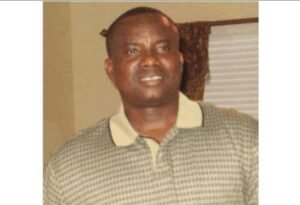
Throughout these formative years, education and competitive football played complementary roles in shaping his development. The conviction that academic achievement and sporting excellence could coexist would later influence his decision to pursue university education in the United States.
𝐅𝐎𝐎𝐓𝐁𝐀𝐋𝐋 𝐁𝐄𝐆𝐈𝐍𝐍𝐈𝐍𝐆𝐒
His earliest football experiences involved the rubber ball popularly known as felele, played on neighbourhood streets and open spaces.
Through school competitions and the Youth Sports Federation of Nigeria (YSFON), Okoku developed the discipline and competitive experience that carried him onto the international stage.
His generation celebrated victories at the 1981 Gothia Cup in Sweden and Dallas Cup in the United States.
His club career included National Bank FC, Abiola Babes and Leventis United, where he developed as a defensive midfielder, combining positional discipline with responsibility to the team.
𝐍𝐀𝐓𝐈𝐎𝐍𝐀𝐋-𝐓𝐄𝐀𝐌 𝐀𝐂𝐇𝐈𝐄𝐕𝐄𝐌𝐄𝐍𝐓𝐒
On January 8, 1983, Nigeria defeated Guinea 2–0 in Lagos, securing qualification for the FIFA World Youth Championship in Mexico.
Under Coach Christopher Udemezue, assisted by Isiaka Yakubu, the Flying Eagles prepared through demanding training sessions and intense competition for places.
The tournament, held from June 2–19, 1983, marked Nigeria’s first appearance at any FIFA World Cup level.
Okoku wore the No. 4 jersey, serving as defensive midfielder and vice-captain.
Yet another defining assignment awaited him after Mexico.
𝐓𝐇𝐄 𝐓𝐇𝐑𝐄𝐄 𝐔𝐂𝐇𝐄𝐒: 𝐓𝐇𝐄 𝐀𝐑𝐓 𝐎𝐅 𝐅𝐎𝐎𝐓𝐁𝐀𝐋𝐋𝐈𝐍𝐆 𝐃𝐄𝐂𝐄𝐏𝐓𝐈𝐎𝐍
Every football team has its characters, personalities and nicknames. Within the 1983 Flying Eagles, three players acquired one that crossed Nigeria’s languages.
Paul Lucky Okoku, Chibuzor Ehilegbu and Yisa Shofoluwe were the “Three Uches.” It began with the Igbo word Uche, associated with thought and understanding. Yoruba-speaking teammates had their own expression: Ologbon, the clever or wise one. Hausa speakers called it Hankali, invoking sense and sound judgment. In English, it was simply “Sense Man.”
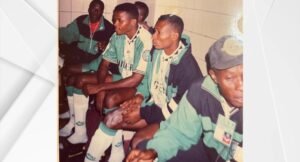
Different tongues. The same recognition: these footballers thought their way through a match.
Even their coach, Christopher Udemezue, joined in calling them Uches.
Okoku recalls one of Udemezue’s unforgettable habits. Whenever the three failed to perform to their usual standard, the coach would fold his arms, stretch his neck forward and deliver his verdict in Nigerian Pidgin:
“Uche, this one no be am!”
In other words, “Uche, this is not the football I expect from you!”
It was both a humorous rebuke and a reminder of the standard Udemezue believed they could reach. The folded arms, extended neck and unmistakable expression made the moment even more memorable.
Even when the Uches were not playing like Uches, their coach would remind them who they were supposed to be.
Uche One. Uche Two. Uche Three.
Who was which? The numbering can remain a dressing-room mystery. What mattered was the craft behind the names.
They could look one way and pass another. A shoulder feint sent a marker in the wrong direction; a disguised through ball opened a defence before its players realized the danger. Their flair was not decoration. It had purpose.
Okoku, from defensive midfield, read the game, recovered possession and turned it into an attack with a calculated pass. Ehilegbu brought imagination and composure to defending, showing that deception was not reserved for forwards.
And then there was Yisa Shofoluwe.
He had played outside right as a primary-school boy, and the attacking instincts stayed with him when he became a defender. He could run, dribble and anticipate. Often, he seemed to have worked out an opponent’s next move before the opponent made it. Then came the interception.
For the Three Uches, football was as much a contest of minds as of legs. A feint could make space where speed could not. One precisely timed pass could undo an entire defensive line.
Then came the coincidence that made the nickname part of a larger story.
When Coach Adegboye Onigbinde sought reinforcements for Nigeria’s decisive 1983 Africa Cup of Nations qualifier against Morocco, the Flying Eagles players he selected were Okoku, Ehilegbu and Shofoluwe.
The Three Uches.
Their teammates had celebrated their ingenuity. Their youth-team coach had recognized their potential and demanded that they live up to it. Now a senior national-team coach was placing his trust in the same three young men.
Before Rabat, they were the Three Uches.
In Rabat, they became Onigbinde’s Golden Boys.
The nickname belonged to their teammates.
The expectations belonged to Udemezue.
The trust belonged to Onigbinde.
The memories belong to Nigerian football history.
𝐓𝐇𝐄 𝟏𝟗𝟖𝟑 𝐌𝐎𝐑𝐎𝐂𝐂𝐎 𝐌𝐈𝐒𝐒𝐈𝐎𝐍
On August 14, 1983, Nigeria’s senior Green Eagles drew 0–0 against Morocco in Benin City during qualification for the 1984 Africa Cup of Nations.
With several senior Green Eagles players not returning to camp following Nigeria’s 0–0 draw against Morocco in Benin City on August 14, 1983, Coach Adegboye Onigbinde faced an urgent selection challenge ahead of the decisive return leg in Rabat.

He turned to the Flying Eagles, who had recently returned from the 1983 FIFA World Youth Championship in Mexico and were preparing for the West African Football Union (WAFU) Cup at Bembo Games Village, Ibadan.
By this time, the Flying Eagles were under Coach Paul Hamilton, assisted by Coach Tunde Disu, following the reassignment of Coach Christopher Udemezue and his assistant, Isiaka Yakubu, who had guided the team through the historic Mexico campaign.
Three young players received the senior national-team call:
* Paul Lucky Okoku
* Chibuzor Ehilegbu
* Yisa Shofoluwe
With only four days remaining before the match, they joined the senior delegation.
Travelling aboard the team bus assigned to the Green Eagles, they departed Bembo Games Village for Lagos, where they spent the night.
The following morning, they flew aboard Iberia, Spain’s national airline, from Lagos to Madrid, Spain. After another overnight stay, they continued to Rabat, Morocco, the next day.
They had not travelled independently to meet the senior team. From Ibadan onward, they were part of the Green Eagles delegation.
𝐓𝐇𝐄 𝐃𝐈𝐍𝐈𝐍𝐆-𝐑𝐎𝐎𝐌 𝐌𝐎𝐌𝐄𝐍𝐓
Before the match, legendary Radio Nigeria commentator Ernest Okonkwo moved through the team’s hotel dining room, familiarizing himself with the players ahead of his broadcast.
When he encountered Okoku, Ehilegbu and Shofoluwe seated together, he recognized their common football background and referred to them as “The Udemezue Boys.”
It was an acknowledgment of the youth-team coach whose work had prepared them for senior international football.
𝐑𝐀𝐁𝐀𝐓: 𝐓𝐇𝐄 𝐌𝐀𝐓𝐂𝐇 𝐀𝐍𝐃 𝐓𝐇𝐄 𝐆𝐎𝐋𝐃𝐄𝐍 𝐁𝐎𝐘𝐒
On Sunday, August 28, 1983, Nigeria held Morocco to another goalless draw in Rabat.
After extra time, the Green Eagles prevailed 4–3 on penalties, securing qualification for AFCON 1984 in Côte d’Ivoire.
Goalkeeper Peter Rufai became one of the defining figures of that dramatic shootout, remembered by Okoku as Nigeria’s hero on the day.
Following qualification, Coach Onigbinde embraced Okoku, Ehilegbu and Shofoluwe together, affectionately calling them “My Golden Boys.”
For three young footballers who had recently represented Nigeria in Mexico, the moment reflected the confidence their senior coach had placed in them.
𝐀 𝐑𝐀𝐑𝐄 𝐅𝐎𝐎𝐓𝐁𝐀𝐋𝐋 𝐅𝐄𝐀𝐓: 𝐑𝐄𝐏𝐑𝐄𝐒𝐄𝐍𝐓𝐈𝐍𝐆 𝐓𝐖𝐎 𝐍𝐀𝐓𝐈𝐎𝐍𝐀𝐋 𝐓𝐄𝐀𝐌𝐒 𝐒𝐈𝐌𝐔𝐋𝐓𝐀𝐍𝐄𝐎𝐔𝐒𝐋𝐘
The 1983 Morocco mission placed Paul Lucky Okoku, Chibuzor Ehilegbu and Yisa Shofoluwe among a rare group of Nigerian footballers who represented the Flying Eagles and senior Green Eagles simultaneously, moving between both national teams during the same period of their international careers.
Their achievement went beyond the conventional progression from youth football to the senior national team. They remained active Flying Eagles players while receiving call-ups to represent Nigeria at senior international level.
Henry Nwosu had earlier established a comparable precedent. After representing Nigeria’s victorious 1980 Africa Cup of Nations team, he subsequently returned to youth international football, including the Flying Eagles’ 1981 World Cup qualifying campaign against Cameroon.
The three 1983 players therefore joined Nwosu in a distinguished tradition of footballers whose international careers overlapped across Nigeria’s youth and senior national teams.
Following the Morocco assignment, Okoku, Ehilegbu and Shofoluwe returned to Flying Eagles duty, participating in Nigeria’s victorious 1983 West African Football Union (WAFU) tournament.
Their experience demonstrated the importance of recognizing young talent and providing opportunities at the highest level without prematurely ending their involvement in youth international football.
Three Flying Eagles.
Two national teams.
Simultaneous international responsibilities.
One remarkable chapter in Nigerian football history.
Christopher Udemezue prepared them.
Adegboye Onigbinde trusted them.
In Rabat, that trust became part of Nigerian football history.
𝐓𝐇𝐄 𝟏𝟗𝟖𝟒 𝐀𝐅𝐑𝐈𝐂𝐀 𝐂𝐔𝐏 𝐎𝐅 𝐍𝐀𝐓𝐈𝐎𝐍𝐒
In 1984, Okoku represented Nigeria’s senior national team at the Africa Cup of Nations in Côte d’Ivoire, where the Green Eagles reached the final and earned the silver medal.
For a player whose journey had begun on Lagos streets, the progression from school football to the Flying Eagles and the senior national team demonstrated how opportunity, preparation and perseverance could transform a young footballer’s life.
𝐋𝐈𝐅𝐄 𝐀𝐅𝐓𝐄𝐑 𝐅𝐎𝐎𝐓𝐁𝐀𝐋𝐋 𝐀𝐍𝐃 𝐋𝐄𝐆𝐀𝐂𝐘
At a time when many young players pursued professional football careers, Okoku chose higher education in the United States.
He attended Alabama A&M University, where he continued playing football while studying Finance, graduating Magna Cum Laude.
His decision reflected a longstanding belief that football and education should complement each other. While deeply committed to the game he loved, Okoku understood the economic principle of opportunity cost: every choice involves sacrificing an alternative, and pursuing one dream can mean foregoing opportunities elsewhere.
For him, the decision required weighing the immediate rewards and possibilities of a football career against the long-term security, education and professional opportunities he hoped to build. He was willing to sacrifice something he deeply loved, not because football had lost its value, but because he believed his future required a broader foundation.
Pursuing higher education in the United States was therefore a deliberate investment in his personal and professional future.
Football opened the door.
Education helped him walk through it.
His subsequent professional career developed across finance, business operations and corporate management.
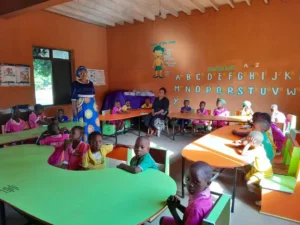
In 2014, he founded the Greater Tomorrow Children’s Fund (GTCF), supporting underserved children and communities through educational resources and humanitarian assistance.
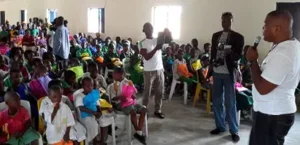
He also remains involved in documenting Nigerian football history, recognizing overlooked contributors and examining questions of football leadership and accountability.
His continuing connection with former teammates and institutions such as St. Finbarr’s College reflects the relationships that helped shape his journey.
𝐓𝐇𝐄 𝐏𝐄𝐑𝐒𝐎𝐍 𝐁𝐄𝐇𝐈𝐍𝐃 𝐓𝐇𝐄 𝐉𝐄𝐑𝐒𝐄𝐘
Beyond international appearances and medals, Okoku’s story is also about teachers who encouraged education, coaches who demanded discipline, teammates who shared responsibility and opportunities that extended beyond football.
His guiding philosophy remains:
“Football was not an end in itself. It was transportation through life’s journey.”
It is a message he hopes future generations of Nigerian footballers will understand: sporting achievement deserves celebration, but the opportunities created through sport can carry value long after the final whistle.
𝐏𝐚𝐮𝐥 𝐋𝐮𝐜𝐤𝐲 𝐎𝐤𝐨𝐤𝐮
FIFA Legend | Former Nigeria Flying Eagles Vice-Captain | Former Super Eagles International | AFCON Silver Medalist | Football Historian | Football Analyst | Investigative Football Writer | Journalist-at-Large | Founder & CEO, Greater Tomorrow Children’s Fund (GTCF)
𝐀𝐔𝐓𝐇𝐎𝐑’𝐒 𝐍𝐎𝐓𝐄
This profile is Part 2 of a historical series documenting Nigeria’s pioneering 1983 Flying Eagles. Although Paul Lucky Okoku is both the author and subject, the account is presented in the third person for consistency with the series. It draws on historical records, documented achievements and his firsthand recollections.
𝐑𝐄𝐒𝐄𝐀𝐑𝐂𝐇 𝐓𝐑𝐀𝐍𝐒𝐏𝐀𝐑𝐄𝐍𝐂𝐘
The account combines published tournament and match records with firsthand recollections of the 1983 Morocco journey, including travel arrangements, the dining-room encounter and the post-match embrace. The claim concerning overlapping youth and senior representation is presented as a rare distinction, not an independently established exclusive record.
𝐅𝐨𝐫 𝐟𝐞𝐞𝐝𝐛𝐚𝐜𝐤 𝐚𝐧𝐝 𝐜𝐨𝐦𝐦𝐞𝐧𝐭𝐬:
PaulOkokuMediaHub@gmail.com
𝐏𝐥𝐞𝐚𝐬𝐞 𝐬𝐡𝐚𝐫𝐞 𝐭𝐡𝐢𝐬 𝐚𝐫𝐭𝐢𝐜𝐥𝐞 𝐭𝐨 𝐡𝐞𝐥𝐩 𝐩𝐫𝐞𝐬𝐞𝐫𝐯𝐞 𝐭𝐡𝐞 𝐡𝐢𝐬𝐭𝐨𝐫𝐲 𝐨𝐟 𝐍𝐢𝐠𝐞𝐫𝐢𝐚’𝐬 𝐟𝐨𝐨𝐭𝐛𝐚𝐥𝐥 𝐩𝐢𝐨𝐧𝐞𝐞𝐫𝐬 𝐚𝐧𝐝 𝐢𝐧𝐬𝐩𝐢𝐫𝐞 𝐟𝐮𝐭𝐮𝐫𝐞 𝐠𝐞𝐧𝐞𝐫𝐚𝐭𝐢𝐨𝐧𝐬.