
Opinion
Meet The 1983 Flying Eagles: Part 9 — Meet Tajudeen Disu (Gaddafi)


𝗕𝘆 𝗣𝗮𝘂𝗹 𝗟𝘂𝗰𝗸𝘆 𝗢𝗸𝗼𝗸𝘂
𝗧𝗛𝗘 𝗥𝗨𝗚𝗚𝗘𝗗 𝗗𝗘𝗙𝗘𝗡𝗗𝗘𝗥 𝗪𝗛𝗢 𝗖𝗔𝗥𝗥𝗜𝗘𝗗 𝗙𝗢𝗢𝗧𝗕𝗔𝗟𝗟 𝗙𝗥𝗢𝗠 𝗟𝗔𝗚𝗢𝗦 𝗧𝗢 𝗔𝗟𝗔𝗕𝗔𝗠𝗔
In football, nicknames often reveal something about a player’s character that statistics cannot capture.
Some earn theirs through speed. Others through extraordinary skill or the ability to score unforgettable goals.
Then there was 𝗧𝗮𝗷𝘂𝗱𝗲𝗲𝗻 𝗗𝗶𝘀𝘂.
We called him 𝗚𝗮𝗱𝗱𝗮𝗳𝗶.
The nickname reflected his ruggedness, physical courage and uncompromising approach to defending.
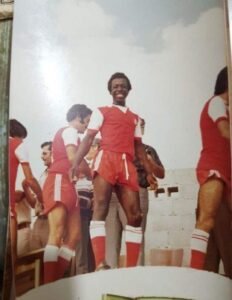
But behind that commanding football personality was an intelligent young man whose journey would eventually take him from Lagos school football to the 1983 FIFA World Youth Championship in Mexico, an American university education and a lifetime of helping other footballers.
I knew Taju long before our historic Flying Eagles journey.
And that is where his story deserves to begin.
𝗙𝗥𝗢𝗠 𝗟𝗔𝗚𝗢𝗦 𝗦𝗖𝗛𝗢𝗢𝗟 𝗙𝗢𝗢𝗧𝗕𝗔𝗟𝗟 𝗧𝗢 𝗬𝗦𝗙𝗢𝗡
Tajudeen came from a remarkable football family.
His father, Albert Suraju Disu, played for Nigerian Railways. His elder brother, Tunde Disu, became a respected coach, while several other members of the family followed footballing careers.
Taju attended Ansar-ud-Deen Primary School, Lawanson, and St. Timothy’s College, Yaba.
I also remember his football journey through Zumratu before his days at Baptist Academy, Obanikoro, where he pursued his Higher School Certificate.
Our friendship developed through the Youth Sports Federation of Nigeria, popularly known as YSFON.
Those were remarkable years when schoolboys were given opportunities to compete internationally while still pursuing their education.
We travelled together as part of Nigerian youth football delegations to Sweden and the United States.
In Sweden, our YSFON team participated in the Gothia Cup. In Dallas, Texas, we competed against international opposition in another important youth tournament.
Those experiences were not ordinary excursions.
They exposed us to different football cultures, foreign universities and the possibility of futures beyond Nigerian league football.
For young players like us, the world was beginning to open.
𝗧𝗛𝗘 𝗗𝗘𝗙𝗘𝗡𝗗𝗘𝗥 𝗪𝗘 𝗖𝗔𝗟𝗟𝗘𝗗 𝗚𝗔𝗗𝗗𝗔𝗙𝗜
Taju was never a defender who approached his responsibilities casually.
He played with strength, determination and the conviction that an opponent should never be allowed an easy passage.
That rugged approach earned him the nickname Gaddafi.
Yet reducing him to physical strength alone would be unfair to his football intelligence.
He understood defensive positioning, anticipation and the importance of protecting his teammates.
In our 1983 Flying Eagles family, every player brought something different.
Some brought elegance. Others possessed extraordinary pace or creative imagination.
Taju brought defensive authority.
Under our late coach, Christopher Udemezue, those different qualities became part of a team that achieved something Nigerian football had never accomplished.
On January 8, 1983, we defeated Guinea 2–0 at the National Stadium in Lagos and qualified Nigeria for its first FIFA World Cup tournament.
That historic breakthrough took us to Mexico, where we represented Nigeria at the FIFA World Youth Championship from June 2 to 19, 1983.
For Taju and the rest of us, it was the fulfilment of a childhood dream.
𝗙𝗥𝗢𝗠 𝗡𝗔𝗧𝗜𝗢𝗡𝗔𝗟 𝗕𝗔𝗡𝗞 𝗧𝗢 𝗟𝗘𝗩𝗘𝗡𝗧𝗜𝗦 𝗨𝗡𝗜𝗧𝗘𝗗 𝗔𝗡𝗗 𝗔𝗕𝗜𝗢𝗟𝗔 𝗕𝗔𝗕𝗘𝗦
Our football lives crossed several times beyond the national youth team.
Taju played for National Bank of Lagos, where several members of our generation developed their club football experience.
He subsequently played for Leventis United of Ibadan, another prominent institution in Nigerian football.
But it was at Abiola Babes of Abeokuta that his career became particularly associated with one of Nigeria’s most influential sports philanthropists, Chief M.K.O. Abiola.
As captain of Abiola Babes, Taju helped lead the club through four consecutive Challenge Cup finals between 1984 and 1987.
In 1987, Abiola Babes defeated Ranchers Bees to win the prestigious trophy.
The victory would become a turning point in his life.
𝗠.𝗞.𝗢. 𝗔𝗕𝗜𝗢𝗟𝗔: 𝗧𝗛𝗘 𝗦𝗖𝗛𝗢𝗟𝗔𝗥𝗦𝗛𝗜𝗣 𝗧𝗛𝗔𝗧 𝗖𝗛𝗔𝗡𝗚𝗘𝗗 𝗔 𝗟𝗜𝗙𝗘
What Chief M.K.O. Abiola did for Tajudeen deserves a special place in this story.
Following Abiola Babes’ 1987 Challenge Cup triumph, Abiola personally supported Taju’s ambition to pursue higher education in the United States.
Taju subsequently attended 𝗔𝗹𝗮𝗯𝗮𝗺𝗮 𝗔&𝗠 𝗨𝗻𝗶𝘃𝗲𝗿𝘀𝗶𝘁𝘆, where he studied Agricultural Economics.
He later completed postgraduate studies in Sports Management.
What makes the story especially significant is that Taju also received an athletic scholarship from his university.
Abiola’s financial support was additional assistance, not merely another description of the same scholarship.
In a published interview, Taju recalled how Abiola arranged financial support before his departure and helped make it possible for him to provide for his family while studying.
That generosity changed the direction of his life.
And Taju did not forget it.
𝗛𝗢𝗪 𝗢𝗡𝗘 𝗦𝗖𝗛𝗢𝗟𝗔𝗥𝗦𝗛𝗜𝗣 𝗕𝗘𝗖𝗔𝗠𝗘 𝗔𝗡 𝗢𝗣𝗣𝗢𝗥𝗧𝗨𝗡𝗜𝗧𝗬 𝗙𝗢𝗥 𝗢𝗧𝗛𝗘𝗥𝗦
One of the most commendable chapters of Taju’s life came after he reached the United States.
Rather than treating his educational opportunity as a personal achievement alone, he began helping other Nigerian footballers pursue scholarships.
He assisted young players with their examinations, university contacts, travel arrangements and adjustment to life in America.
In his own account, he helped approximately 15 to 18 aspiring Nigerian footballers obtain educational opportunities.
Consider the significance.
A young Nigerian defender benefited from Chief Abiola’s generosity and subsequently helped open similar doors for others.
It was the practical expression of a lesson he had learned from his benefactor.
𝗧𝗵𝗲 𝗴𝗿𝗲𝗮𝘁𝗲𝘀𝘁 𝘃𝗮𝗹𝘂𝗲 𝗼𝗳 𝗼𝗽𝗽𝗼𝗿𝘁𝘂𝗻𝗶𝘁𝘆 𝗶𝘀 𝗻𝗼𝘁 𝗺𝗲𝗿𝗲𝗹𝘆 𝘄𝗵𝗮𝘁 𝗶𝘁 𝗱𝗼𝗲𝘀 𝗳𝗼𝗿 𝘂𝘀, 𝗯𝘂𝘁 𝘄𝗵𝗮𝘁 𝗶𝘁 𝗲𝗻𝗮𝗯𝗹𝗲𝘀 𝘂𝘀 𝘁𝗼 𝗱𝗼 𝗳𝗼𝗿 𝗼𝘁𝗵𝗲𝗿𝘀.
𝗙𝗥𝗢𝗠 𝗙𝗢𝗢𝗧𝗕𝗔𝗟𝗟 𝗧𝗢 𝗣𝗨𝗕𝗟𝗜𝗖 𝗦𝗘𝗥𝗩𝗜𝗖𝗘 𝗜𝗡 𝗦𝗨𝗥𝗨𝗟𝗘𝗥𝗘
Taju’s commitment to community development later extended into public service.
He served as Supervisory Councillor for Agriculture, Youths, Sports and Social Development in Surulere Local Government, Lagos.
In that capacity, he worked with the council chairman, 𝗛𝗼𝗻. 𝗧𝗮𝗷𝘂𝗱𝗲𝗲𝗻 𝗔𝗷𝗶𝗱𝗲, another former footballer and a childhood friend.
It was an interesting reunion of two men whose paths had crossed on football fields long before they became involved in community administration.
Taju also assumed responsibilities in YSFON, footballers’ welfare and Lagos football development.
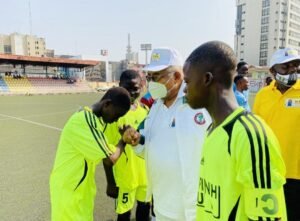
In 2020, he became chairman of the Lagos State chapter of YSFON, an organisation that had helped establish his own football career.
That return carried particular significance.
The schoolboy who once benefited from organised youth football was now involved in restoring opportunities for another generation.
𝗕𝗢𝗦𝗧𝗢𝗡, 𝗟𝗔𝗚𝗢𝗦 𝗔𝗡𝗗 𝗔𝗕𝗨𝗝𝗔: 𝗔 𝗟𝗜𝗙𝗘 𝗔𝗖𝗥𝗢𝗦𝗦 𝗧𝗪𝗢 𝗖𝗢𝗡𝗧𝗜𝗡𝗘𝗡𝗧𝗦
Today, Taju’s family is based in Boston, Massachusetts.
His own commitments have continued to take him between the United States and Nigeria, particularly Lagos and Abuja.
He has remained active in football development, international sports connections and programmes intended to identify and support young talent.
In 2024, he received an appointment with a Nigerian sports and cultural organisation in New Jersey.
As recently as April 2026, he was involved in a Lagos youth football development initiative aimed at creating opportunities for talented boys and girls.
The footballer once discovered through school competitions is now helping others find their own pathways.
𝗧𝗛𝗘 𝗟𝗘𝗚𝗔𝗖𝗬 𝗢𝗙 𝗚𝗔𝗗𝗗𝗔𝗙𝗜
Whenever I remember Tajudeen Disu, I see two sides of the same man.
On the football field, he was Gaddafi—the rugged defender who approached his responsibilities with determination and authority.
Beyond football, he became a university graduate, a family man, a public servant and someone committed to helping young people pursue better opportunities.
I also remember our schoolboy days, the journeys to Sweden and America, the friendships we formed and the excitement of discovering that football could carry us beyond the places where our dreams began.
More than four decades have passed since Mexico 1983.
But the brotherhood remains.
Football was never an end in itself. It was transportation through life’s journey.
Taju’s story demonstrates how far that journey can take a young Nigerian footballer when talent meets discipline, education, opportunity and generosity.
𝗢𝗻 𝘁𝗵𝗲 𝗽𝗶𝘁𝗰𝗵, 𝗚𝗮𝗱𝗱𝗮𝗳𝗶 𝗽𝗿𝗼𝘁𝗲𝗰𝘁𝗲𝗱 𝗼𝘂𝗿 𝗱𝗲𝗳𝗲𝗻𝗰𝗲. 𝗕𝗲𝘆𝗼𝗻𝗱 𝘁𝗵𝗲 𝗽𝗶𝘁𝗰𝗵, 𝗧𝗮𝗷𝘂𝗱𝗲𝗲𝗻 𝗗𝗶𝘀𝘂 𝗵𝗲𝗹𝗽𝗲𝗱 𝗼𝗽𝗲𝗻 𝗱𝗼𝗼𝗿𝘀 𝗳𝗼𝗿 𝗼𝘁𝗵𝗲𝗿𝘀.
And that is a legacy worth celebrating.
𝗣𝗮𝘂𝗹 𝗟𝘂𝗰𝗸𝘆 𝗢𝗸𝗼𝗸𝘂
FIFA Legend | Former Nigeria Flying Eagles Vice-Captain | Former Super Eagles International | AFCON Silver Medalist | Football Historian | Football Analyst | Investigative Football Writer | Journalist-at-Large | Founder & CEO, Greater Tomorrow Children’s Fund (GTCF)
𝗙𝗼𝗿 𝗳𝗲𝗲𝗱𝗯𝗮𝗰𝗸 𝗮𝗻𝗱 𝗰𝗼𝗺𝗺𝗲𝗻𝘁𝘀:
PaulOkokuMediaHub@gmail.com
𝗣𝗹𝗲𝗮𝘀𝗲 𝗳𝗲𝗲𝗹 𝗳𝗿𝗲𝗲 𝘁𝗼 𝘀𝗵𝗮𝗿𝗲 𝘁𝗵𝗶𝘀 𝗮𝗿𝘁𝗶𝗰𝗹𝗲. 𝗪𝗲 𝗮𝗿𝗲 𝗮𝗹𝗹 𝗶𝗻 𝘁𝗵𝗶𝘀 𝘁𝗼𝗴𝗲𝘁𝗵𝗲𝗿.