Education
FLASHBACK: On this day in 1960, Nigeria was admitted as the 99th member of the United Nations

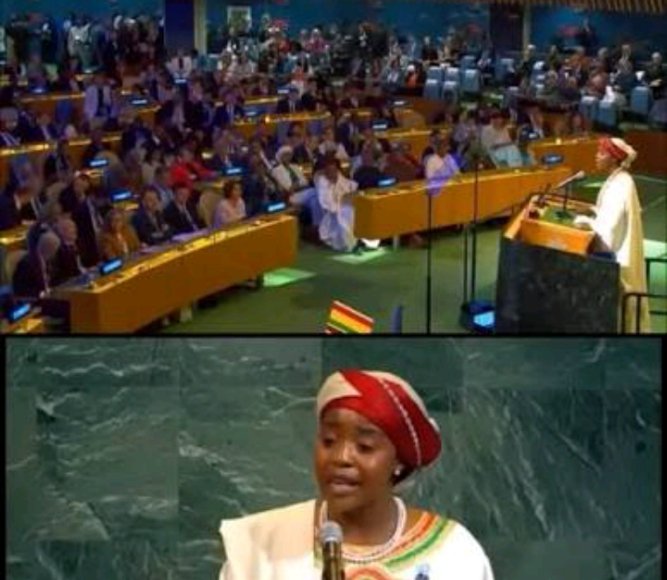
On October 7, 1960, exactly six days after gaining independence from Britain, the Federation of Nigeria was unanimously admitted as the 99th member of the United Nations by the General Assembly.
The admission followed a recommendation by the Security Council, which had considered Nigeria’s application earlier that same day.
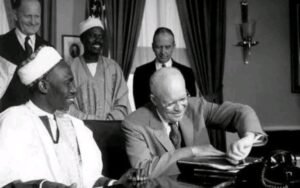
Prime Minister Sir Abubakar Tafawa Balewa had submitted Nigeria’s application on October 1, 1960, the very day the country attained independence, along with a declaration accepting the obligations contained in the UN Charter.
At the 893rd plenary meeting of the General Assembly, the resolution admitting Nigeria was adopted by acclamation, and the Nigerian delegation was escorted to its seats in the General Assembly Hall.
Speaking at the session, Prime Minister Balewa pledged Nigeria to a policy of friendship with all countries, nonalignment in the Cold War, and strong support for the United Nations. He renounced any “territorial or expansionist intentions” for Nigeria and expressed hope that other newly independent African states would adopt a similar stance.
Balewa also addressed the crisis in the newly independent Congo, arguing that African countries should play a leading political role in resolving it. “Africa must not be allowed to become a battleground in the ideological struggle,” he told the Assembly, insisting that the Congo situation should be dealt with “primarily by African states at the political level”.
He further declared that Nigeria would not automatically align itself with competing global power blocs. “We shall not be found to align ourselves as a matter of routine with any particular bloc,” Balewa said, while reaffirming Nigeria’s commitment to the United Nations.
The President of the General Assembly welcomed the Nigerian delegation, stating that the Assembly was certain Nigeria would bring “a contribution as important as it is precious” to its work. The United Kingdom’s Foreign Secretary, Lord Home, noted that Nigeria was great in size, population, and character, adding that its people possessed “that fundamental moral integrity which is the secret of wisdom”.
Tunisia’s representative, Mr. Slim, who had sponsored the resolution for Nigeria’s admission, said Nigeria was “a great nation with a glorious past and the cradle of an old and beautiful civilization,” expressing confidence that it would live up to its international responsibilities.
The following day, October 8, President Dwight D. Eisenhower conferred with Prime Minister Balewa at the White House for nearly an hour. After the meeting, Balewa said he had invited the President to visit Nigeria and had “some hope” Eisenhower would find it possible to accept.
Nigeria’s admission as the 99th member came during a historic wave of African independence, as the continent threw off colonial rule and took its place in the community of nations.