
Business
Dutch Lawmakers Urge Government to Resist US MATCH Bill Targeting ASML’s China Business

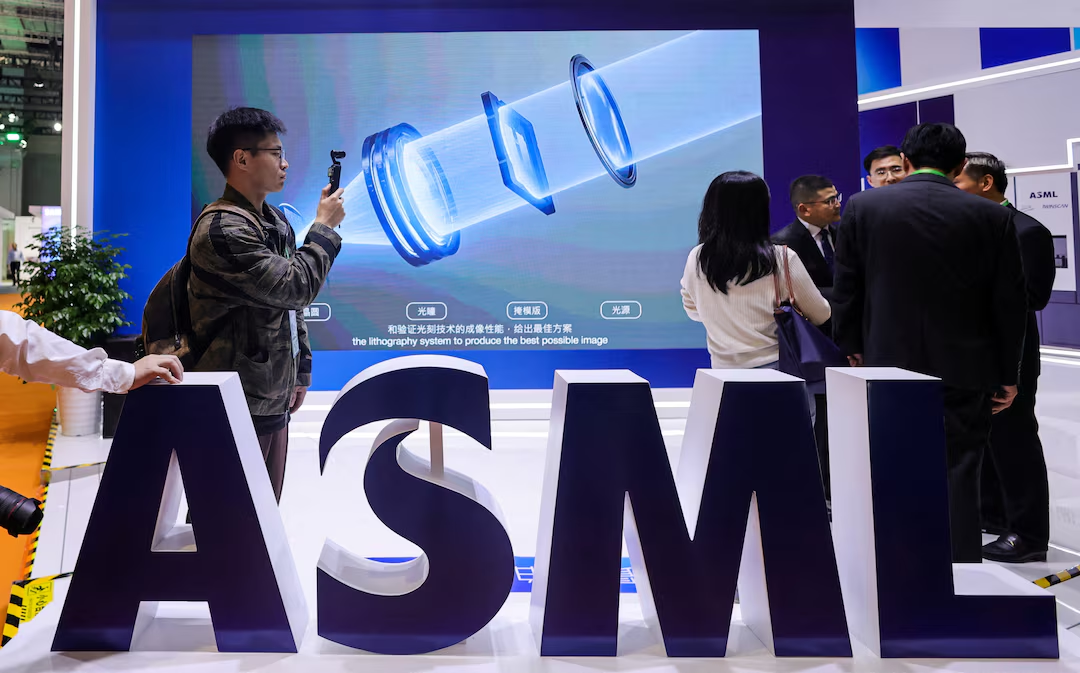
Dutch lawmakers have urged the government to intensify efforts to oppose proposed United States legislation that could impose tighter restrictions on semiconductor equipment manufacturer ASML’s business in China, warning that the measures could damage the country’s economy and technology industry.
The calls were made during a parliamentary debate on trade policy on Tuesday, November 24, 2026, as the US Congress considers incorporating the bipartisan Multilateral Alignment of Technology Controls on Hardware (MATCH) Act into its annual defence policy legislation.
The proposed law seeks to compel US allies, including the Netherlands and Japan, to introduce stricter export controls on advanced chipmaking equipment supplied to China. If negotiations fail to produce an agreement, Washington could impose unilateral restrictions on equipment manufactured by companies in those countries.
The measures could significantly affect ASML, Europe’s largest supplier of advanced semiconductor manufacturing equipment, particularly its sales of immersion deep ultraviolet (DUV) lithography machines to Chinese customers.
During the debate, Nicole Maes of the conservative People’s Party for Freedom and Democracy (VVD) warned that the legislation would be disastrous for ASML and, by extension, the Dutch economy.

Another lawmaker, Laurens Dassen of the progressive Volt party, called for European measures to protect the company and its position in the global semiconductor industry.
Michiel Hoogeveen of the conservative JA21 party also described the proposed legislation as unacceptable, urging the government to pursue diplomatic efforts to prevent its passage.

The lawmakers’ concerns reflect growing unease in the Netherlands over Washington’s attempts to influence the export policies of allied countries through its own legislation.
Dutch Foreign Trade Minister Sjoerd Sjoerdsma has previously argued that export controls should be based on cooperation rather than pressure from another country.
Speaking during a parliamentary comittee discussion on November 19, Sjoerdsma warned that restrictions on ASML’s ability to sell and service semiconductor equipment in China could have serious consequences for the Dutch economy.
He also said the government was doing everything possible to prevent the legislation from advancing, noting that ASML and its supply chain contribute significantly to the country’s economic growth.
ASML, headquartered in Veldhoven in the Netherlands, manufactures highly specialised equipment used by semiconductor producers to make computer chips. Its technology is essential to the global electronics industry, supplying major chipmakers across different markets.
China remains an important market for the company. ASML expects the country to account for approximately 20 per cent of its total sales in 2026, although this would represent a decline from the previous year.
The MATCH Act could go beyond restricting new equipment sales by also limiting maintenance and servicing of certain machines already installed at Chinese facilities. Such restrictions could affect existing commercial agreements and create additional financial and legal complications for the company.
ASML has criticised the proposal, describing it as a bad idea that could encourage China to accelerate the development of competing semiconductor technology.
The Dutch government has maintained that countries should retain control over their own export-control policies, even while acknowledging shared security concerns surrounding the transfer of advanced technology to China.
In a written response to parliamentary questions earlier this year, the government warned that the proposed legislation could have significant consequences for Dutch semiconductor companies and weaken their international market positions.
The government has also argued that broad restrictions could disrupt global supply chains and undermine the predictability of international trade and investment.
Meanwhile, the proposed legislation has gained renewed attention in Washington amid growing tensions over the supply of advanced artificial intelligence chips and semiconductor technology to China.
The US Congress is negotiating whether to include the MATCH Act in the National Defense Authorization Act, an annual defence policy bill, before the outgoing Congress concludes its work.
Dutch Foreign Minister Tom Berendsen is also expected to discuss the issue during a visit to China this week, as the Netherlands continues diplomatic efforts to protect its semiconductor industry while addressing international security concerns.
The outcome of the US legislative process could have far-reaching implications for the global semiconductor industry, particularly the relationship between Washington, European technology suppliers and China’s expanding chipmaking sector.