
General News
NiMet, Morocco Seal Meteorological Partnership to Boost Early Warning Systems

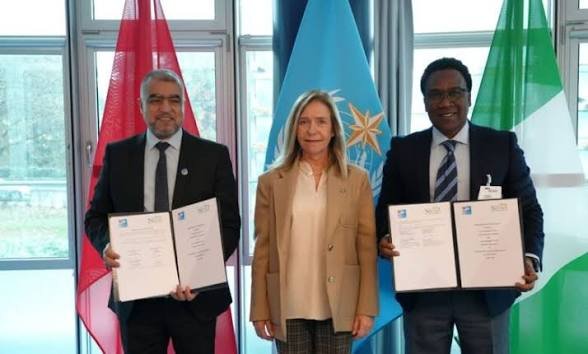
Nigeria and Morocco have strengthened bilateral cooperation in weather and climate services following the signing of a Memorandum of Understanding (MoU) between the Nigerian Meteorological Agency (NiMet) and Morocco’s General Directorate of Meteorology (DGM).
The agreement is aimed at improving weather forecasting, advancing climate research, strengthening early warning systems and promoting the exchange of technical expertise between the two countries.
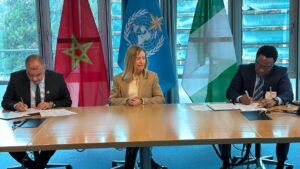
The MoU was signed by NiMet Director-General and Chief Executive Officer, Prof. Charles Anosike, and his Moroccan counterpart, Mr Mohammed Dkhissi, on the sidelines of the ongoing session of the Commission for Observation, Infrastructure and Information Systems (INFCOM) at the World Meteorological Organisation (WMO) Secretariat in Geneva, Switzerland.
Speaking during the ceremony, Anosike said the partnership was an opportunity to demonstrate Africa’s growing capacity and expertise in meteorology and climate science.
He explained that cooperation between the two institutions would not only strengthen their respective capabilities but also create opportunities to extend technical assistance to other meteorological services across the region.

According to him, the initiative would promote shared expertise and ensure that countries across Africa are not left behind in the development of modern meteorological services.
Dkhissi described the agreement as a partnership built on mutual benefits, noting that both countries would exchange knowledge, experience, expertise and technological advancements.
He emphasised the need for immediate action, insisting that the MoU was designed for practical implementation rather than merely serving as a formal document.
The WMO Secretary-General, Prof. Celeste Saulo, witnessed the signing and congratulated the two Permanent Representatives, describing the partnership as consistent with the organisation’s commitment to promoting cooperation among national meteorological services.
She also expressed the WMO’s readiness to learn from the outcomes of the bilateral arrangement.
The agreement covers several areas, including weather forecasting, seasonal climate prediction, early warning systems, meteorological observations, climate research and the development of climate services for socioeconomic sectors.
It also provides for institutional capacity building, peer-to-peer technical assistance, knowledge and technology transfer, metrology and calibration, telecommunications infrastructure and meteorological database development.
In addition, both agencies will explore joint innovation in digital meteorological services, including the application of artificial intelligence to weather and climate forecasting, as well as the strengthening of Quality Management Systems.
The partnership is expected to harness the institutional strengths and youthful professionals of both agencies to improve service delivery and promote technological advancement in meteorology across Africa.