General News
El-Rufai Denies Wiretapping Ribadu, Says Claim Was Political Rhetoric

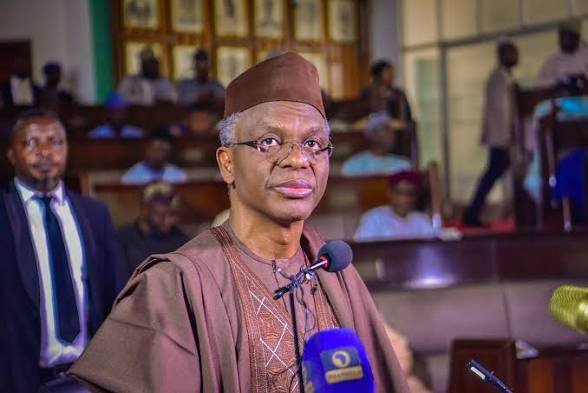
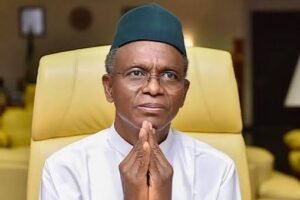
Former Kaduna State Governor, Nasir El-Rufai, has denied intercepting the telephone conversations of the National Security Adviser, Nuhu Ribadu, describing his earlier claim about phone tapping as political rhetoric intended to make the government uncomfortable.
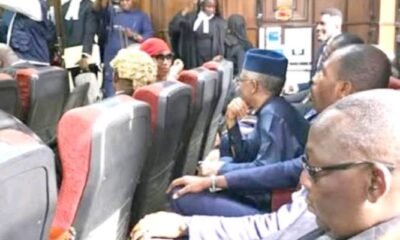
El-Rufai made the clarification on Wednesday while opening his defence in the ongoing trial over allegations that he unlawfully intercepted Ribadu’s telephone conversations at the Federal High Court in Abuja.
Testifying before the court, the former governor said his comments during an interview on ARISE News’ Prime Time programme on February 13 were exaggerated and not a literal admission that he had engaged in telephone interception.
“I used the word ‘tap’ as political rhetoric to make them uncomfortable. It was rhetorical, not literal. It was linguistic flourish, just to make the government uncomfortable,” he told the court.
When his counsel, Paul Erokoro, SAN, reminded him that the interviewer had pointed out that tapping another person’s telephone was illegal, El-Rufai said his intention was to draw public attention to what he described as the government’s alleged surveillance of opposition figures without lawful court orders.
The defendant explained that information about alleged plans by the NSA against him came through verbal communications from individuals within the government who were dissatisfied with its activities.
However, he declined to disclose the identities of his sources, citing concerns for their safety and livelihoods.
El-Rufai also denied being a hacker or belonging to any network of hackers, explaining that his use of the word “we” during the television interview referred to a group of opposition politicians without identifying them.
He further rejected claims that he had confessed to being a hacker, insisting that he neither possessed the technical knowledge nor the equipment required to intercept telephone conversations.
According to him, the information about alleged plans to abduct him originated from someone who overheard Ribadu’s telephone conversation while the NSA’s phone was on speaker mode.
“The NSA has a very known and confirmed telephone habit… he usually puts his phone on speaker. He says anything anywhere,” he said.
The former governor also told the court that when operatives of the Independent Corrupt Practices and Other Related Offences Commission (ICPC) searched his residence on February 19, they recovered only computers and his old mobile phones.
He described the search warrant as defective and maintained that no wiretapping or hacking equipment was discovered during the operation, contrary to some media reports.
Recounting his relationship with Ribadu, El-Rufai said he had known the NSA since 2003 when, as Director-General of the Bureau of Public Enterprises, he assisted in establishing the Economic and Financial Crimes Commission by providing office accommodation and funding.
He said their relationship deteriorated after Ribadu contested the 2011 presidential election, explaining that he supported former President Muhammadu Buhari because he considered him a better candidate.
El-Rufai further alleged that Ribadu’s current disposition towards him was connected to his opposition to President Bola Tinubu’s re-election bid.
During cross-examination by the prosecution’s lead counsel, Oluwole Aladedoye, SAN, El-Rufai maintained that the alleged plot to arrest him was not classified information but an open secret known to the media and other members of the public.
He said the alleged arrest plan was first set in motion on February 12 when operatives of the Department of State Services attempted to arrest him upon his arrival at the Nnamdi Azikiwe International Airport, Abuja, from Cairo.
According to him, the attempt was unsuccessful following the intervention of fellow passengers at the airport.
The former governor insisted that he had not lied about receiving information from his sources, adding that he had sworn by the Quran and did not affirm during Wednesday’s proceedings.
He also maintained his refusal to disclose the identities of those who provided him with the information.
Meanwhile, the defence team disclosed its intention to call four witnesses, including representatives of the ICPC and the NSA, to testify in the case.
Erokoro informed the court that the defence would formally apply for the witnesses to be made available to give evidence on behalf of his client.
Justice Joyce Abdulmalik subsequently adjourned the case until February 15 and 16 for the continuation of the defence.