General News
2027 Elections: INEC, NSA Strengthen Security Partnership As Amupitan Condemns Political Violence

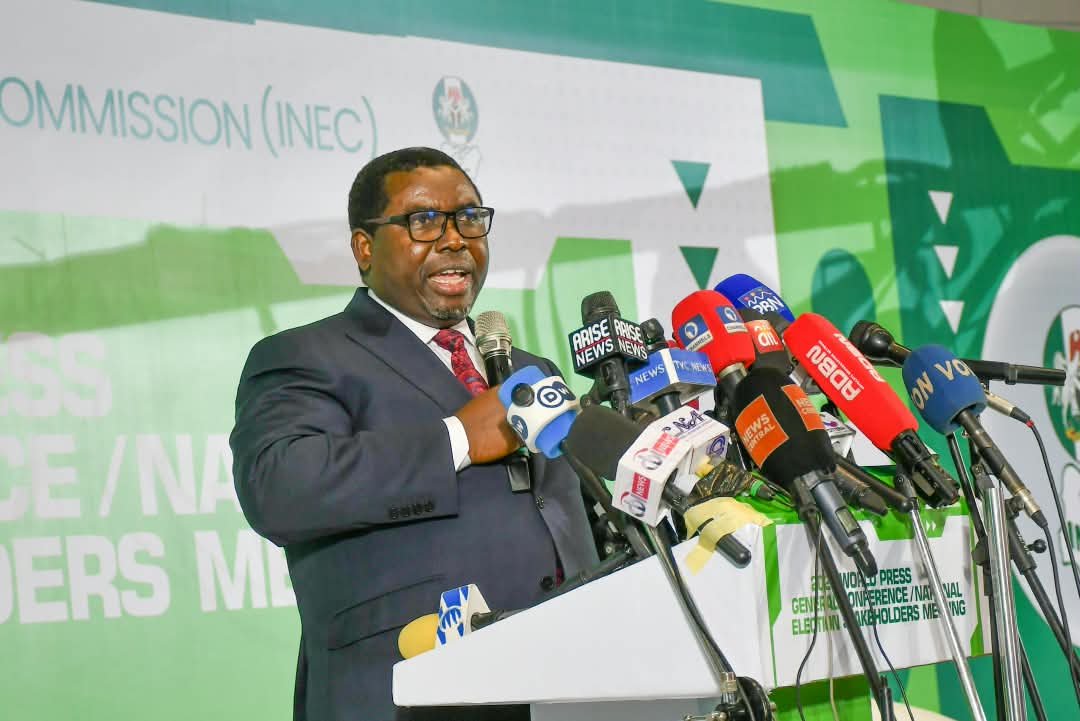
The Independent National Electoral Commission (INEC) and the Office of the National Security Adviser (ONSA) have stepped up collaboration to address security threats ahead of the 2027 general elections, following growing concerns over attacks on political supporters and electoral officials.
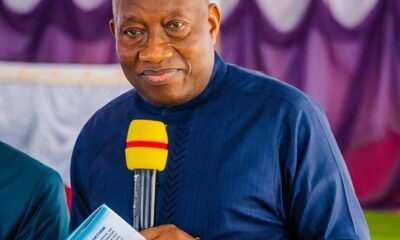
INEC Chairman, Prof. Joash Amupitan, disclosed this on Thursday in Abuja at the INEC–ONSA Strategic Election Security Conference, where he called on security agencies to adopt proactive measures to prevent violence and protect the integrity of the electoral process.
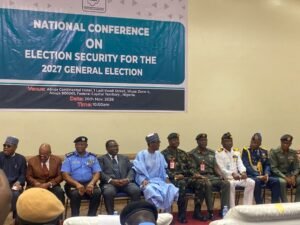
The conference was attended by the National Security Adviser, Mallam Nuhu Ribadu; Minister of Defence, Gen. Christopher Musa (retd.); heads of security agencies; Resident Electoral Commissioners; Commissioners of Police and other stakeholders.
Amupitan said the meeting was aimed at identifying emerging security challenges, improving intelligence sharing and establishing coordinated security arrangements for the 2027 elections.

With the presidential and National Assembly elections scheduled for January 16, 2027, and governorship and State Houses of Assembly polls fixed for February 6, he urged security agencies to intensify preparations to guarantee peaceful elections.
He said the scale of the exercise, involving more than 100 million registered voters and 177,299 polling units, required effective cooperation between the electoral commission and security institutions.
According to him, security remains central to every stage of election administration, as the commission cannot successfully discharge its responsibilities without a peaceful environment.
He urged the Inter-Agency Consultative Committee on Election Security (ICCES) to strengthen intelligence-led operations and coordinated responses rather than relying largely on reactive policing.
Amupitan recalled that ICCES was established after the violence that accompanied the 2011 general elections to facilitate joint security planning, intelligence sharing, operational coordination and emergency response.

While acknowledging the committee’s contributions, including the identification of electoral flashpoints and coordinated deployment of security personnel, he called for more effective implementation of its decisions across states, local governments and wards.
The INEC chairman expressed particular concern over reported political violence since the commencement of open campaigns in August 2026.
He listed Lagos, Edo, Ekiti, Enugu, Ebonyi, Delta, Cross River, Oyo and Benue among states where attacks on campaign convoys, political gatherings, party offices and supporters had been reported.
He condemned the incidents, insisting that all political parties and candidates must be allowed to campaign freely without intimidation, harassment or violence.

“No political ambition is worth the blood of a single Nigerian,” Amupitan declared.
He also warned against attempts by political actors to turn public spaces into centres of violence or prevent opponents from campaigning in certain communities.
Amupitan further raised concerns over alleged attacks, harassment and intimidation of INEC officials and ad hoc staff by political party supporters, describing such actions as threats to the independence of the electoral institution.
He maintained that electoral personnel were non-partisan public servants performing constitutional duties and must be protected from political interference.
In his address, the National Security Adviser, Nuhu Ribadu, assured Nigerians that security agencies would provide adequate protection for voters, candidates, electoral officials and other stakeholders before, during and after the 2027 elections.
Ribadu said the Federal Government remained committed to peaceful, free, fair and credible elections, adding that security personnel would perform their duties without political bias.
He said the administration of President Bola Tinubu was committed to democratic principles and would ensure that all Nigerians enjoyed equal protection, irrespective of their political affiliations.
The NSA also emphasised that political parties, candidates, observers, journalists and citizens must be able to exercise their lawful rights without intimidation or unnecessary interference.
He noted that Nigeria’s electoral process had recorded improvements over time, pointing to increasing voter registration and other indicators as signs of growing public confidence.
However, he stressed that sustaining the progress required transparency, accountability and respect for INEC’s constitutional independence.
Ribadu specifically charged security agencies to respect the commission’s statutory responsibilities, assuring that their operations would be guided by the law.
“Security agencies will discharge their responsibilities impartially and in accordance with the law,” he said.