
Africa
AFRICA’S FIRST PRIVATE AERONAUTICS UNIVERSITY UNVEILED IN ABUJA


In a landmark event for Nigeria and the African continent, the Isaac Balami University of Aeronautics and Management (IBUAM) was officially inaugurated on Friday, October 17, 2025, at the Plateau Hall of the Transcorp Hilton Hotel in Abuja. Hailed as Africa’s first privately owned university dedicated to aeronautics and management, the grand unveiling doubled as a world press conference, attracting a distinguished gathering of leaders from aviation, education, defence, diplomatic, and legislative sectors.
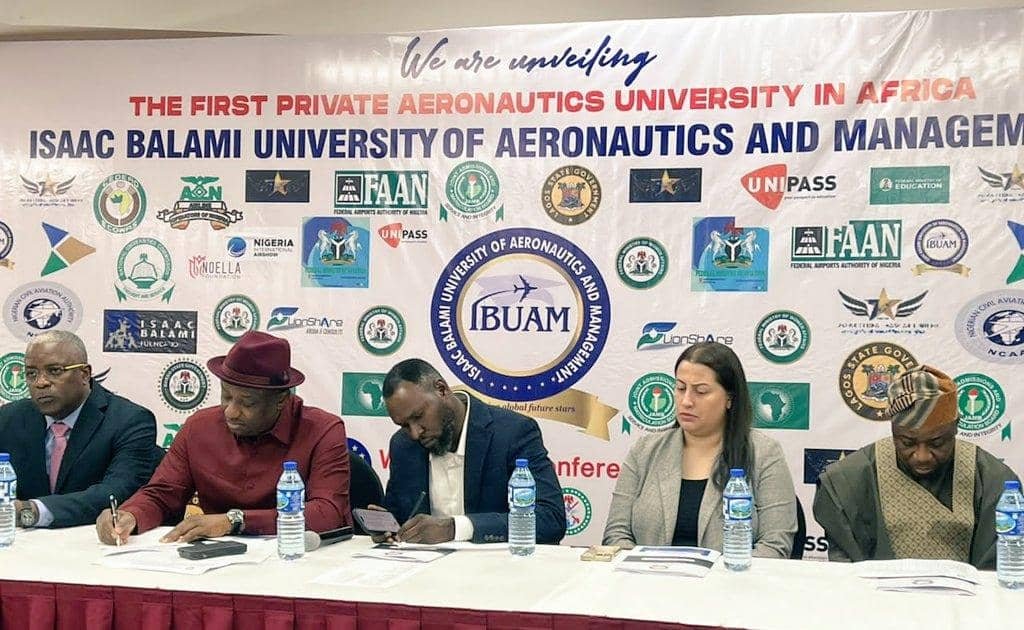
Notable attendees included Hon. Festus Keyamo, SAN, Minister of Aviation and Aerospace Development; Amb. Gabriel Aduda, Permanent Secretary of the Ministry of Foreign Affairs; Senator Abubakar Mahadi; Capt. Chris Najomo, Director-General of the Nigerian Civil Aviation Authority; Air Vice Marshal (Prof.) Paul Jemitola (Rtd), Vice Chancellor of IBUAM; and Comrade Isaac Balami, Founder and Chancellor. Also present were representatives of the Minister of Women Affairs, members of the National Assembly, senior government officials, industry experts, and journalists from across the country.
In his keynote address, Air Vice Marshal (Prof.) Paul Jemitola described the institution as a revolutionary force set to transform aviation education and leadership in Africa. “Today, we unveil not just a university, but a revolution designed to shape the future of aviation and leadership across Africa,” he said. “The International Civil Aviation Organisation projects that over 65,000 new African aviation professionals will be needed by 2040. Our university is a timely response to that call.” Jemitola outlined IBUAM’s unique model, which combines academic learning with hands-on professional training. “Every graduate of this university will not only earn a degree but also acquire a Private Pilot Licence and Aircraft Maintenance Certification in compliance with the Nigerian Civil Aviation Authority and European Union Aviation Safety Agency standards,” he noted. He emphasized that students would log over 1,000 flight and simulation hours with industry partners like Boeing, Airbus, and Rolls-Royce, making them “global professionals with African roots.” Jemitola concluded with an invitation to aspiring students: “If you dream of flying, fixing, managing, or leading, this is the runway to your future.”
Comrade Isaac Balami, the founder and chancellor, delivered an emotional testimony, recounting his humble beginnings in Maiduguri, Borno State. “I came from a background where I was a suck-away evacuator, a bus conductor, and a farm labourer,” he shared. “During school holidays, when others played football, I was in the bush working to support my family. Today, by God’s grace, we are unveiling Africa’s first private aeronautics and management university.” Balami expressed gratitude to supporters, including Minister Festus Keyamo, Capt. Chris Najomo, and the Minister of Education, for approving the university’s licence after a rigorous process. He detailed the practical training approach, revealing that IBUAM is linked to an aircraft maintenance facility in Lagos. “Our students will not just study theory; they will spend their weekends and holidays in the hangar — repairing engines, testing avionics, and learning real-life operations. By graduation, they will be employable anywhere in the world without supervision,” he said. Balami assured that IBUAM would uphold excellence and accountability, calling it a “patriotic response to Africa’s aviation manpower deficit.”
A major announcement came with the revelation that the Federal Ministry of Women Affairs would sponsor 100 female students annually from across Nigeria’s six geopolitical zones to study at IBUAM. “This partnership will help break barriers and open the skies to women,” Balami declared, eliciting applause from the audience. Mrs. Jimmy Okoye, representing the Minister of Women Affairs, praised the initiative as “a landmark for gender inclusion in aviation,” adding, “We are proud to support a university that is not only training pilots and engineers but also building leaders — both male and female — who will shape Africa’s future.”
National leaders lauded IBUAM’s vision in their goodwill messages. Amb. Gabriel Aduda described the university as “a national pride and a beacon for Africa’s next generation of innovators.” Senator Abubakar Mahadi commended the project for “turning dreams into institutional realities,” while Capt. Chris Najomo pledged continued regulatory support to ensure global compliance and operational excellence.
The ceremony concluded with guests hailing IBUAM as a symbol of hope and progress, embodying its motto, “Excellence in the Skies, Leadership on the Ground.” In his closing remarks, Balami underscored the university’s role in Africa’s development: “Nobody will come to fix Nigeria for us. It is our duty to build it ourselves. IBUAM is our contribution — our runway to a brighter, stronger Africa.”


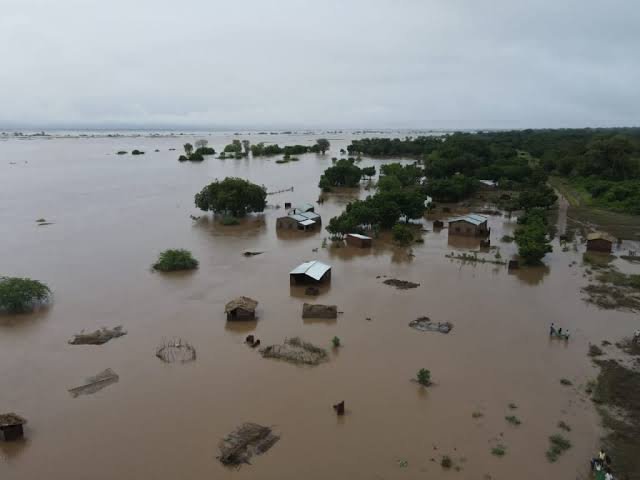
At least 13 people have been confirmed dead in Malawi following days of heavy rainfall that triggered widespread flooding across several parts of the country, authorities have said.
According to disaster management officials, the relentless downpour caused rivers to overflow, sweeping away homes, farmlands, and critical infrastructure. Many families have been displaced, with emergency responders working to rescue stranded residents and provide temporary shelter.
The Department of Disaster Management Affairs (DoDMA) in Malawi reported that the floods have affected multiple districts, particularly low-lying communities that are prone to seasonal flooding. Several people remain missing, raising fears that the death toll could increase as search and rescue operations continue.
Local authorities say roads and bridges have been severely damaged, complicating relief efforts and cutting off access to some rural areas. Humanitarian agencies have begun mobilizing aid, including food supplies, clean water, and medical assistance for affected communities.
Weather experts have warned that more rainfall is expected in the coming days, heightening the risk of further flooding and landslides. The government has urged residents in vulnerable areas to relocate to higher ground as a precaution.
Flooding is a recurring challenge in Malawi during the rainy season, often worsened by poor drainage systems, deforestation, and the impacts of climate change.
Authorities say efforts are ongoing to assess the full scale of the damage and coordinate long-term recovery plans for affected communities.
*South Africa’s Water Crisis Worsens as Criminal Gangs Exploit Shortages
By Ezinne Obah
South Africans are raising concerns that criminal gangs are taking advantage of the country’s deepening water crisis, turning a basic service failure into a growing public safety threat.
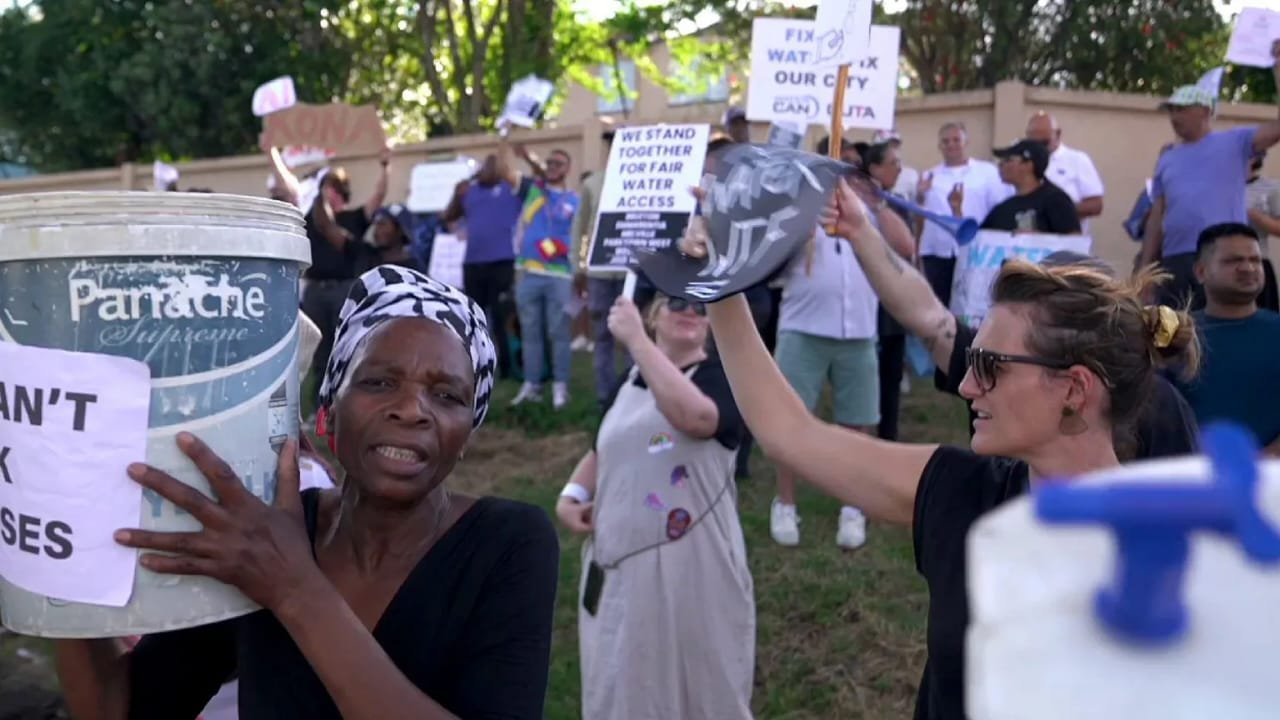
In parts of Johannesburg, residents say prolonged water outages; some lasting over a month, have left communities desperate, creating an opportunity for organised criminal networks to step in and profit. Locals report that gangs are exploiting the shortages by controlling access to water supplies and forcing residents to pay for services that should be publicly provided.
The crisis, driven by ageing infrastructure, poor maintenance, and years of underinvestment, has already strained daily life. But the emergence of so-called “water mafias” has added a dangerous dimension, with reports suggesting that some criminal groups manipulate supply systems or insert themselves into distribution channels for financial gain.
Authorities have acknowledged the presence of organised networks linked to water tanker operations. Law enforcement officials say these groups sometimes demand payments from contractors or interfere with water delivery systems, further complicating efforts to provide relief to affected communities.
The growing crisis has triggered protests in several areas, with residents demanding reliable access to water, a right guaranteed under South Africa’s constitution. The situation has also intensified political pressure on the government, which has already identified organised crime and failing service delivery as major national challenges.
Analysts warn that if the crisis continues, it could deepen inequality, as poorer communities; unable to afford alternative water sources, remain the most vulnerable to both shortages and exploitation.
The developments highlight how infrastructure failures, when left unresolved, can create opportunities for criminal activity, turning essential services into commodities controlled by illicit networks.
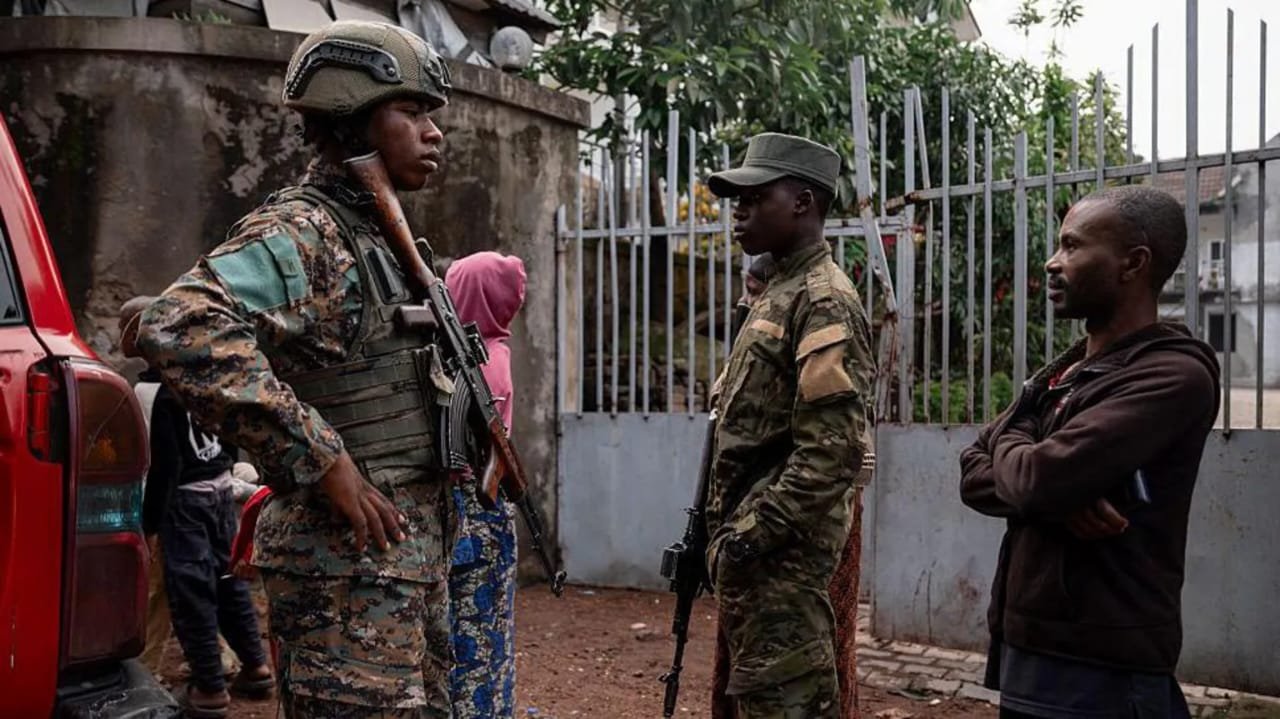
The Democratic Republic of the Congo and Rwanda have agreed to take steps toward easing tensions following high-level talks held in Washington, D.C., signalling a renewed push to stabilise one of Africa’s most volatile regions.
According to a joint statement released after the March 17–18 meeting, both countries committed to “concrete steps” aimed at de-escalating the ongoing conflict in eastern Congo and advancing the implementation of a previously signed peace agreement.
The talks, hosted by the United States, come amid escalating violence in eastern Congo, where fighting involving the M23 rebel group has continued despite earlier peace efforts. The conflict has strained relations between Kinshasa and Kigali, with the Congolese government accusing Rwanda of backing the rebels, an allegation Rwanda denies.
As part of the new understanding, both sides are expected to take measures addressing key security concerns, including the withdrawal of forces from contested areas and action against armed groups operating along their shared border.
The renewed diplomatic push follows mounting international pressure, including recent U.S. sanctions on Rwandan military officials over their alleged involvement in the conflict.
Despite the agreement, analysts caution that the path to lasting peace remains uncertain, as previous ceasefire deals have repeatedly collapsed amid continued fighting and mutual distrust.
Eastern Congo remains one of the world’s most complex conflict zones, with armed groups competing for control of mineral-rich territories, contributing to a prolonged humanitarian crisis.