
General News
BUSINESSWOMAN TRACY OHIRI APOLOGISES TO MINISTER DAVID UMAHI, RETRACTS CONTROVERSIAL ALLEGATIONS


Businesswoman Tracy Ohiri has publicly apologised to the Minister of Works, David Umahi, retracting controversial claims that recently circulated online and generated widespread reactions. In a video statement that surfaced online, Ohiri clarified that she never alleged the minister tied a wrapper or towel around himself to meet her in a hotel room, a claim that had fueled speculation and memes across social media platforms.
Ohiri stressed that the widely circulated allegation was never made by her. “I never said Engineer Deacon David Umahi tied a wrapper to meet me in a hotel room,” she said. She further expressed regret over the embarrassment the controversy may have caused the minister and his family. “I apologize to Minister Umahi for the embarrassment this allegation may have caused him and his family,” she added.
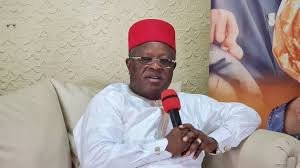
The apology follows earlier accusations by Ohiri in which she alleged that the minister owed her money related to a business or contractual arrangement. Some reports had also linked the dispute to claims of alleged improper advances which she reportedly rebuffed. The allegations had attracted public attention and sparked discussions among activists and social media users.
Ohiri explained that after consultations with her family, legal team, and close associates, she decided to step back from the controversy. According to her, the decision was taken to allow her family focus on their personal lives and business activities. She also expressed regret over any misunderstanding or distress that the situation may have caused.
The apology has generated mixed reactions online. While some observers view the retraction as a step toward resolving the dispute, others have questioned the circumstances surrounding the apology.




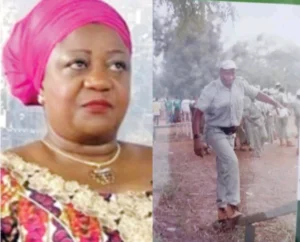
A chieftain of the African Democratic Congress, Lauretta Onochie, has weighed in on the controversy surrounding the National Youth Service Corps (NYSC) certificate of the Deputy Speaker of the House of Representatives, Benjamin Kalu.
Onochie made her position known in a post on her official X account on Friday, March 13, 2026, stating that participation in the National Youth Service Corps does not necessarily prove that an individual graduated from a tertiary institution.
The issue resurfaced following a report by THISDAY which indicated that the Legal Practitioners Disciplinary Committee had yet to dismiss a petition filed against Kalu over his NYSC documentation. The petition was reportedly submitted by the Civil Society Groups for Good Governance, triggering fresh debate about the relationship between NYSC certification and academic qualifications.
Reacting to the development, Onochie argued that the NYSC scheme and academic graduation are separate processes and should not be treated as the same.
“I know someone who took part in the National Youth Service Corps even though he did not do graduation,” she wrote, stressing that possession of an NYSC certificate alone should not be regarded as proof of completing a university or polytechnic programme.
Her remarks come as public scrutiny over the academic credentials of political figures continues to intensify. In Nigeria’s political landscape, questions about educational records have repeatedly generated debate and legal challenges.
Observers say Onochie’s comments highlight the need to distinguish between NYSC participation and formal graduation records, noting that academic certificates remain the primary evidence of educational attainment.
The statement has since sparked reactions across social media and political circles, with some Nigerians supporting her clarification while others insist that transparency in the documentation of public officials is vital for maintaining public confidence.
General News
NIGERIAN CIVIL SOCIETY GROUPS RAISE ALARM OVER SENATE PROBE, DEMAND PRESIDENTIAL INQUIRY INTO NNPC FINANCES
The Conference of Nigeria Political Parties (CNPP) and more than 75 civil society organizations operating under the Coalition of National Civil Society Organizations (CNCSOs) have raised fresh concerns over the ability of Nigeria’s legislature to ensure accountability in corruption investigations, warning that decades of parliamentary probes have rarely produced prosecutions or jail terms for culpable public officials.
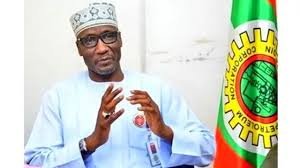
The political parties’ umbrella body and its civil society allies made the assertion in a joint press statement signed by Deputy National Publicity Secretary of the CNPP, Comrade James Ezema, and National Secretary of the CNCSOs, Alhaji Ali Abacha, in reaction to the ongoing Senate investigation into alleged ₦210 trillion accounting discrepancies in the books of the Nigerian National Petroleum Company Limited (NNPCL) during the tenure of its former Group Chief Executive Officer, Mele Kyari.
In the strongly worded statement, the groups expressed skepticism about the outcome of the Senate probe, arguing that similar investigations conducted by the National Assembly of Nigeria since the country’s return to democratic rule in 1999 have largely ended without meaningful consequences.
In a statement, the groups said legislative investigations into corruption across various sectors of the Nigerian economy—especially the petroleum industry—have historically generated significant public attention but seldom translated into criminal prosecution or conviction.
They stated that the recurring pattern has become familiar to Nigerians: once a scandal breaks, the legislature convenes hearings, officials are summoned, public outrage follows, and investigative reports are promised. However, the matter often fades away without concrete action against those responsible.
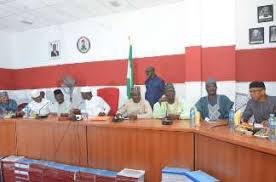
The organizations noted that the latest probe by the Senate into the financial records of the national oil company has again brought the issue of accountability in Nigeria’s petroleum sector to the forefront of national discourse.
The Senate is currently investigating allegations of about ₦210 trillion in accounting discrepancies linked to the operations of the Nigerian National Petroleum Company Limited, particularly during the leadership of Mele Kyari, who previously served as Group Managing Director of the defunct Nigerian National Petroleum Corporation (NNPC) before the organization was restructured and transformed into a limited liability company.
While the CNPP and the coalition of civil society groups welcomed the decision by the Senate to summon former officials of the company to explain the controversial figures, they warned that the probe must not follow what they described as a familiar trajectory of inconclusive investigations.
“For more than two decades, Nigerians have witnessed countless legislative probes that ended without prosecution, conviction, or imprisonment of those responsible for corruption uncovered during the hearings,” Comrade James Ezema and Alhaji Ali Abacha said.
The groups recalled that they had repeatedly raised alarm over the financial management of the national oil company during the tenure of the former management led by Mele Kyari, alleging opaque accounting practices and questionable financial disclosures relating to subsidy payments, crude oil transactions and operational expenditures.
They also revisited long-standing concerns about the controversial rehabilitation of Nigeria’s state-owned refineries, particularly the Port Harcourt Refinery, which they said had consumed billions of dollars in public funds without delivering sustainable refining capacity.
In a statement, the groups said repeated announcements by officials of the national oil company suggesting that the refineries had been successfully rehabilitated ultimately turned out to be misleading when the facilities failed to function as expected.
They claimed that trillions of naira and substantial foreign-currency expenditures were reportedly committed to refinery rehabilitation projects across the country, yet the anticipated results never materialized.
The statement noted that the eventual shutdown of operations at the Port Harcourt Refinery by the new management of the Nigerian National Petroleum Company Limited raised serious questions about the effectiveness of the earlier rehabilitation efforts.
Despite the magnitude of the alleged financial irregularities, the groups lamented that no public official had been successfully prosecuted or jailed in connection with the projects.
Beyond the refinery controversy, the organizations also expressed concern about what they described as a disparity in the enforcement of anti-corruption laws in Nigeria.
They accused the country’s major anti-graft agencies—the Economic and Financial Crimes Commission (EFCC) and the Independent Corrupt Practices and Other Related Offences Commission (ICPC)—of showing greater urgency in cases involving political opponents than in investigations involving high-ranking public officials accused of large-scale economic sabotage.
In a statement, the groups said some members of the immediate past management of the Nigerian National Petroleum Company Limited, including Mele Kyari, were reportedly invited and briefly detained by the Economic and Financial Crimes Commission following their removal from office.
However, they claimed that the detention lasted only a short period and that the Nigerian public has not been informed of any major findings from the investigation since then.
The groups contrasted this situation with what they described as the aggressive prosecution of some political figures outside the ruling All Progressives Congress (APC), many of whom have faced prolonged detention or repeated arrests even after courts granted them bail.
They warned that such disparity creates the perception that anti-corruption enforcement in Nigeria may be selective and politically motivated.
In light of these concerns, the CNPP and the coalition of civil society organizations called for decisive presidential intervention to address the controversy surrounding the finances of the national oil company.
They urged Bola Ahmed Tinubu, President of the Federal Republic of Nigeria, to issue an executive order establishing an independent judicial commission of inquiry into the financial dealings of the Nigerian National Petroleum Company Limited.
Comrade James Ezema and Alhaji Ali Abacha said the proposed investigation should cover the period from 2015 to date, particularly in view of the fact that the administration of the late Muhammadu Buhari had previously overseen the judicial seizure of assets and recovery of stolen funds from past officials of the national oil company before 2015.
They also demanded a comprehensive forensic audit of the finances, contracts, crude oil transactions and subsidy claims of the company within the same period.
The groups said the probe should further investigate all funds allocated to the rehabilitation of Nigeria’s refineries, including the Port Harcourt Refinery and other federal facilities.
In a statement, they insisted that the activities and decisions of the management of the Nigerian National Petroleum Company Limited under the leadership of Mele Kyari must be thoroughly examined.
They further called for the public presentation of the findings of the forensic audit and judicial inquiry, followed by the immediate prosecution of any officials found culpable.
In a statement, the organizations stressed that Nigeria cannot afford a situation in which allegations involving trillions of naira generate public outrage but ultimately produce no consequences.
The organizations stressed that if the administration of Bola Ahmed Tinubu is genuinely committed to fighting corruption, the most powerful actors in the country’s most strategic economic institution must be subjected to the same level of scrutiny applied to ordinary citizens and political opponents.
They concluded that only a transparent, impartial and credible investigation can restore public confidence in the management of Nigeria’s petroleum resources.
Until such an independent judicial inquiry and comprehensive forensic audit are carried out, the groups warned that legislative hearings alone would remain insufficient to resolve the deep-rooted concerns surrounding the operations of the Nigerian National Petroleum Company Limited.
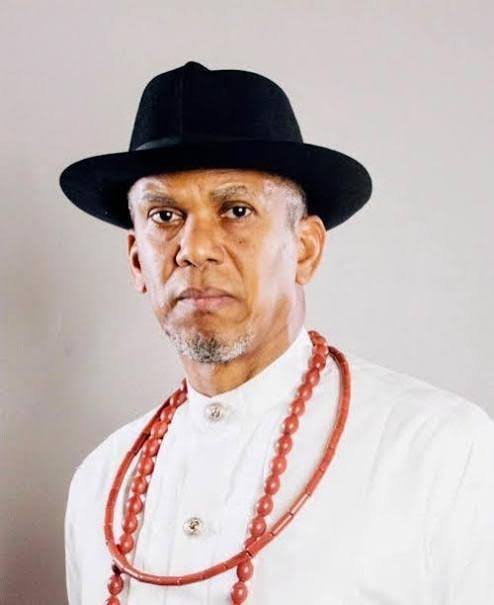
Amid the ongoing leadership crisis in the Sapele-Okpe Community of Delta State, Senator Ede Dafinone has again emerged as a prominent voice advocating for the protection of Urhobo interests.
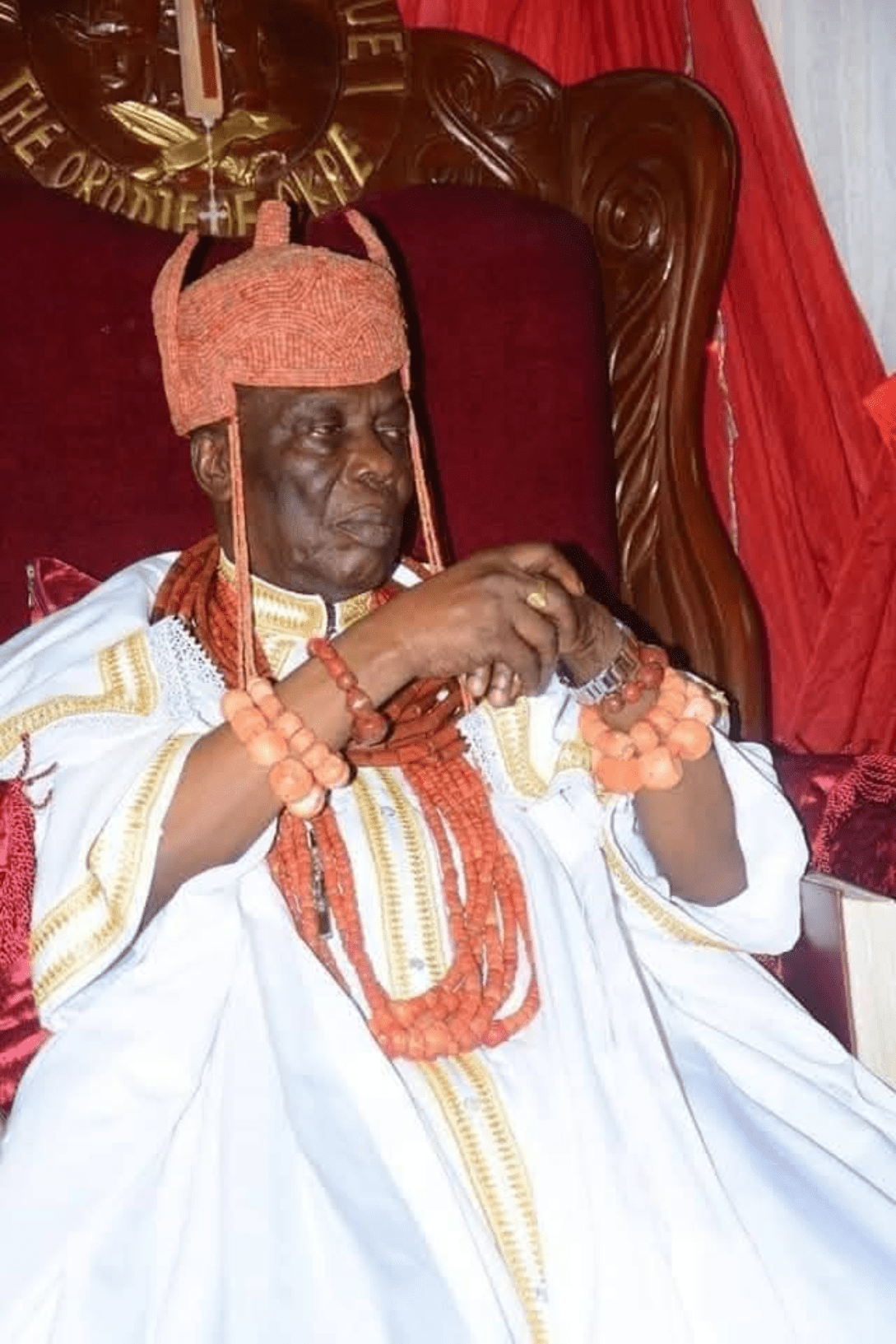
The senator, who represents Delta Central Senatorial District, is widely believed to have played a significant role in the recent decision by His Royal Majesty, Felix Mujakperuo (Rtd), the Orodje of Okpe Kingdom, to suspend controversial constitutional amendments initiated by the community chairman. The monarch also halted indefinitely the proposed creation of a fifth quarter within the Sapele-Okpe Community in Sapele Local Government Area.
Observers within the Urhobo nation say the development highlights the growing influence of the Delta Central lawmaker, known for his calm but firm stance on matters affecting Urhobo heritage and collective interests. Many stakeholders describe him as a leader who combines humility with a willingness to act decisively when issues concerning the identity and rights of his people arise.
At the centre of the dispute is a long-standing conflict involving Okpe settlers and the Sapele-Okpe Community over ownership of a forest reserve in the area. The matter has previously been heard at both the High Court and the Court of Appeal, where the Sapele-Okpe Community reportedly secured favourable judgments. The case is currently before the Supreme Court.
Tensions escalated after reports emerged that moves were being made to withdraw the case from the apex court. The attempt reportedly faced strong resistance from Senator Dafinone and other community stakeholders who insisted that the legal process should be allowed to run its course.
Following the failed withdrawal effort, another controversial proposal surfaced — the creation of a fifth quarter in the Sapele-Okpe Community. Critics argued that such a move could potentially transfer a share of ownership and control of the disputed forest reserve to Okpe settlers, thereby undermining the collective rights of the host community.
Amid growing concerns, Senator Dafinone reportedly began consultations with elders, youth leaders, and other stakeholders in the community. During these engagements, attention turned to the actions of the Sapele-Okpe Community Executive Committee led by Chairman Chief Onoriode Temiagin, with some stakeholders expressing fears that certain decisions could weaken the community’s legal position in ongoing land disputes.
To address the concerns, a general meeting of the Sapele-Okpe Community was scheduled for March 1, 2026. However, the meeting was reportedly cancelled moments before it was to begin, despite the presence of several community leaders, youth representatives, and members of the executive at Okpe Hall in Sapele.
At the gathering, Senator Dafinone addressed those present, explaining the potential implications of the proposed constitutional amendment and the creation of the fifth quarter. Participants at the meeting later passed a vote of no confidence in the Temiagin-led executive.
The development sparked strong reactions among youths in the community, many of whom feared that the community’s interests were being compromised. Despite the tension, the senator urged restraint and adherence to due process.
He cautioned that “you cannot shave a man’s head in his absence,” stressing that the community chairman should be given the opportunity to respond before any final decisions are taken. He also called for a broader stakeholders’ meeting involving representatives from the four traditional quarters of the community.
As tensions continued to rise and youth protests intensified, the Orodje of Okpe intervened, suspending the amended constitution indefinitely and halting the proposed creation of the fifth quarter. The monarch’s action was widely viewed as a move to restore calm and prevent further divisions within the community.
Many observers believe the royal intervention followed a clearer understanding of the issues surrounding the dispute. Several stakeholders described the decision as a conciliatory step that helped de-escalate tensions.
Within the community, many believe Senator Dafinone’s involvement helped bring wider attention to the potential implications of the constitutional changes and mobilised stakeholders to safeguard what they consider their collective heritage.
The senator has previously spoken on matters affecting Urhobo identity and territorial integrity, including disputes involving neighbouring communities and historical claims to land in Sapele and Warri.
For many in the Urhobo nation, his recent role reflects the legacy of past Urhobo leaders who were known for defending the cultural and political interests of the people.
While the long-term outcome of the crisis remains to be seen, the events surrounding the Sapele-Okpe Community dispute have once again placed Senator Ede Dafinone at the centre of discussions on the protection of Urhobo interests.