Politics
CSOs Launch Comprehensive Assessment of INEC Compliance, Vote Buying, and Youth Participation in Osun Governorship Election

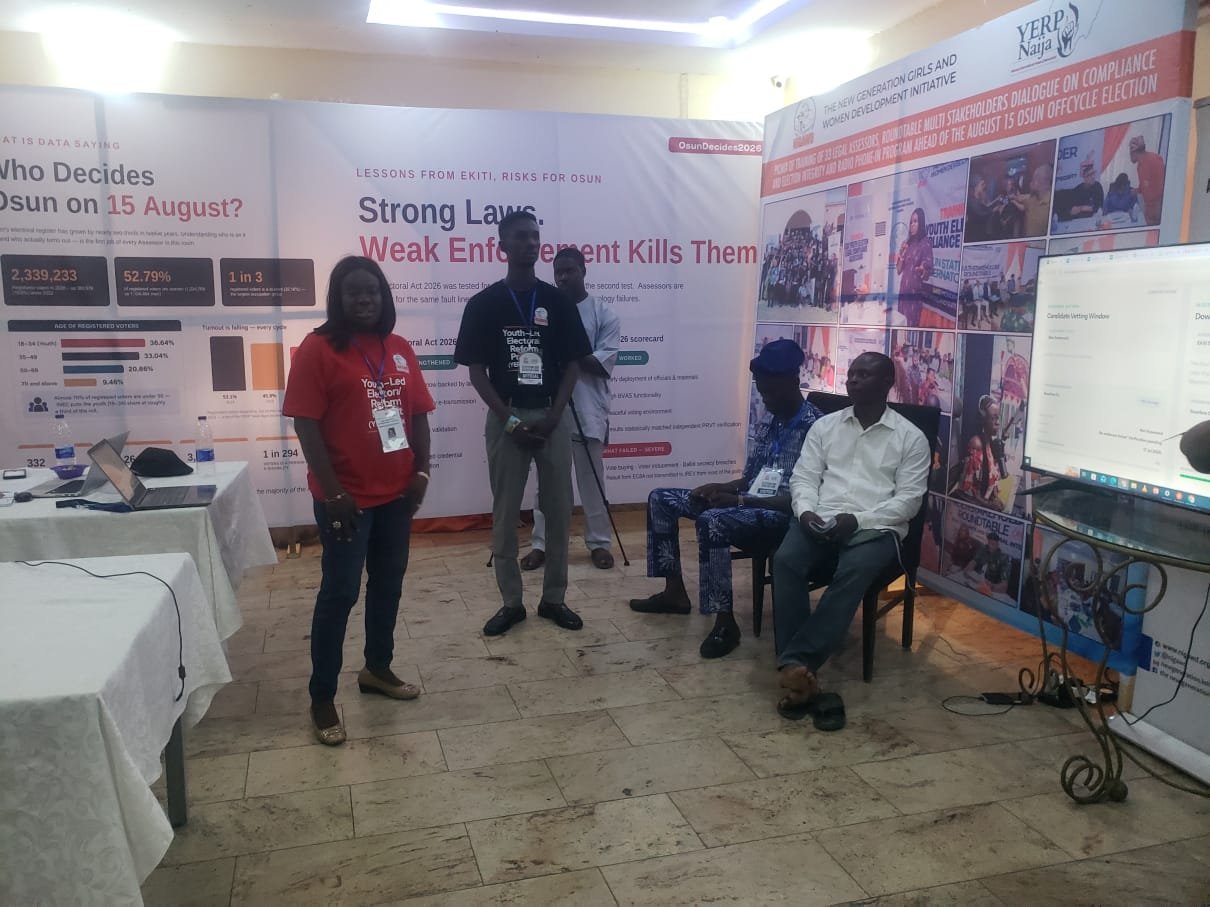
Civil society organisations monitoring the 2026 Osun State governorship election have commenced a comprehensive assessment of the level of compliance with electoral guidelines and reforms, with a particular focus on downloadable Permanent Voter Cards, electronic transmission of results, voter inducement, ballot secrecy, and youth participation.
The organisations, led by the YERP-NAIJA Consortium, said the assessment was designed to determine whether electoral reforms and recommendations from previous elections had translated into concrete improvements in the conduct of the poll.
Speaking during a presentation on the field assessment, Executive Director of The New Generation Girls and Women Development Initiative (NIGAWD) the Southwest lead for YERP Naija Consortium, Abimbola Aladejare-Salako, said the organisations had engaged the Independent National Electoral Commission, including its Resident Electoral Commissioner and other stakeholders, ahead of the election. According to him, the engagements were aimed at ensuring the implementation of relevant provisions of the Electoral Act and other electoral guidelines, particularly those relating to voter accreditation, transparency and electronic transmission of results.
She said the organisations subsequently observed that some polling units and local government areas had made use of the downloadable PVC system.
The monitors explained that their observers were also assessing whether voters presenting downloadable PVCs were accepted at polling units, stressing that a valid downloadable PVC should not be confused with a photocopy of a physical PVC or other forms of identification.
The organisations said the next phase of the assessment would focus on the counting and result-management processes, including whether the appropriate result forms were properly completed and displayed at polling units and whether images of the results were uploaded to INEC’s designated electronic platform.
They added that cases of failed electronic uploads would also be documented, including the circumstances and possible reasons for such failures.
According to the organisations, the issue of result transmission was particularly important because the integrity of an election could be affected by what happens to results between the polling unit and the collation centre.
“Anything can happen between that point of voting and the collation centre,” A said, stressing the need to monitor the entire process from voting through result transmission and collation.
The organisations also disclosed that their field legal assessors had documented alleged cases of cash and gift distribution presented as philanthropic activities at campaign venues.
They further reported alleged electronic transfers of N10,000 which they said were linked to political parties, while noting that the reports would be subjected to further assessment and verification.
The monitors said they were also tracking possible cases of vote buying, voter inducement and violations of ballot secrecy, warning that such practices could undermine the credibility, transparency and integrity of the electoral process.
On youth participation, Aladejare-Salako said the organisations were particularly interested in determining the extent to which young Nigerians participated in the election.
She said the assessment would document the number of young people who turned out to vote and exercise their constitutional right, while also examining how electoral reforms affecting young voters were implemented.
The organisations said their monitoring activities covered three major stages: pre-election engagements, election-day observation and post-election assessment.
They explained that the initiative grew out of the Vote Not Buy campaign, which mobilised young Nigerians, particularly in the Southwest, to participate actively in elections and reject vote buying.
The campaign later contributed to the emergence of the YERP-NAIJA Consortium, which has advocated electoral reforms aimed at addressing the needs and concerns of young Nigerians.
As part of its advocacy, the consortium said it had engaged members of the National Assembly on electoral reform and submitted recommendations for consideration in the development of new electoral legislation.
The organisations said their work had now shifted from advocacy for electoral reforms to assessing whether reforms already contained in the Electoral Act and related policies were being effectively implemented.
They disclosed that several observer groups had been trained and deployed across the state to monitor the implementation of the reforms during the election.
The monitors said the assessment platform was also being developed as a knowledge bank for electoral reform, enabling civil society organisations to track whether recommendations from previous elections were producing measurable improvements.
They explained that the current exercise was being conducted as a pilot assessment, with observations and responses from the field being converted into quantitative scores to measure the implementation of electoral reforms.
The organisations also expressed concern about the reliability of election technology and information management, saying challenges encountered during previous elections should serve as lessons for improving subsequent polls.
They stressed that the purpose of the assessment was not to replace the responsibilities of INEC but to provide independent monitoring of the electoral process, identify implementation gaps and document areas where reforms were succeeding or failing.
The organisations said they would not release preliminary percentage scores while the electoral process was still ongoing, noting that the final assessment would be based on verified reports from observers after the completion of the process.
They said a comprehensive report and press release would subsequently be issued and shared with media organisations and other stakeholders.
The organisations reiterated that their overall objective was to promote transparency, credibility and accountability in elections while ensuring that the voices, participation and interests of young Nigerians remained central to Nigeria’s electoral reform process.