Africa
Ebola Outbreak in Republic of Congo Sparks Cross-Border Emergency as Confirmed Cases Rise

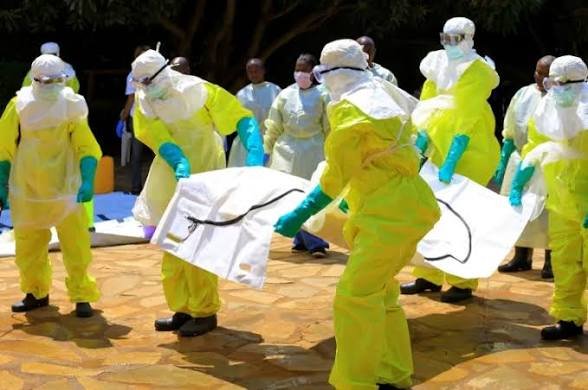
A new Ebola outbreak in the Democratic Republic of the Congo has killed at least 80 people and infected dozens more, with health authorities now racing to contain the virus after a confirmed case crossed into neighbouring Uganda. The outbreak, declared in the conflict-hit Ituri Province in the country’s northeast, marks the 17th time Ebola has struck the nation since the virus was first identified in 1976.
Laboratory analysis conducted by the National Institute of Biomedical Research in Kinshasa has confirmed 13 cases of the Ebola Bundibugyo strain out of 20 samples collected from suspected cases in the Mongwalu and Rwampara health zones. As of the latest update, approximately 246 suspected cases have been reported alongside 65 to 80 community deaths, with four deaths confirmed among laboratory-positive patients. The presumed index case was a nurse in the Rwampara health zone who died after developing symptoms including fever, bleeding, vomiting and severe weakness.
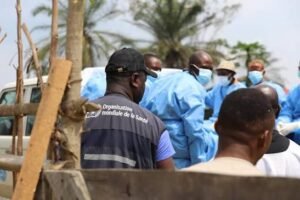
The World Health Organization confirmed it received an alert about suspected cases on 5 May 2026 and immediately deployed a mission to Ituri to support investigations. WHO Director-General Tedros Adhanom Ghebreyesus said he has released US$500,000 from the organisation’s Contingency Fund for Emergencies to support the initial response. “The Democratic Republic of the Congo has extensive experience responding to Ebola outbreaks, and WHO is rapidly scaling up support to the ongoing response,” said Dr Mohamed Janabi, WHO Regional Director for Africa. “Working closely with national authorities and partners, we are mobilizing swiftly, deploying additional expertise and resources to halt the spread of the virus, protect and save lives.”
The outbreak has raised urgent cross-border concerns after Uganda confirmed an imported Ebola Bundibugyo case in a 59-year-old Congolese man who was admitted to Kibuli Muslim Hospital in Kampala on 11 May 2026 and died three days later. “This is an imported case from the DRC. The country is yet to confirm a local case,” said Diana Atwine, permanent secretary at Uganda’s Ministry of Health.
The Africa Centres for Disease Control and Prevention has called for rapid regional coordination, citing significant risks including the urban context of Bunia and Rwampara, intense population movement associated with mining activities in Mongwalu, ongoing insecurity in affected areas, gaps in contact tracing, infection prevention and control challenges, and the proximity to Uganda and South Sudan. “Africa CDC stands in solidarity with the Governments and people of the Democratic Republic of the Congo and Uganda as they respond to this outbreak and the imported case reported by Uganda,” said H.E. Dr Jean Kaseya, Director General of Africa CDC. “The situation requires speed, scientific rigour and regional solidarity. We are working with DRC, Uganda, South Sudan and partners to strengthen surveillance, preparedness and response, and to help contain transmission as quickly as possible.”
Health officials are particularly concerned because currently licensed Ebola vaccines primarily target the Zaire strain, while this outbreak involves the Bundibugyo strain first identified in western Uganda in 2007. No approved vaccine exists for this strain, complicating containment efforts. The outbreak is affecting areas with significant operational challenges, including armed violence, displacement, fragile health services and frequent cross-border movement.
WHO has deployed additional experts in epidemiology, infection prevention and control, laboratory diagnostics, clinical care, logistics, risk communication and community engagement to reinforce the frontline response. The organisation is airlifting five metric tonnes of supplies from Kinshasa to Bunia, the Ituri provincial capital, including infection prevention and control materials, laboratory sample transportation equipment, case management supplies and tents. Priority actions include strengthening disease surveillance, active case finding, contact tracing, infection prevention and control in health facilities, expanding access to safe care, increasing laboratory testing capacity, ensuring safe and dignified burials, and community sensitisation.
The previous Ebola outbreak in the Democratic Republic of the Congo ended in December 2025 after recording 64 cases and 45 deaths. Ebola virus disease is severe and often fatal, spreading through direct contact with the bodily fluids of infected persons, contaminated materials, or the bodies of those who have died from the disease. Early detection, supportive treatment and rapid public health measures significantly improve survival and are critical to stopping transmission.