
General News
FG, States Face Fresh Pressure to Turn Health Research Into Lifesaving Solutions

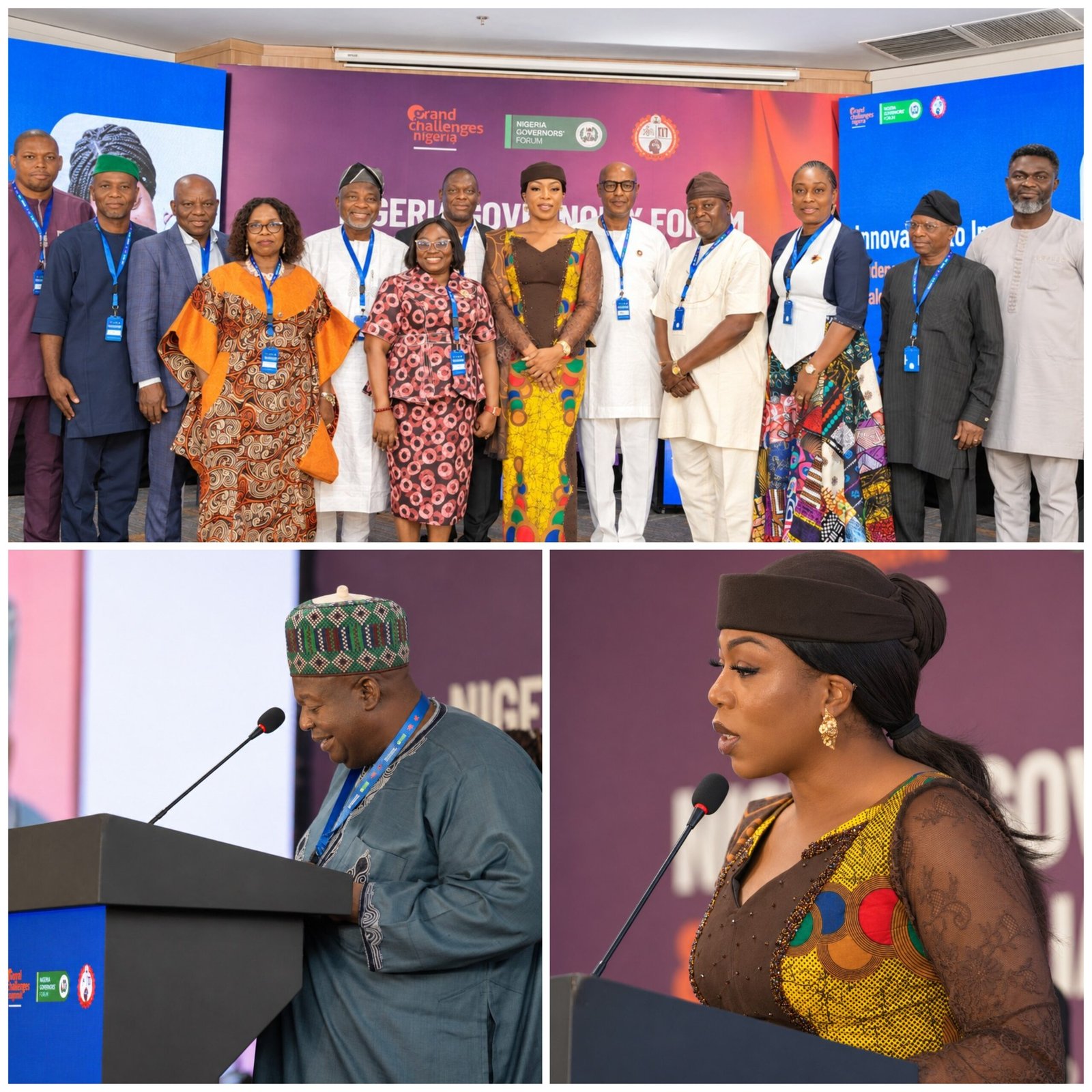
The Federal Government and state governments have been urged to increase investment in locally developed healthcare innovations as Nigeria intensifies efforts to address its persistent burden of maternal and newborn deaths.
The call was made on Friday by the Senior Special Assistant to President Bola Tinubu on Public Health in the Office of the Vice-President, Uju-Rochas Anwukah, who challenged state governments to move beyond supporting research on paper and commit resources to implementing solutions capable of saving lives.
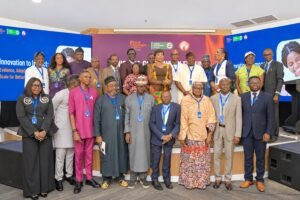
Speaking at the Nigerian Governors’ Forum (NGF) and Grand Challenges Nigeria Annual Meeting and Innovation Exchange, Anwukah warned that promising health innovations would make little difference if they were not adopted, adequately funded and integrated into the country’s healthcare delivery system.
She said the disconnect between research and implementation remained a major obstacle to achieving meaningful improvements in maternal and newborn health.
“Too many promising ideas end up as reports on a shelf, while the families they were meant to help never feel the difference. This meeting is about closing that gap,” she said.
Anwukah, who chairs the Board of Grand Challenges Nigeria, disclosed that 10 Nigerian-led projects had received seed funding of up to N60 million each, with eight beneficiaries participating in the meeting to present their innovations and explore opportunities for wider implementation.

She recalled that Vice-President Kashim Shettima launched the initiative at the State House two years ago, positioning Nigeria as the seventh African country to join the Grand Challenges network.
According to her, reducing maternal and newborn deaths requires sustained investment in interventions that address the health needs of women and children, particularly at the frontline of healthcare delivery.
She described maternal and newborn survival as a critical foundation for human capital development, insisting that healthcare investment must begin with protecting mothers and giving children a healthy start in life.
“That investment has to begin with the mother and the newborn because a healthy start is the foundation of every productive life,” she said.
The presidential aide cautioned that innovations dependent entirely on temporary donor funding risked disappearing once grants expired.
“A pilot that ends when the grant ends is not a success at all. It is a missed opportunity,” she said.
She identified reliable evidence, government ownership, adequately equipped frontline health workers and sustainable financing as essential requirements for expanding successful interventions.

She also challenged federal and state governments, alongside development partners, to identify innovations they were prepared to adopt, provide implementation timelines and designate officials responsible for delivering the commitments.
“When we gather again next year, the question will not be what we discussed but what we delivered together,” she added.
The Senior Programme Officer, Nutrition at the Gates Foundation, Alem Hadera Abay, also called for urgent action on maternal and child healthcare, noting that Nigeria continued to record high mortality despite improvements in some child health indicators.
Abay urged the country to intensify efforts towards achieving its commitments under the World Health Assembly targets and the Sustainable Development Goals.
In his contribution, the Permanent Secretary, Federal Ministry of Innovation, Science and Technology, Dr Mukhtar Yawale Muhammad, called for stronger collaboration among researchers, regulatory agencies, state governments and private-sector organisations.
He said research findings must move beyond experimental and pilot stages through sustained institutional support, financing and clearly defined implementation plans.
Muhammad stressed that institutions expected to deploy research outcomes should be involved from the beginning of project development to ensure that innovations respond to actual healthcare needs and are easier to adopt.
Representing the Director-General of the Nigeria Governors’ Forum Secretariat, Dr Abdulateef O.T. Shittu, the Head of Health Team, Dr Chinekwu Oreh, acknowledged the difficulties facing state governments in maternal and newborn healthcare, primary healthcare delivery and sustainable health financing.
He maintained that innovations must reflect the operational realities of Nigeria’s healthcare system if they were to achieve widespread impact.
“The question before us is therefore not simply what innovations exist, but which ones work, under what conditions, and how we can make them available to more Nigerians,” he said.
Shittu urged stakeholders to move from discussions to concrete implementation arrangements, including identifying institutions that could take ownership of promising projects.
“The true value of innovation lies not in the novelty of an idea, but in its capacity to improve lives,” he added.
Earlier, the Programme Director of Grand Challenges Nigeria, Godwin Bamsa, explained that the initiative was established to mobilise resources for Nigerian researchers and innovators developing solutions to the country’s health and development challenges.
He said the programme focuses on identifying local needs, supporting home-grown innovations and connecting researchers with institutions capable of translating their findings into practical interventions.
The President of the Nutrition Society of Nigeria, Professor Salisu Abubakar, called for stronger partnerships between researchers, government institutions and development organisations.
Abubakar recalled that Grand Challenges Nigeria was launched in November 2024 with support from the Gates Foundation and the Office of the Vice-President to promote and finance locally driven innovations.
He urged the Nigeria Governors’ Forum and the Federal Ministry of Innovation, Science and Technology to demonstrate concrete commitments towards financing and implementing research outcomes.
Also speaking, Associate Partner at Dalberg, Chimdi D. Owundiegu, identified weak institutional partnerships as one of the major reasons promising research findings fail to translate into practical solutions.
She challenged Nigerian innovators to build stronger relationships with government agencies and other organisations responsible for implementing their work.
Owundiegu further identified the proposed National Research Institute as a possible mechanism for addressing fragmentation in research funding and coordination.
She, however, emphasised that the proposed institution must maintain strong partnerships with public- and private-sector organisations to ensure that research investment produces measurable improvements in maternal and child healthcare.
The meeting underscored the need for stronger government ownership of locally developed health innovations, with stakeholders insisting that sustainable funding and institutional adoption would be critical to reducing preventable deaths among Nigerian mothers and newborns.