Crime
FORMER ATTORNEY-GENERAL ABUBAKAR MALAMI DETAINED FOR SECOND NIGHT AS EFCC PROBES 18 ALLEGED OFFENCES


For the second night running, former Attorney-General of the Federation and Minister of Justice, Abubakar Malami, remained in custody at the expansive detention facility of the Economic and Financial Crimes Commission in Abuja. Malami, once one of the most powerful officials in Nigeria’s security and justice architecture, is at the centre of an intensifying corruption probe that touches on contentious financial dealings of the Buhari administration.

Malami, who defected from the ruling APC to the African Democratic Congress in mid-2025 to pursue his 2027 Kebbi governorship ambition, arrived at the EFCC headquarters late on Monday following an invitation. What began as a routine interrogation stretched into a second day as investigators expanded their questioning. “Despite frantic efforts by his allies, the former minister was unable to meet the stringent bail conditions set by the anti-graft agency,” a source familiar with the matter said.
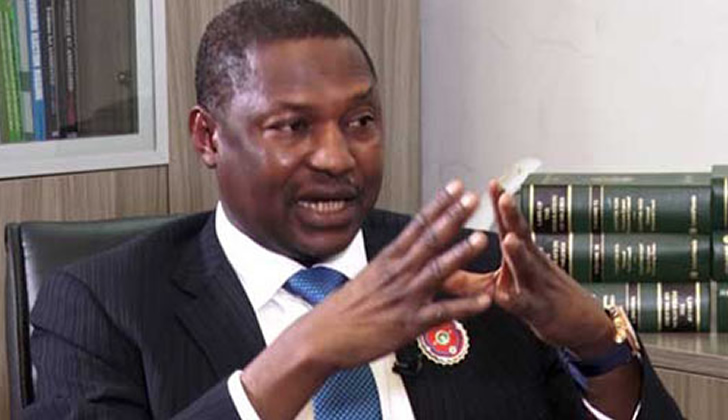
According to officials familiar with the investigation, Malami is being grilled over 18 alleged offences ranging from money laundering to abuse of office and suspected terrorism financing. At the top of the EFCC’s inquiry is the handling of the $346.2 million Abacha loot repatriated from Switzerland and additional funds returned from Jersey Island. “Investigators want explanations for discrepancies in documentation and the management structure used for the recoveries,” an official stated.
The former minister is also facing questions over the alleged mismanagement of N4 billion said to have come through the Central Bank of Nigeria’s Anchor Borrowers’ Programme—funds investigators believe may have been diverted. Beyond federal recoveries, Malami is being probed for alleged N10 billion investments linked to him, including private schools, hotels, and rice mills in Kebbi State. “These assets do not match his legitimate earnings,” a source claimed. As part of the widening dragnet, up to 46 bank accounts allegedly connected to the former AGF are now under scrutiny.
The current investigation revives older questions first raised in a 2023 probe that spotlighted at least five transactions handled under Malami’s watch. These include the controversial $496 million payment to Global Steel Holdings Ltd, tied to the Ajaokuta Steel concession; alleged irregularities in the sale of forfeited assets managed by the EFCC; his role in the $419 million Paris Club refund judgment payment; the contentious decision to approve $200 million to Sunrise Power in the Mambilla power dispute; and accusations of duplicated legal fees in the transfer of $321 million Abacha loot from Switzerland.
For many observers, the EFCC’s renewed vigour signals one of the most serious anti-corruption actions yet involving a top member of the Buhari cabinet—an administration that frequently touted a zero-tolerance posture toward corruption. When contacted, EFCC spokesperson Dele Oyewale declined to comment. “We maintain our typical silence around ongoing sensitive investigations,” Oyewale said. But insiders suggest the probe is far from over. “New leads continue to emerge with each round of questioning,” an insider revealed.
For Malami, who once sat at the apex of Nigeria’s legal and anti-corruption apparatus, the days ahead may prove defining. What began as a routine invitation now appears to be spiralling into one of the most consequential corruption cases in recent years—one that could reshape political alliances and revive long-standing questions about accountability within the former administration. As investigators tighten the circle, Nigeria waits to see whether this high-profile probe ends in prosecution, exoneration, or something in between.