
Automobile
Future of Rides: Uber Invests Billions in Self-Driving Cars


Uber has announced plans to invest up to $1.25 billion in electric vehicle maker Rivian as part of a major push into the fast-growing robotaxi market.
The deal will see Uber and its partners initially acquire about 10,000 fully autonomous vehicles based on Rivian’s upcoming R2 model, with an option to expand the fleet to as many as 50,000 units in the coming years.
The partnership is expected to roll out its first robotaxi services in cities such as San Francisco and Miami starting in 2028, with a broader expansion planned across up to 25 cities in the United States, Canada, and Europe by 2031.
Uber’s investment will be made over several years and is tied to Rivian achieving key milestones in autonomous driving technology. The company has committed an initial $300 million, with additional funding dependent on progress toward full self-driving capabilities.
The move marks a significant step in Uber’s strategy to position itself as a central platform for autonomous ride-hailing services, despite not developing its own self-driving technology. Instead, the company is partnering with multiple firms to build a large-scale robotaxi network.
For Rivian, the agreement represents a major boost as it expands beyond electric trucks and SUVs into autonomous mobility. The collaboration is also expected to accelerate the development of advanced driverless systems and strengthen its presence in the competitive electric vehicle market.
Industry analysts say the partnership highlights intensifying competition in the global robotaxi race, as companies invest heavily in autonomous technology to shape the future of transportation.
Automobile
Tinubu’s EV Push Gains Momentum as FG Approves Electric Buses, NADDC Targets Nnewi Automotive Hub


The National Automotive Design and Development Council (NADDC) has unveiled plans to establish a full-scale Automotive Development Park in Nnewi, Anambra State, as the Federal Government approves the rollout of electric buses for civil servants in a bold shift toward sustainable transportation.
Director-General of NADDC, Oluwemimo Osanipin, made the disclosure in Abuja while outlining the Council’s strategic initiatives under the Nigeria First Policy of President Bola Ahmed Tinubu.
He described the proposed Nnewi Automotive Development Park as a game-changing project designed to close critical infrastructure gaps and attract large-scale investment into Nigeria’s automobile industry.
According to him, the park will provide shared facilities for manufacturers, reducing startup costs and encouraging more players to establish operations within the ecosystem.
“We are building an Automotive Park that allows investors and manufacturers to leverage shared infrastructure rather than bear the full cost individually. At this stage, we are seeking strong investor participation to accelerate delivery,” Osanipin said.
In a major policy boost, the NADDC boss revealed that the Federal Government has approved electric buses for use by civil servants, with procurement to be done through local vehicle assemblers.
He added that the initiative will be supported by the installation of charging stations across strategic locations nationwide, signaling a coordinated push toward electric mobility.
“The approval of electric buses is a significant step. These vehicles will be sourced locally, and the supporting charging infrastructure is already being planned to ensure seamless adoption,” he stated.
Osanipin further noted that NADDC is intensifying efforts to localize the production of key automotive components, including batteries and tyres, through targeted training and industry support programmes.
To strengthen the sector, he disclosed that the Council is preparing a new bill for submission to the National Assembly to align its operations with evolving global standards.
He also highlighted ongoing collaboration with the Bank of Industry to enable qualified stakeholders access funding under the National Automotive Development Fund.
Reiterating the Council’s commitment to transforming the industry, Osanipin called on Nigerians to embrace locally made vehicles, stressing that increased patronage would drive job creation, industrial growth, and improved contributions to the nation’s GDP.

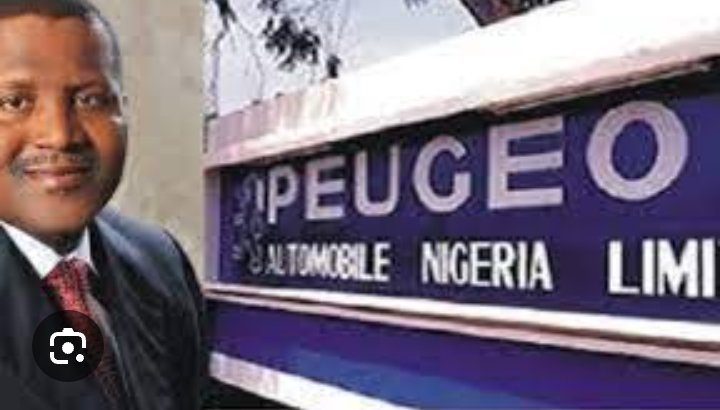
Dangote Peugeot Automobiles Nigeria Limited (DPAN) has commenced the assembly of the Peugeot 3008 GT model in Kaduna, Nigeria. This development is part of the company’s efforts to regain its leadership position in the Nigerian auto market.

The Peugeot 3008 GT, which is being assembled at DPAN’s modern plant in Kaduna, features a 1.6-liter high-performance turbo engine, automatic transmission system, and a range of premium features, including driver lumbar adjustment and massage seat, Bluetooth telephony, cruise control, and auto headlights.

Chief Commercial Officer of Dangote Peugeot, Umar Isa-Kaita, revealed that the company is also set to introduce the Peugeot Landtrek 4×2, a pickup truck with a rear-wheel drive system, into the Nigerian market. Isa-Kaita noted that the Landtrek is part of the Peugeot Landtrek pickup truck range, known for its ruggedness.

Isa-Kaita also revealed that DPAN has been holding discussions with some auto companies to expand the Peugeot sales and after-sales network by accrediting dealerships in various parts of Nigeria. This move is expected to enhance the visibility and availability of Peugeot vehicles nationwide and ensure satisfactory after-sales support for Peugeot owners.

The Managing Director of DPAN, Ibrahim Isa Gachi, expressed confidence that with the company’s capacity to assemble 120 vehicles per day, DPAN would gradually return the Peugeot brand to the forefront of the Nigerian auto market. Gachi noted that the introduction of the 3008 GT and the Landtrek is part of the company’s promise to introduce new models into the market, following the roll-out of the Peugeot 301 in January 2022.