Gender
GOCOP Warns Fake News and Women’s Exclusion Threaten Nigeria’s 2027 Elections

The Guild of Corporate Online Publishers has raised alarm over the twin threats of fake news and the political exclusion of women ahead of Nigeria’s 2027 general elections, warning that both could undermine the credibility of the polls.
In a communiqué issued after its 10th Annual Conference held on October 7 and 8, 2026, at the Radisson Blu Hotel in Ikeja, Lagos, GOCOP identified fake news, unverified leaks, manipulated content and artificial intelligence-generated deepfakes as significant threats to the electoral process.
The conference warned that such material could deepen divisions, discourage voter participation and cause damage that subsequent retractions might not adequately repair.
“Information disorder — fake news, unverified leaks, synthetic media and AI-generated deepfakes — is a direct threat to the polls,” the communiqué stated. “It inflames division and depresses turnout, and retractions rarely repair the damage”.

The Guild urged its members and other media organisations to prioritise accuracy over speed, reject clickbait and protect election reporting from partisan and proprietorial interests.
It declared that unverified polling-unit results, altered result sheets and inflammatory speculation would have no place on its platforms, warning that violations would attract sanctions under its code of conduct.
On women’s participation, GOCOP expressed concern that inclusion remained largely performative, alleging that opaque consensus arrangements used by political parties to select candidates systematically excluded women.
The Guild warned that prevailing trends suggested fewer women could emerge as elected representatives in 2027 unless deliberate measures were taken.
The conference called on the National Assembly to enact legislation specifically aimed at increasing women’s participation and representation in the electoral process.
It also urged political parties to conduct open and transparent candidate selection and end opaque consensus arrangements that exclude women.
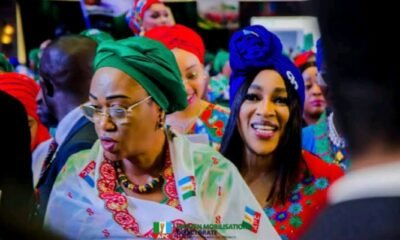
Gender equality advocate Adaora Onyechere Sydney-Jack, who spoke during a panel session at the conference, said the numbers were alarming.
“On June 8, 2026 after the primaries of the various political parties in the country, we saw that only three female senatorial candidates emerged from across the 22 political parties in the country,” she said. “This represents a drastic decline from what we saw in 2019”.
She added that in 2023 there was no female presidential candidate on the ballot papers, and in 2026 only two women emerged among the 22 political parties.
“We want to grow from this current performative inclusion to real-time inclusion for women,” she stated.
The Guild also criticised the limited accessibility of electoral laws and guidelines, noting that Nigeria’s linguistic diversity, encompassing about 250 ethnic groups, made the continued publication of electoral laws exclusively in English a significant barrier to broader public understanding.
It called for the translation of the Electoral Act, relevant regulations and voter-education materials into major Nigerian languages, alongside accessible formats for persons with disabilities.
GOCOP further expressed concern over weak accountability for electoral offences, arguing that the limited prosecution of offenders could encourage impunity.
It called on the Independent National Electoral Commission to work with prosecuting authorities to pursue electoral offences and make the outcomes public.
The conference observed that only 38 per cent of Nigerians believe in the credibility of elections, noting that trust is neither inherited nor conceded but earned through consistent, verifiable and transparent execution.
It also identified the cost of living as the leading issue likely to shape voter choices, urging political parties and candidates to focus their campaigns on issues affecting Nigerians and refrain from disinformation and incitement.
The communiqué was signed by GOCOP President Danlami Nmodu and General Secretary Sufuyan Ojeifo.