
General News
HISTORIC OKPE IDENTITY UNDER THREAT AS MONARCH DECLARES OKPE A DIALECT OF URHOBO

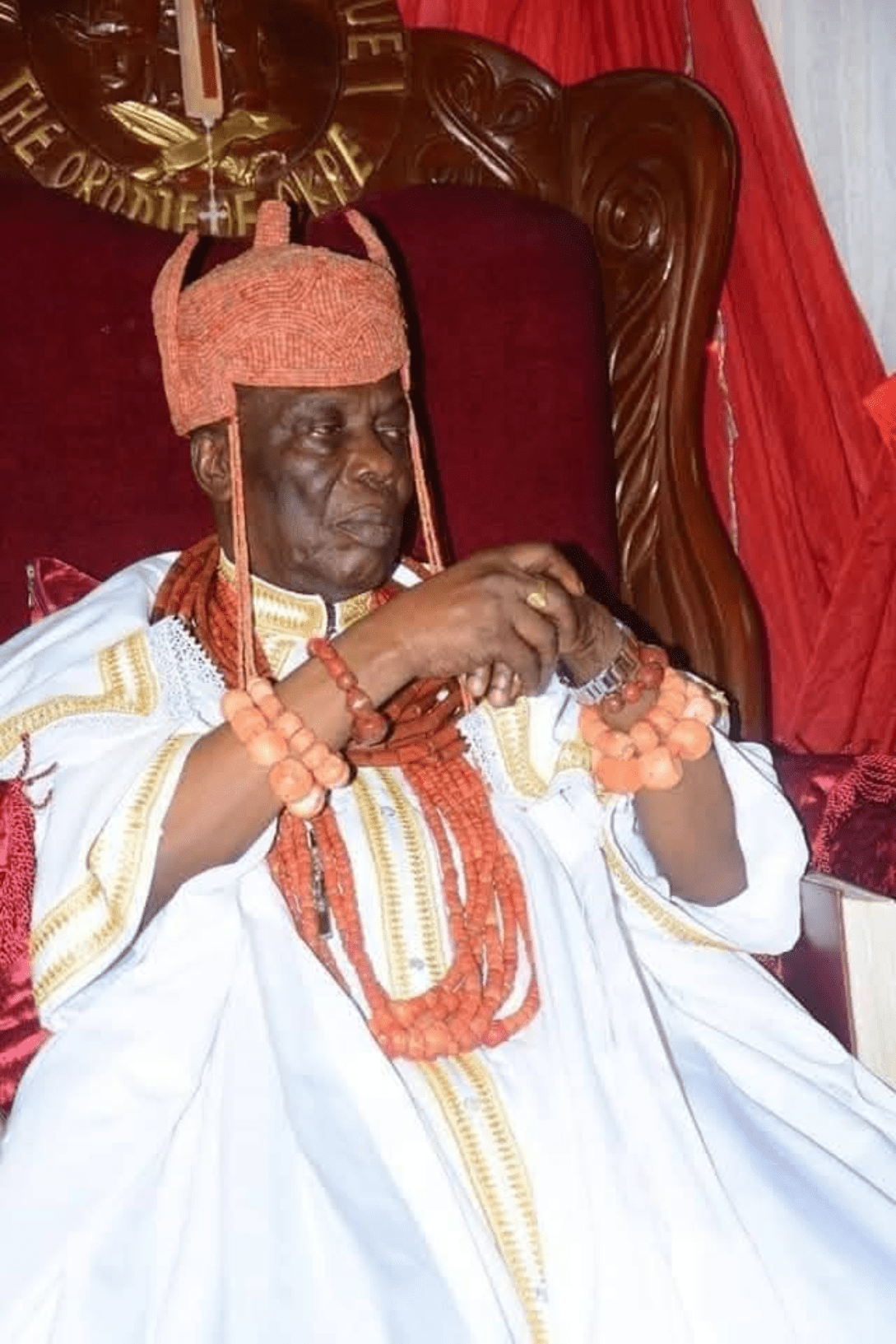
A video statement by HRM Orhue I, the Orodje of Okpe Kingdom, declaring that “Okpe is a dialect of the Urhobo,” has ignited widespread controversy and condemnation from the Okpe community worldwide. The November 5, 2025, statement, seen as a denial of Okpe’s distinct ethnic nationality, was immediately rejected by the Okpe Union as false and historically inaccurate.
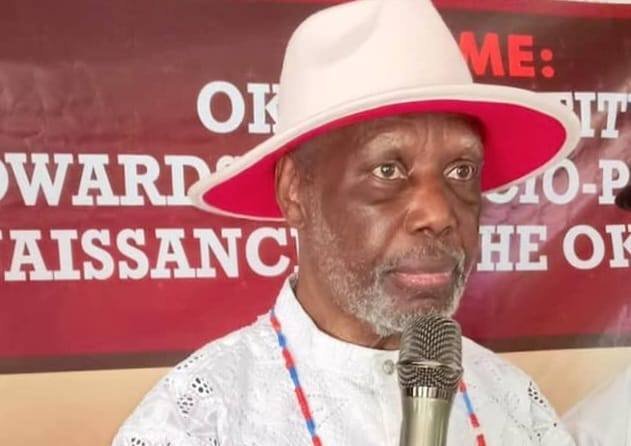
The Orodje’s declaration coincided with his directive that 20 Okpe nationals be submitted as delegates to the Urhobo Progress Union (UPU), a move critics interpret as aligning with forces undermining Okpe autonomy. In response, the Okpe Union’s National Executive Council convened on November 15, 2025, to formally refute the monarch’s claims.
Historically, the Okpe people trace their origins to migrations from the Benin Kingdom during the reign of Oba Ozolua (1483–1504 AD). Prince Okpe, a son of the Benin royal lineage, and his four sons—Orhue, Orhoro, Evbreke, and Esezi—established the Okpe Kingdom, developing a distinct territory, political structure, and monarchy.
Scholars assert that the colonial-era classification of Okpe as “Western Urhobo” was an administrative convenience by British authorities, not an ethnographic fact. British anthropologist R.E. Bradbury noted in 1970 that the Okpe were culturally closer to the Edo-speaking Benin people than to the Urhobo. The Okpe Union argues that, unlike the successfully recognized Isoko people who were labeled “Eastern Urhobo,” the Okpe continue to fight against this colonial misclassification.
The Union stresses that the Okpe language is distinct, not a dialect. “A dialect, by definition, is a regional or social variant of a primary language, whereas Okpe constitutes a fully distinct language with unique grammar, vocabulary, and oral traditions,” the council stated. They maintain that Okpe satisfies all criteria for a distinct ethnic nationality: common ancestry, shared language, unique traditions, defined territory, and political cohesion.
The timing of the Orodje’s statement has raised questions about political motivations ahead of the 2027 elections. Analysts suggest the declaration risks undermining Okpe cohesion for external political gain. A senior chief in the palace admitted that internal actors with Urhobo parentage have dominated policy in the kingdom, suggesting a possible “fifth column” influencing the pronouncement.
This stance marks a dramatic shift from the Orodje’s earlier positions. In 2006, he hosted the first Okpe Voice World Conference to affirm Okpe distinctness. In 2007, he told the Okpe Union of North America, “Okpe is a unique ethnic nationality with distinctive roots in ancient history, tradition, culture, customs, and language.”
However, from around 2010, his advocacy reportedly weakened for personal political ambitions, including within the Delta State Traditional Rulers’ Council. He publicly cautioned the Okpe Union against pursuing ethnic recognition while internally endorsing Okpe identity, a duality that culminated in the November 2025 video.
The implications of denying Okpe ethnicity are tangible, affecting governance, educational language instruction, and cultural preservation. Barr. Kingsley Ehensiri Akpederin warned, “When the leadership of a people claim the identity of a neighboring nation for political correctness, they have wittingly or unwittingly opted to destroy their own identity, language, arts, and the self-esteem of the people.”
Prof. Kenneth Eni noted that only a few Okpe unaware of their roots might support the Urhobo narrative, adding that “the Urhobo themselves do not consider Okpe as Urhobo.”
The Okpe Union asserts that the monarchy, while a vital symbol, cannot unilaterally redefine the ethnicity of the people. They call for unity and continued advocacy for recognition. “The struggle for recognition is long and arduous, but the preservation of identity is non-negotiable,” the Union stated.
The controversy serves as a cautionary tale on political expediency overriding historical truth. The Okpe Union concludes, “Okpe is not Urhobo. Okpe is a distinct nationality with a proud history, resilient culture, and a language that deserves recognition. History will judge the Orodje’s declaration, but the resilience of the Okpe Nation ensures that truth, not political convenience, will prevail.”







The Managing Director of Belujane Konzult, Chris Aligbe, has defended the Federal Competition and Consumer Protection Commission (FCCPC) over its probe into domestic airline fares, dismissing criticisms as a misunderstanding of the law.
Aligbe spoke amid controversies surrounding allegations of price-fixing by domestic airlines during the high travel season last December. He stated that the FCCPC acted within its legal mandate, describing the sharp airfare hikes as unjustifiable and not backed by factors such as rising Jet A1 fuel costs or new taxes, as claimed by the airlines.
The Airline Operators of Nigeria (AON) had previously challenged the FCCPC’s interim report, arguing that the commission lacked competence in airline economics and that its findings could threaten the survival of domestic carriers.
Despite the disagreement, the FCCPC proceeded to indict five unnamed indigenous airlines and announced plans to impose sanctions in line with existing laws. The commission also intends to engage forensic experts to examine the alleged price-fixing practices.
Speaking to The Guardian in Lagos, Aligbe emphasized that while the Nigeria Civil Aviation Authority (NCAA) regulates the aviation sector, the FCCPC functions as a cross-sectoral competition and consumer protection authority, with jurisdiction to intervene in anti-competition cases across industries, including aviation.
He added that the FCCPC’s authority, established by an Act of the National Assembly, has been reinforced by judicial endorsements, including those from the Chief Justice of Nigeria.
Responding to claims that the FCCPC lacked aviation expertise, Aligbe said the arguments were unfounded, noting that former FCCPC Chief Executive Officer Babatunde Irukera contributed to drafting the commission’s founding legislation, ensuring continuity of institutional knowledge.
Aligbe further accused domestic airlines of exploiting passengers during peak periods by delaying the opening of booking portals, which forces last-minute ticket purchases at inflated prices. He dismissed airline claims that aircraft unavailability caused these delays, stating that proper planning should ensure fleet readiness ahead of high-demand seasons.
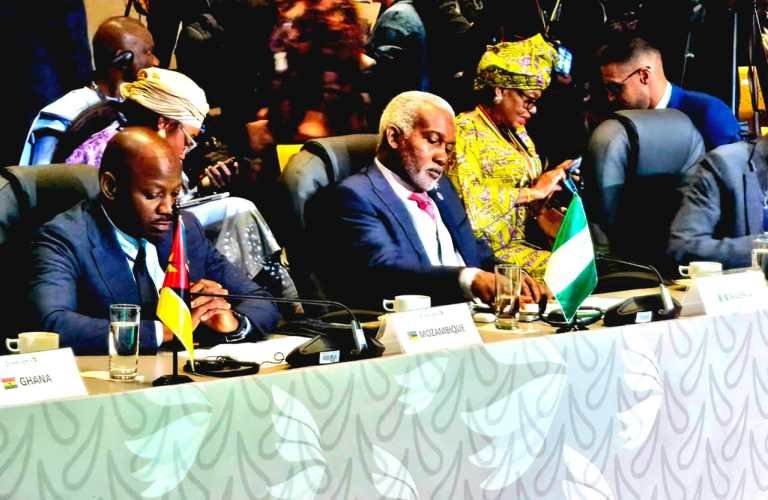
Nigeria has called for deeper economic, cultural, and strategic collaboration between Africa and Latin America at the CELAC–Africa High-Level Forum held in Bogotá.
Minister of Foreign Affairs, Yusuf Maitama Tuggar, who represented President Bola Ahmed Tinubu, described the forum as a critical platform for strengthening cooperation among Global South nations amid growing geopolitical uncertainties.
Tuggar commended Gustavo Petro for convening the meeting at a pivotal moment in global affairs, noting that ongoing global conflicts continue to have far-reaching consequences for developing countries.
He urged participating nations to work collectively to promote stability and mitigate shared risks, while advocating for a more unified and influential Global South voice in the evolving global order.
Highlighting Nigeria’s priorities, the minister identified key areas for collaboration, including education, energy, agriculture, solid minerals, and technology. He stressed the need for inclusiveness in emerging technologies such as artificial intelligence, warning that developing regions must not be left behind.
Reaffirming Nigeria’s commitment to international cooperation, Tuggar referenced the country’s Technical Aid Corps programme, which has supported Caribbean nations since 1987, and expressed readiness to expand partnerships across trade, healthcare, culture, and climate resilience.
On economic prospects, he noted Nigeria’s position as Africa’s largest market, pointing to opportunities in agriculture and agro-processing, as well as ongoing efforts to achieve food self-sufficiency through increased fertiliser production.
He also underscored the importance of cultural exchange and the creative industry in strengthening ties, calling for enhanced collaboration in arts, education, digital innovation, and intellectual property development.
Addressing global challenges, Tuggar called for joint action on climate change, healthcare access, and technology transfer, while reiterating Nigeria’s stance on tackling illicit financial flows and advancing discussions on historical reparations linked to slavery and colonialism.
The CELAC–Africa High-Level Forum, held from March 20 to 21, 2026, brought together leaders from Africa, Latin America, and the Caribbean to deepen cooperation across political, economic, and cultural sectors.

Nigeria is set to host the 8th Nigeria–European Union Ministerial Dialogue in Abuja, as both parties seek to strengthen diplomatic and economic ties.
The meeting, scheduled for Monday at the Ministry of Foreign Affairs, Tafawa Balewa House, will be led on the Nigerian side by the Minister of Foreign Affairs, Yusuf Maitama Tuggar. The European Union delegation will be headed by Kaja Kallas, who also serves as Vice-President of the European Commission.
Kallas arrived in Abuja on Sunday ahead of the talks and is expected to hold a bilateral meeting with Tuggar to review Nigeria–EU relations and explore new areas of cooperation.
As part of her visit, the EU envoy will also pay a courtesy call on Vice President Kashim Shettima at the Presidential Villa, in a move aimed at deepening diplomatic engagement.
Both parties are expected to address journalists in a joint press briefing after the dialogue, outlining key outcomes and areas of agreement.
The ministerial talks will focus on critical sectors including trade and investment, security cooperation, governance, migration, climate action, and sustainable development.
The Ministry of Foreign Affairs Nigeria reaffirmed Nigeria’s commitment to strengthening bilateral relations with the European Union, expressing optimism that the dialogue will yield productive and forward-looking outcomes.