
Analysis
HOW NIGERIAN POLITICIANS STARTED DASHING CARS AND HOUSES TO JUDGES


By Chidi Anselm Odinkalu
In January 1993, Ibrahim Babangida was Nigeria’s military ruler. He was supposedly in the last year of an interminable transition at the end of which he promised to hand over power to an elected civilian administration. Moshood Abiola was actively canvassing to inherit that mantle. As Chief Justice of Nigeria (CJN), Mohammed Bello was in his fourth year at the apex of the system for resolving disputes between Abiola and Babangida in that process of transition from military to civil rule. He had been CJN since 1987. At the time, Abiola was also Nigeria’s most influential newspaper publisher under the Concord Group. One of the titles published by the Concord Group was a weekly magazine called African Concord. Its editor was Bayo Onanuga.
The previous month, in December 1992, Bayo Onanuga’s African Concord ran a cover under the title: ‘‘Justice Mohammed Bello: Kick him out now! Lawyers demand.” Essentially, the story alleged that military ruler, Ibrahim Babangida, had bribed the Justices of the Supreme Court led by CJN, Mohammed Bello, with gifts of exotic Mercedes Benz cars. At the time, Mercedes Benz produced the most famous luxury brand of cars in Nigeria.
This story would not have amounted to much but for what followed. Shortly after New Year in 1993, nine of the Justices of the Supreme Court instructed Frederick Rotimi Alade (FRA) Williams, the doyen of Senior Advocates of Nigeria (SAN), to file a case before the High Court of Lagos State against the Concord Group, African Concord, and its editor, Bayo Onanuga, claiming that the story had defamed them. The Concord Group instructed stormy petrel, Gani Fawehinmi, to represent them. At the Ikeja Division of the High Court of Lagos where the case was tried, Samuel Omotunde Ilori, who would later rise to become the ninth Chief Judge of Lagos, presided.
This case had many sub-plots. It turned out, for instance, that Chief Williams’s youngest son, Tokunbo, who was shortly thereafter to become a SAN himself, was married to the daughter of the presiding judge, Olusola. When Gani Fawehinmi asked the judge to disqualify himself from the case, he declined, describing the request as “unprecedented” and an invitation to “an abdication of his sacred duty as a judicial officer.”
The Secretary to the Government of the Federation (SGF) at the time, Alhaji Aliyu Mohammed, the Wazirin Jema’a, was a witness in the case. In cross examining him, Gani Fawehinmi asked for his qualifications. Reluctantly, the SGF ventured that he was the proud holder of a Teachers Grade 2 certificate, in response to which Gani spat out (to predictable courtroom mirth) “Teacher’s Grade Two certificate, and he rose through the ranks to become the SGF!”
Ultimately, the case was settled when Abiola elected to apologise to the Supreme Court Justices, who then instructed Chief Williams to withdraw it. In response, Bayo Onanuga resigned as editor of Chief Abiola’s African Concord.
The underlying issue in that case, however, was judicial independence and integrity. 32 years ago, it was an affront to the independence and integrity of judges to suggest that they could be impressed with gifts of cars or imply that they were in the payroll of political office holders. Today, it is different. Senior judicial figures flaunt their propinquity to politicians and rely on that to subvert established rungs of authority among judges and between courts in the judicial hierarchy. It is now de rigeur for politicians to ply judges with cars.
Divining how the country got to this is not that difficult although it is not nearly as necessary as understanding when we did so.
When Mohammed Bello retired as CJN in 1995, Mohammed Lawal Uwais succeeded him. Justice Uwais was one of the justices affronted by the claims about collecting a car from the soldiers in 1992. Although Uwais well understood that “military rule had a corrosive effect” on the judiciary and had not made much of an effort to disguise their campaign to reduce the heads of the judiciary to the status of beggars before the soldiers, he was nevertheless not prepared to cede much ground to them on questions of personal and institutional integrity. Until his retirement in June 2006, the spectacle of politicians publicly gifting cars to judicial officers was not much part of Nigerian public life.
All that was to change under his successors. In effect, this business of the judges being reduced to beggars for Sub-Urban Utility Vehicles (SUVs) has all eventuated in less than two decades. It is difficult now to trace exactly when this change began. It seems likely, however, that the index case was – as with many things in Nigeria – Lagos State. There are suggestions, at the time of writing difficult to verify, that the practice of lacing judicial office with gifts of political housing and transport was quietly in place before 2007.
However, a significant moment for policy purposes occurred in the first week of October, 2007 when freshly minted Governor of Lagos, Babatunde Raji Fashola, SAN, presented 18 cars to Magistrates in Lagos State. Daily Champion reported the presentation the day after it occurred under the caption “Lagos Government Dashes 18 Cars to Magistrates.” In presenting the cars, Governor Fashola declared: “Our commitment to continuously improve the welfare package and conditions of service of judicial officers in the state places a reciprocal demand on magistrates to display professionalism, integrity and above all a good work ethic.”
Of course, Magistrates Courts are state courts and subordinate ones at that. They are inferior to the High Court. But the significance of this moment was hardly lost on the politicians and the public. At the state level, the Judicial Service Commission oversees the work of Magistrates. The Chief Judge of the state heads the JSC. At the federal level, that role belongs to the CJN. The JSC also controls the budget of the magistracy. The issue was not that the government desired to uplift the wellbeing of magistrates. It was that it chose to do so through a public presentation of cars by the governor for their “welfare”. The same goal could have been achieved if the JSC received the budget to be administered for precisely that objective.
If the governor chose not to do so, it would have been because he desired greater say in the management of the funds or he did not trust the hierarchy of the judiciary to manage it properly if it had been given to them. It could, of course, be a matter of cause and effect between these two factors. Giving credence to this, former Justice of the Supreme Court, Ejembi Eko publicly accused heads of courts in 2024 of “vandalisation of the judiciary budget” notwithstanding the fact that heads of courts in Nigeria controlled “enormous budgetary resources.”
There were many things about that event in Lagos in 2007 that should have warranted attention. The governor involved was a lawyer and SAN and the state involved was seen as one that set trends in Nigeria. Yet, when this occurred in 2007, most people missed both the event and its significance. The number of cars purchased by governors for the judiciary at various levels in the 18 years since then has gone off the charts. Hopefully, the judges are in a better state for it because, quite clearly, the courts are not.
It happens that the NJC Guidelines governing the appointment of judges requires as a precondition that every appointment round should be preceded by “proof of adequate Capital vote provision in the relevant approved Budget for the Superior Court of Record concerned.” In other words, before judges are appointed, the NJC requires proof from the head of the court system concerned that there are sufficient funds to take care of such things as both cars and housing for them. If politicians thereafter ply the judges with cars and other blandishments while the NJC looks away, it is not difficult to figure out what is happening.

A lawyer and a teacher, Odinkalu can be reached at chidi.odinkalu@tufts.edu


Analysis
Ozoro Festival Scandal Sparks National Debate on ‘Weaponised Traditions’ and Cultural Reform
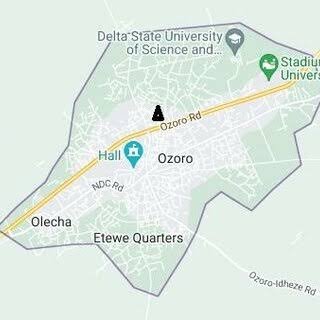
The controversy surrounding the Ozoro Festival in Delta State has ignited a nationwide debate over harmful cultural practices, following viral videos showing acts of sexual violence and widespread outrage across Nigeria.

The scandal has led to the arrest of six suspects by the police, including a community leader, but many Nigerians argue that the response falls short of justice and fails to address deeper cultural issues.
Critics have described the Ozoro Alue-Do Festival as a “weaponised tradition,” accusing it of reinforcing misogyny and enabling abuse under the guise of cultural celebration. Some members of the Isoko community, however, insist the issue is being misrepresented.
A female indigene, who spoke anonymously, condemned what she described as systemic discrimination against women within the culture, alleging that harmful practices are often excused and victims silenced.
“Women are blamed even in cases of abuse, while perpetrators are shielded,” she said, pointing to long-standing traditions that, in her view, enable injustice.
But cultural analyst Anote Ajelouruo cautioned against sweeping generalisations, arguing that the festival’s origins must be understood within historical context.
He noted that fertility rites were common in many ancient societies and said isolated incidents of misconduct should not define an entire cultural heritage.
“Every society had practices shaped by limited knowledge at the time. What matters is ensuring such traditions are not hijacked or abused,” he said.
Lessons from Ibadan
Observers say reform is possible, pointing to the transformation of the Oke’Badan Festival in Ibadan, which has evolved from a chaotic and unsafe event into a structured cultural celebration.
Journalist and historian Temilade Adeyemi recalled that the festival was once notorious for harassment of women, with vulgar displays and public misconduct.
Today, however, it is widely regarded as a symbol of cultural pride, featuring organised performances and safer participation for women.
Path to Reform
Experts say any attempt to reform the Ozoro Festival must be driven by the community, with traditional leaders playing a central role in redefining its purpose.
They also stress the importance of accountability, urging authorities to ensure that those arrested are prosecuted to rebuild public trust.
Increased participation of women in planning and decision-making is seen as critical to reshaping the festival into a safer and more inclusive event.
Analysts further recommend sustained public education and media engagement to highlight positive cultural values while discouraging harmful practices.
Uncertain Future
Despite the outrage, questions remain over whether meaningful reform will take place or if the festival will continue to attract criticism.
For now, attention remains on both community leaders and law enforcement authorities, as Nigerians watch closely to see whether the incident will mark a turning point or another missed opportunity for change.

By AVM Rtd Akugbe Iyamu MNSA fsi
Extreme weather conditions are unexpected, unusual or severe weather events that fall outside normal patterns, often causing significant disruption, damage to infrastructure, and environmental destruction.
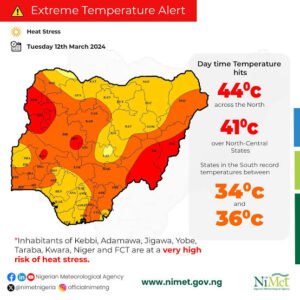
Examples include heatwaves, intense hurricanes, flooding, severe droughts, and tornadoes. These events are becoming more frequent due to climate change.
Nigeria is a country perpetually under elections frenzy: campaigning, off cycle and other electoral activities. These political manifestations always offered little attention to key areas of the environment that threatens economic growth and development, security and poverty, inequality and hunger. As of early 2026, Nigeria hosts over 3.7 million internally displaced persons (IDPs) driven from their homes by conflict, insecurity, and climate disasters. The vast majority of this displacement is concentrated in the North-East and North-West regions, with around 3,900 camps and host communities providing temporary shelter. Currently, Africa is experiencing intensified extreme weather events driven by climate change, primarily manifested as severe droughts, devastating floods, and extreme heatwaves. These events, such as the 2020-2023 Horn of Africa drought and 2024 regional flooding, are becoming more frequent, severely impacting food security, agriculture, and infrastructure.
For instance the death situation in Kenya has risen to 66 and Ethiopia 125 deaths with 11,000 displaced. This is a clear and present danger to Africa and is likely to stretch the existing response measures. At this point NIHSA, NiMet and other agencies need to be called out to show visible signs to the 2026 Seasonal Climate Prediction. At this point, the country need more emphasis in advising all stakeholders to shift from reactive to proactive climate-informed planning to ensure food security and protect infrastructure. Nigeria need to step up preparation against what we see coming as extreme weather in 2026. From the situations in Ethiopia and Kenya, it is obvious that 2026 will be characterized by variable rainfall and cyclone bomb. We have seen prolonged dry spells, and higher-than-average temperatures early in the year that have threatened the health and security of Nigerians. Based on the 2026 Seasonal Climate Prediction (SCP) unveiled by the Nigerian Meteorological Agency (NiMet) on February 10, 2026, the country need to do more. Judging from the heavy snow in the northern hemisphere, nigeria need key preparations that include using AI for better forecasting, tailored agricultural advice, and flood warning systems.
2026 should not be treated like other years. With insecurity, poverty, inequality, high taxation, higher borrowings and higher energy costs, negligence will unravel the economy and underbelly of Nigeria energy security system. Time to act is now because there are too many negatives conflating the country and we have to solve the issues of environmental challenges because when you lack the structure, you attract rupture.
The Federal Government, through the National Orientation Agency (NOA) should be promoting the dissemination of the SCP to local farmers to ensure it directly informs field decisions.
AVM RTD AKUGBE IYAMU MNSA fsi
CONSULTANT ON CLIMATE CHANGE AND ANALYST ON ENVIRONMENTAL POLICIES
PRESIDENT ASSOCIATION OF ENVIRONMENTAL PROTECTION AND CLIMATE CHANGE PRACTITIONERS

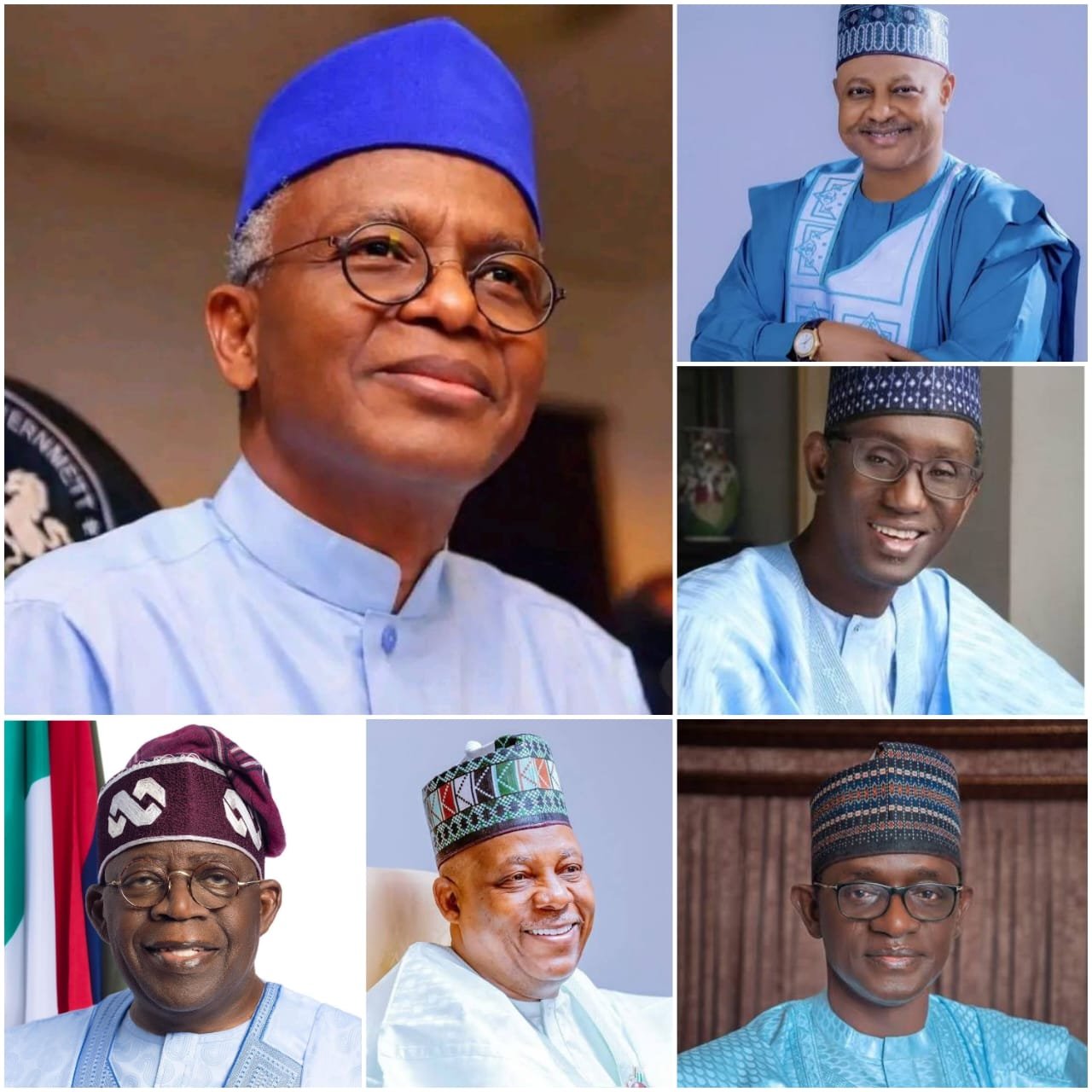
FFK Raises Fresh Questions Over El-Rufai’s Actions, Security Allegations
Former Minister of Aviation, Femi Fani-Kayode, has again raised concerns about the actions and statements of former Kaduna State Governor, Nasir El-Rufai, describing some of them as matters that require clarification in the interest of national security.
In a lengthy statement titled “More Questions for Nasir El-Rufai,” Fani-Kayode said he was still awaiting answers to several issues he had previously raised regarding El-Rufai’s conduct while serving in public office.
He also expressed sympathy after reports that El-Rufai allegedly suffered a nosebleed while in detention, noting that he hoped the former governor would soon respond directly to the questions raised.
Fani-Kayode accused the former governor of carrying out several demolition exercises during his tenure as Minister of the Federal Capital Territory and later as governor of Kaduna State, claiming that the actions affected residential buildings, communities and facilities, including some used by vulnerable groups.
He further alleged that some of the demolitions occurred close to the end of El-Rufai’s tenure in May 2023, including operations reportedly conducted by the Kaduna State Urban Planning and Development Authority in areas such as Gbagyi Villa and other communities.
According to him, critics had described the demolitions as vindictive, while affected residents alleged that some structures were removed despite legal disputes over the properties.
The former aviation minister also raised issues relating to policies implemented during El-Rufai’s administration in Kaduna State, including restrictions on certain religious activities and the suspension of state-sponsored pilgrimages at the time.
Fani-Kayode additionally referenced tensions between El-Rufai and some political figures, including Kaduna State Governor Uba Sani, claiming the relationship deteriorated after the former governor left office.
Beyond the political issues, the statement also touched on security-related concerns, particularly allegations surrounding the bugging of phones and claims involving the possible importation of a toxic substance.
Fani-Kayode said such matters, if true, could pose serious national security implications and called for relevant security agencies to investigate thoroughly.
He expressed confidence that institutions such as the Department of State Services, the Nigerian Police Force, and other intelligence bodies would look into the allegations and determine the facts.
Fani-Kayode maintained that his remarks were intended to raise questions and encourage transparency, emphasizing the need for clarity on issues that could affect national stability and public confidence.