
Judiciary
“I Warned Them the Coup Would Fail” – Court Watches Cleric’s Video Confession in Alleged Coup Trial


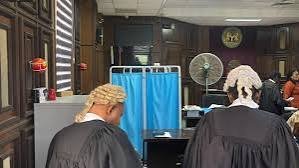
A Federal High Court in Abuja on Monday played a video recording containing the alleged confession of an Islamic cleric accused in the ongoing trial of persons charged with plotting a coup against the Nigerian government.
In the video shown before the court, the sixth defendant, Sheikh Sani Abdulkadir, told investigators that he had warned the alleged conspirators that the coup plan would fail and that those involved would eventually be exposed.
The recording was played during the continuation of proceedings before Justice Joyce Abdulmalik, with the fourth prosecution witness identified as PW4 still under examination.
According to the video evidence, Abdulkadir said he became involved after a man identified as Sanda approached him for prayers on behalf of an alleged coup plot orchestrated by a military officer referred to as Colonel Maaji.
The cleric stated that after conducting prayers and spiritual consultations, he informed them that the operation would not succeed and that two persons would ultimately betray the group.
He further claimed that a message was later relayed back to him requesting additional prayers to prevent the alleged betrayal.
Money sent for prayers, charity
In the recording, Abdulkadir maintained that money transferred to him was intended strictly for prayers and charitable purposes, not to support any illegal activity.
He added that names of persons allegedly linked to the plot were forwarded to him for inclusion in the prayers.
According to him, he later became suspicious after Sanda informed him that Colonel Maaji had disappeared for several days, before media reports emerged concerning arrests over an alleged coup conspiracy.
The cleric also admitted that although he understood that a coup meant a military overthrow of government, he did not report the alleged plan because he did not know whom to inform.
He narrated that he was eventually arrested after visiting the Economic and Financial Crimes Commission over restrictions placed on his bank account.
Abdulkadir said he had attempted to withdraw money sent to him when he discovered the account had been flagged, prompting him to contact an EFCC official who later invited him for questioning.
Defence lawyers challenge admissibility
Following the playback, the prosecution sought to tender extra-judicial statements allegedly made by the first to fifth defendants before a Special Investigation Panel and military police authorities, alongside Abdulkadir’s own statement to military investigators.
However, lawyers representing all six defendants separately opposed the admissibility of the statements and accompanying video recordings.
The defence teams argued that the statements were either involuntary or obtained in violation of provisions of the Administration of Criminal Justice Act (ACJA).
Counsel to some of the defendants argued that the video recordings did not correspond with the written statements presented in court, while others insisted their clients were denied access to legal representation during interrogation.
One defence lawyer further alleged that his client had been coerced into making statements and questioned whether the video recording properly reflected the conditions under which it was obtained.
Another lawyer argued that because multiple defendants were involved, the court ought to conduct separate trial-within-trial proceedings for each disputed statement rather than a joint exercise.
Court orders joint trial-within-trial
Responding to the objections, the prosecution urged the court to reject the defence arguments and proceed with a single trial-within-trial to determine the voluntariness of all disputed statements.
The prosecution maintained that the law does not mandate separate proceedings for each defendant and argued that the trial judge retains discretion over how evidence is admitted.
In her ruling, Justice Abdulmalik ordered a joint trial-within-trial to determine the admissibility and voluntariness of both the written and video statements attributed to the six defendants.
The case was adjourned until May 12 for continuation of proceedings.