
Climate Change
Living on The Edge of Extreme Weather Conditions and It’s Uncertainty in Nigeria

By AVM RTD AKUGBE IYAMU MNSA fsi
Addressing the gaps in disaster management systems in Nigeria squarely rest on more proactive and integrated solutions and approaches that call for investment in climate resilience infrastructure.


The critical starting point will be improved drainage systems, flood control mechanisms including comprehensive monitoring of urban development in high risk areas.
Additionally, we need to harness the energy of the young generation as students of digital relatives through disaster awareness clubs in tertiary institutions to help pool together a generation of informed people who not only understand the risks of climate change and extreme weather conditions but actively participate in intervention efforts within their communities.
As obtained across the globe, Nigeria need to redouble technological efforts to present a significant platform that transform disaster management towards delivering real time alerts.
Additionally, i consider that improving data analysis can significantly improve how disaster will be managed, enhance adaptation and response measures and strategies.
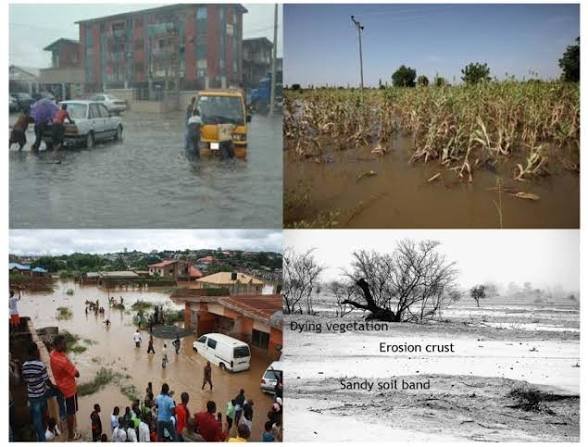
As observed across the world, disaster from extreme weather conditions are no longer rare unexpected events they manifest annually as flooding that swallowed homes and farmlands.
This clearly showed that we are all living on the edge of environmental uncertainty because what was once considered a global phenomenon is now a frequent reality in Nigeria thus shaping our disaster management spectrum.
Also, increasingly, human activities like deforestation, poor waste management and rising carbon emissions are now escalating extreme weather conditions across Nigeria.
Let’s talk about the increasing intensity of storm in Nigeria particularly in the FCT that has posed a significant threat to lives and livelihoods.
We now live in a live in Federal Capital Territory where extreme weather conditions and disaster are pervasive and those who are responsible for dealing with the challenges may not escape responsibility and accountability.
Flooding in in the FCT and states like Kogi, Benue, Anambra are becoming more erratic from seasonal inconsistencies to unimaginable humanitarian consequences where citizens are displaced and livelihoods destroyed.
The concerning aspect is that disaster now extends far beyond destruction of lives and livelihoods to destruction of economies, national security, educational systems with negative effects on the overstretched national resources.
Thus, disaster management spectrum is no longer about emergency management but a critical component of national development, stability and national security.
This growing intensity of climate related disasters are now making intervention from agencies like NIHSA, NIMET and NEMA inadequate and ineffectual as the country’s disaster management systems are largely reactive.
While this brings immediate succour into emergencies, it is no longer sufficient for a climate altered extreme weather conditions with escalating risks.
There have to be strong efforts to close the gaps between predictions, early warning systems and state sponsored responses that enable vulnerable communities have access to information on time because Information must not only be generated but need to be understood and acted on.
The combination of these efforts will create a more responsive and adaptive national approach that minimises loss and enhance resilience.
AVM RTD AKUGBE IYAMU MNSA fsi
CONSULTANT ON CLIMATE CHANGE AND ANALYST ON ENVIRONMENTAL POLICIES AND HE IS PRESIDENT ASSOCIATION OF ENVIRONMENTAL PROTECTION AND CLIMATE CHANGE PRACTITIONERS