
Business
MTN Agrees $6.2bn All-Cash Deal to Acquire IHS Towers

MTN Group has reached an agreement to acquire IHS Towers in an all-cash transaction valuing the firm at approximately $6.2 billion, marking one of the largest telecom infrastructure deals involving an African operator.
The agreement follows weeks of negotiations between the companies that had been publicly reported earlier this month. Under the merger terms, IHS shareholders will receive $8.50 per ordinary share in cash, representing a 36% premium to its 52-week volume-weighted average price and about a 3% premium to its unaffected closing price of $8.23 on February 4, 2026.
Executive reactions
Chairman and CEO of IHS Towers, Sam Darwish, described the deal as a compelling opportunity for investors to realize value built over the company’s 25-year history.
He said the announcement provides certainty and immediate returns for shareholders and deepens the long-standing partnership between both firms, combining Africa’s largest mobile network operator with one of its biggest digital infrastructure platforms.
MTN’s Group President and CEO, Ralph Mupita, said the acquisition would strengthen MTN’s strategic and financial position as digital infrastructure becomes increasingly central to economic development across the continent.
According to him, the transaction offers MTN a unique chance to buy back its towers and strengthen its role as a development partner to countries where it operates, while maintaining high service standards for IHS customers.
Board and shareholder backing
IHS Towers’ board has unanimously approved the deal and recommended it to shareholders. MTN, which already owns roughly 24% of IHS on a fully diluted basis, has committed to vote its shares in favour of the transaction.
Long-term investor Wendel has also pledged support, bringing total committed backing to more than 40% of shareholders.
The cash consideration offers investors a defined exit following a strategic review launched amid geopolitical and macroeconomic volatility in key markets.
Background to the transaction
Earlier in the month, MTN confirmed in a cautionary notice that it was evaluating a potential buyout of minority shareholders of the New York Stock Exchange-listed IHS after market speculation.
The company warned that any deal could materially affect its share price and urged investors to exercise caution when trading its stock pending further announcements.
Financing structure and conditions
The transaction is expected to close in 2026, subject to shareholder and regulatory approvals and other customary conditions.
Funding will come from a combination of:
MTN’s existing stake rollover
About $1.1 billion in cash from MTN
Roughly $1.1 billion from IHS’s balance sheet
Rollover of existing IHS debt
IHS must also maintain a minimum cash balance of $355 million at closing. Completion partly depends on IHS successfully divesting its Latin American tower business and fibre operations, both announced in February 2026.
Financial advisory for IHS is being handled by J.P. Morgan, while legal counsel includes Latham & Watkins LLP and Walkers (Cayman) LLP.
On MTN’s side, advisers include BofA Securities and Citigroup Global Markets Limited, with legal advice from Cravath, Swaine & Moore LLP.
Company profile
Founded in 2001 with an initial focus on Nigeria, IHS Towers has grown into one of the world’s largest independent owners and operators of shared telecom infrastructure.
Headquartered in London and listed in New York since its 2021 IPO, the company manages more than 37,000 towers across seven African markets including South Africa, Cameroon, Côte d’Ivoire and Zambia as well as Latin American operations in Brazil and Colombia. MTN remains its largest customer.

Business
Nigeria Tax Act 2025 Now in Force, No 25% Tax on Building Materials or Bank Funds — Committee


The Presidential Fiscal Policy and Tax Reforms Committee has dismissed claims circulating in a viral video that the Nigeria Tax Act 2025 will introduce a 25 per cent tax on building materials, construction funds, or business transactions.
The committee clarified that the Act has already commenced and does not impose any such levy, contrary to assertions that it will only take effect in 2027.
In a statement issued to counter what it described as misinformation capable of causing public anxiety, the committee stressed that the law contains provisions aimed at reducing the cost of housing, encouraging real estate development, and supporting small businesses and low-income earners.
According to the committee, the Act exempts land and buildings from Value Added Tax (VAT), including rent payments. Contractors are also allowed to recover input VAT on materials and services used in construction, a move expected to lower overall building costs.
The withholding tax rate on construction contracts has been reduced to 2 per cent to ease cash flow pressures on developers.
In addition, individuals constructing owner-occupied residential houses can deduct mortgage interest from their taxable income, while property owners earning rental income are permitted to deduct expenses such as repairs, insurance and agency fees.
The Act introduces rent relief of up to ₦500,000 or 20 per cent of annual rent, whichever is lower, to increase disposable income for low and middle-income earners.
Lease agreements valued below ₦10 million annually, or 10 times the annual minimum wage, are also exempt from stamp duty.
Incentives for Investors and Developers
Individuals are exempted from Capital Gains Tax when disposing of a dwelling house. Real Estate Investment Trusts (REITs) are granted Companies Income Tax exemptions where they distribute at least 75 per cent of rental or dividend income within 12 months after the financial year.
The law also provides incentives for manufacturers of building materials such as iron and steel under an economic development incentive scheme that may grant tax exemptions for up to 10 years.
There is also scope for reducing Companies Income Tax for large businesses from 30 per cent to 25 per cent.
Protection for Workers and Small Businesses
Employer-provided accommodation will have its taxable value capped at 20 per cent of an employee’s annual gross income, excluding the rental value.
Small companies benefit from zero per cent Companies Income Tax, exemption from charging VAT, and no withholding tax deductions on invoices and payments.
The committee emphasised that the Nigeria Tax Act 2025 does not:
Tax money in bank accounts
Impose a levy on transfers used to purchase building materials
Introduce a 25 per cent construction or business cost tax.
It urged the public to rely on verified information and consult the law directly when confronted with alarming claims.
According to the committee, the overarching objective of the new tax framework is to make housing more affordable, stimulate real estate investment, and strengthen support for small businesses and tenants, not to introduce additional financial burdens.

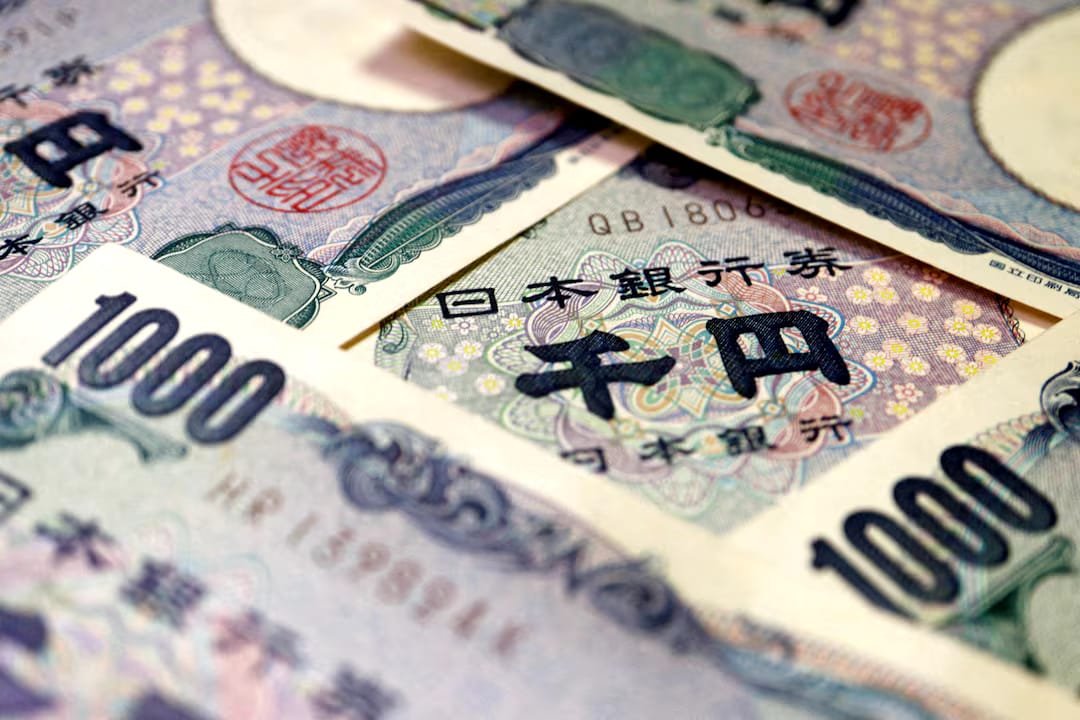
The Japanese yen edged lower on Monday, retreating slightly after recording its strongest weekly performance in over a year, while the U.S. dollar held steady amid growing expectations that the Federal Reserve could lower interest rates later this year.
Trading activity was subdued, with financial markets in the United States, China, Taiwan, and South Korea closed for public holidays.
The yen weakened by 0.3% to 153.15 against the dollar, giving back some of the nearly 3% gains it posted last week its biggest weekly rise in roughly 15 months. The surge followed a decisive election victory by Prime Minister Sanae Takaichi’s Liberal Democratic Party, which appeared to ease investor concerns over fiscal uncertainty.
Later on Monday, Bank of Japan Governor Kazuo Ueda is scheduled to meet Takaichi for the first time since the election. The talks are expected to focus on the country’s economic outlook and the direction of monetary policy.
Market analysts noted that the election outcome triggered an unexpected rally in both Japanese government bonds and the currency. Brent Donnelly, founder of Spectra Markets, said investors had anticipated that a commanding majority for the ruling party would weigh on bonds and the yen. Instead, both strengthened.
According to Donnelly, reduced political uncertainty encouraged long-term investors to return to Japanese assets. He described the renewed interest in Japanese yields, equities such as the Nikkei, and the currency itself as part of a broader “Buy Japan” trend.
However, fresh economic figures highlighted ongoing challenges for the government. Data released Monday showed Japan’s economy grew at an annualised pace of just 0.2% in the previous quarter, underscoring sluggish momentum.
The weak growth numbers could complicate the Bank of Japan’s path toward further monetary tightening. The central bank’s next policy meeting is set for March, with market pricing suggesting only a 20% probability of a rate increase. Economists surveyed by Reuters previously indicated that policymakers may hold off until July before raising rates again.
In December, the Bank of Japan raised its benchmark rate to 0.75%, the highest level in three decades, though it remains far below rates in other major economies. The wide interest-rate gap has contributed to persistent yen weakness in recent years, at times prompting authorities to step in directly to stabilise the currency.
Strategists at Goldman Sachs cautioned that if the BOJ uses the yen’s recent strength as justification for a more gradual tightening approach, the currency could resume its downward trend, and long-term bond yields may become volatile. Goldman forecasts the yen will trade around 152 per dollar over the next 12 months.
Meanwhile, in the United States, softer-than-expected inflation data released Friday reinforced the case for policy easing. Consumer prices rose less than anticipated in January, giving the Federal Reserve additional room to consider rate cuts.
Kyle Rodda, senior financial analyst at Capital..com, said markets are increasingly entertaining the possibility of a third rate cut this year.

Billionaire investor Femi Otedola has expressed optimism that the naira could strengthen to below ₦1,000 against the U.S. dollar before the end of the year, citing the full-scale operations of the Dangote Group refinery as a major catalyst.
In a post on X, Otedola congratulated Africa’s richest man, Aliko Dangote, on achieving the refinery’s full production capacity of 650,000 barrels per day, describing the milestone as a game-changer for Nigeria’s economy.
He noted that the refinery’s ability to supply up to 75 million litres of Premium Motor Spirit (PMS) daily marks a historic shift from decades of dependence on imported petroleum products.
“With domestic refining now fully underway, the pressure on Nigeria’s foreign exchange market is expected to ease considerably,” Otedola stated. He added that reduced demand for dollars to fund fuel imports could significantly strengthen the naira, making sub-₦1,000/$1 exchange rates increasingly realistic before year-end.
For years, Nigeria relied heavily on imported refined petroleum products, a situation that drained foreign reserves and intensified demand for foreign currency. According to Otedola, large-scale domestic refining will reverse that trend, improve energy security, and stabilise the currency market.
He further revealed that Dangote has initiated a $12 billion expansion project to increase refining capacity to 1.4 million barrels per day. The expansion will also scale up petrochemical production, including 2.4 million tonnes of polypropylene and 400,000 metric tonnes of Linear Alkyl Benzene, a vital input in detergent manufacturing.
Describing the development as more than an industrial milestone, Otedola said it represents a broader economic reset capable of strengthening the naira, stimulating manufacturing, and reducing Nigeria’s exposure to global supply, shocks.
The projection comes at a time when the federal government is implementing sweeping economic reforms aimed at stabilising the currency and boosting domestic production.