General News
NIGERIA WINS SUPREME COURT BATTLE FOR LEGAL COSTS TO BE PAID IN BRITISH POUNDS


The United Kingdom Supreme Court has dismissed an appeal from Process & Industrial Developments Limited, ruling decisively that the Federal Republic of Nigeria must be reimbursed its legal costs in sterling. The ruling affirms Nigeria’s position in a dispute over the currency for recovering £44.2 million in legal fees spent to overturn a fraudulent $11 billion arbitral award.
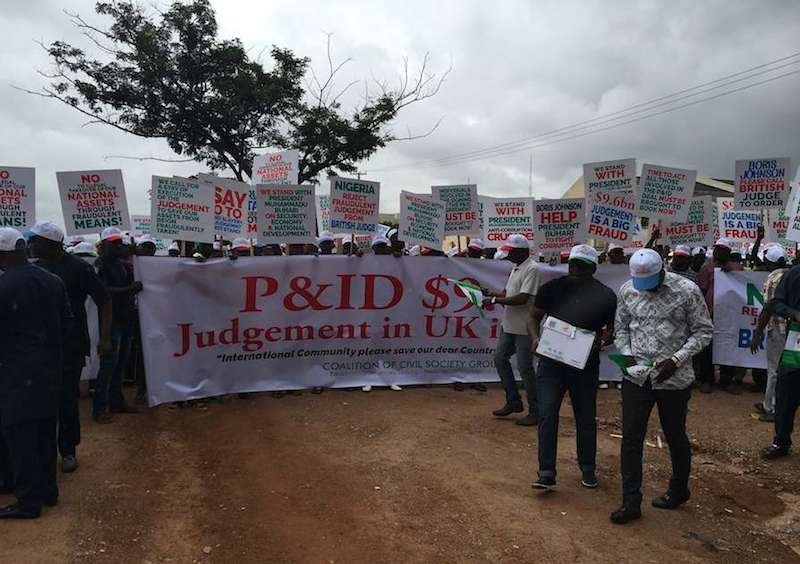
The judgment was delivered on 22 October 2025 by a panel led by Lord Reed, the President of the Supreme Court. The Court unanimously upheld earlier decisions from the Commercial Court and the Court of Appeal, finding that costs should be paid in the same currency in which the legal obligations were originally incurred by Nigeria.
This case is a continuation of Nigeria’s landmark legal victory in 2023, when it successfully challenged and overturned two massive arbitral awards granted to P&ID. The Commercial Court had found those awards, which had ballooned to over $11 billion with interest, were “procured by fraud” and were therefore void.
In the process of that challenge, Nigeria paid its legal team through 116 invoices issued between November 2019 and November 2024, all of which were billed and settled in British pounds. P&ID had argued that the subsequent costs order should be made in Nigerian naira, contending that a sterling payment would grant Nigeria a “windfall” due to the naira’s significant depreciation after it was allowed to float freely in 2023.
The Supreme Court rejected P&ID’s argument. In a joint judgment delivered by Lord Hodge and Lady Simler, and agreed with by Lords Reed, Stephens, and Richards, the Court held that a costs order “is not intended to compensate for loss” but instead acts as a statutory indemnity for expenses already paid during litigation.
The Justices ruled, “As Nigeria had incurred liability and made payments in sterling, the court ought to make a costs order in sterling.” The Court further emphasized the discretionary nature of costs awards, clarifying they are not compensatory like damages in contract or tort cases. It warned that adopting P&ID’s proposed approach would necessitate intrusive inquiries into how litigants fund their legal fees, which would in turn create “disproportionate and expensive satellite litigation.”
The judgment reinforces the established legal principle that costs are to be awarded in the currency in which the legal services were billed and paid, barring any exceptional or abusive circumstances. The Supreme Court concluded by dismissing P&ID’s appeal and ordering the company to pay Nigeria’s legal costs for this latest appeal on the standard basis. This ruling represents another significant legal victory for Nigeria in its protracted and high-stakes dispute with P&ID.