
Education
NYSC Certificate Doesn’t Prove Graduation, Onochie Says Amid Benjamin Kalu Controversy


A chieftain of the African Democratic Congress, Lauretta Onochie, has weighed in on the controversy surrounding the National Youth Service Corps (NYSC) certificate of the Deputy Speaker of the House of Representatives, Benjamin Kalu.
Onochie made her position known in a post on her official X account on Friday, March 13, 2026, stating that participation in the National Youth Service Corps does not necessarily prove that an individual graduated from a tertiary institution.
The issue resurfaced following a report by THISDAY which indicated that the Legal Practitioners Disciplinary Committee had yet to dismiss a petition filed against Kalu over his NYSC documentation. The petition was reportedly submitted by the Civil Society Groups for Good Governance, triggering fresh debate about the relationship between NYSC certification and academic qualifications.
Reacting to the development, Onochie argued that the NYSC scheme and academic graduation are separate processes and should not be treated as the same.
“I know someone who took part in the National Youth Service Corps even though he did not do graduation,” she wrote, stressing that possession of an NYSC certificate alone should not be regarded as proof of completing a university or polytechnic programme.
Her remarks come as public scrutiny over the academic credentials of political figures continues to intensify. In Nigeria’s political landscape, questions about educational records have repeatedly generated debate and legal challenges.
Observers say Onochie’s comments highlight the need to distinguish between NYSC participation and formal graduation records, noting that academic certificates remain the primary evidence of educational attainment.
The statement has since sparked reactions across social media and political circles, with some Nigerians supporting her clarification while others insist that transparency in the documentation of public officials is vital for maintaining public confidence.

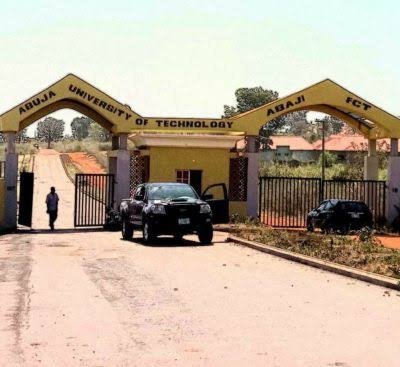
The Federal Capital Territory (FCT) University of Science and Technology in Abaji is poised to begin operations under the leadership of President Bola Ahmed Tinubu.
FCT Minister Dr. Nyesom Wike announced during a thank-you visit to Abaji, Abuja, that the administration has already started building the essential infrastructure and facilities for the university’s launch.
Dr. Wike urged residents to remain patient, assuring them that the university will soon become a reality under President Tinubu’s administration.
In addition to the university, the Minister pledged to construct the Gurara Market bridge, tackle gully erosion in two communities, and reactivate a 15-kilometre abandoned road connecting other local communities. He also revealed plans to upgrade all third-class chiefs to second-class chiefs and all second-class chiefs to first-class chiefs.
Alhaji Abubakar Abdullahi, Chairman of Abaji Area Council, highlighted that Abaji previously had minimal Federal Government presence and thanked President Tinubu for giving the area a renewed sense of inclusion and development.
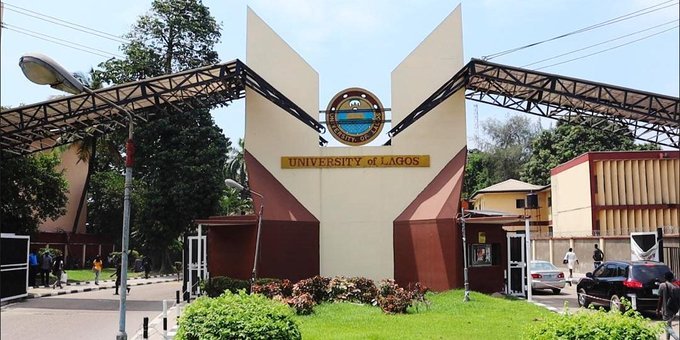
Lecturers at the Academic Staff Union of Universities (ASUU), University of Lagos (UNILAG) chapter, have commenced an indefinite strike over what they described as “amputated” salaries paid to members for January and February 2026.
The decision followed an emergency congress of the union held on Tuesday, where members resolved to withdraw their services until the university management pays the outstanding balance of their salaries in full.
In a communiqué jointly signed by the branch Chairperson, Idou Kehinde, and Secretary, Adesina Arikawe, the union said the industrial action takes effect from Wednesday, March 11, 2026.
ASUU said the strike became necessary after what it described as “extensive and exhaustive deliberations” on the salary deductions implemented by the university administration over the past two months.
According to the union, lecturers across the institution received incomplete salaries in January, with members on the Akoka campus allegedly not paid Earned Academic Allowance (EAA), while those at the Idi-Araba campus were reportedly denied both EAA and the Clinical Academic Training Allowance (CATA).
The union further accused the university management of repeating the same action in February, describing the development as unfair and unacceptable.
“The university discriminately paid amputated salary in January 2026 to all members. At Akoka campus there was no EAA payment, while at Idi-Araba campus there was neither EAA nor CATA payment,” the communiqué stated.
ASUU condemned the deductions, describing them as a violation of acceptable labour practices and an indication of insensitivity by the university administration.
The union also referenced an earlier resolution of its National Executive Council, stating that members would withdraw their services whenever salaries were not paid in full.
ASUU therefore directed its members to stay away from academic activities beginning March 11 until the university authorities settle all outstanding salary payments for January and February.
The strike is expected to disrupt academic activities at the university if the dispute between the union and the management is not resolved quickly.
The Delta State chapter of the Nigeria Union of Teachers (NUT) has resolved to engage the state government through dialogue rather than embark on industrial action over unresolved demands affecting teachers in the state.
The decision followed deliberations among the union’s leadership and members during a meeting held in Asaba, where officials discussed the progress of ongoing engagements with government representatives on issues concerning teachers’ welfare and career advancement.
Union leaders said dialogue remains the most constructive approach to resolving the concerns raised by teachers while avoiding disruptions to academic activities across public schools in the state.
According to the union, discussions with relevant authorities are already underway, with efforts focused on addressing key demands that include improved welfare packages and career progression opportunities for teachers within the state’s public service structure.
One of the major issues raised by the union is the call for the creation of positions such as Headmaster-General and Principal-General, which would allow qualified teachers with higher academic qualifications to advance to senior levels within the civil service.
The NUT leadership appealed to members to remain calm and allow the negotiation process to continue, expressing optimism that the government would respond positively to their requests.
However, the union noted that it would continue to monitor the outcome of the discussions and may reconsider its next line of action if the dialogue fails to produce satisfactory results.