
Business
PRESIDENT TINUBU ASSURES AIRTEL CHAIRMAN OF PRO-BUSINESS ENVIRONMENT IN NIGERIA


President Bola Tinubu has assured the Chairman of Airtel, Sunil Bharti Mittal, that his administration is committed to creating a pro-business environment in Nigeria. The President made this known during a meeting with Mittal at the State House in Abuja, where he stated that the telecoms sector’s regulatory framework and operations would be reviewed to reflect global best practices, with a greater focus on protecting infrastructure.

The Special Adviser to the President on Information and Strategy, Bayo Onanuga, said in a statement that President Tinubu expressed his gratitude to Mittal for his openness, readiness, and confidence in Nigeria’s economic policies. “I am grateful for your openness, readiness, and confidence, which moved us very close to the Prime Minister of India. When he was here, we discussed things at length,” President Tinubu said. Onanuga also stated that the President assured Mittal that his administration is prepared to learn from other countries, including India, and implement policies that would promote economic growth.

President Tinubu noted that tax reforms would be implemented to create a more favourable climate for investors. “We will find a way to work with tax administrators to ensure that whatever we have to do, we will encourage growth and opportunities. We are ready to do that,” he said. Mittal commended the President for his economic reforms, stating that they have transformed the economy for future growth. He also praised the removal of the petrol subsidy, describing it as a tough but necessary decision.

Mittal expressed his support for Nigeria’s economic policies, stating that they would attract foreign investments to the country. He also announced plans by Airtel to invest $700 million in Nigeria over the next two years. Onanuga stated that the Minister of Communication, Innovation, and Digital Economy, Bosun Tijani, thanked the President for consistently supporting the telecoms sector’s growth.
Tijani noted that the approval by the President for the protection of fibre optic and undersea cables as critical national assets would further stimulate growth in the industry. Onanuga also stated that Mittal advised that more Nigerians should be encouraged to invest in the country, particularly those with huge financial portfolios abroad. “I have been speaking to people in Nigeria, friends and business people, and they are all now feeling calm, and when they start to get back, they will move very fast. I have experienced this in India,” Mittal said.













Two of Nigeria’s largest beverage manufacturers; Nigerian Breweries and Guinness Nigeria, have announced plans to increase the prices of some of their products, citing rising operational and production costs amid the country’s challenging economic environment.
In separate notices sent to distributors, both companies said the price adjustments would affect selected stock-keeping units (SKUs) across their product lines. The move comes as manufacturers grapple with inflation, foreign exchange volatility, rising energy expenses, and increasing logistics costs.
Nigerian Breweries, Nigeria’s largest brewing company, disclosed that its new price structure would take effect on March 20, 2026. In a letter dated March 13 and signed by its zonal business manager (West), John Oloche Ademu, the company, said the review was necessary to cushion the impact of escalating operational and input costs.
The company explained that the current economic landscape has significantly increased the cost of doing business, making the price adjustment unavoidable in order to sustain operations and maintain steady product supply to distributors.
Similarly, Guinness Nigeria informed distributors in a notice dated March 14 that it would also increase prices on selected products, with the new rates expected to take effect from March 27, 2026. The brewer said the decision was driven by prevailing economic conditions that have raised production and operational expenses across the industry.
Both companies noted that distributors who place and fully fund their orders before the effective dates will still be able to purchase products at the existing prices.
Industry analysts say the development reflects growing pressure on manufacturers in Nigeria, where the cost of raw materials, packaging, transportation, energy, and foreign exchange has surged in recent months. The planned adjustments could lead to higher retail prices for popular beer and malt drinks in the coming weeks as distributors and retailers adjust to the new pricing structure.
Nigerian Breweries produces widely consumed brands such as Star Lager, Gulder, Legend Extra Stout, Heineken, and Maltina, while Guinness Nigeria is known for products including Guinness Stout, Malta Guinness, and Orijin.
The price hike is expected to add further pressure on consumers already facing high inflation and rising living costs across the country.
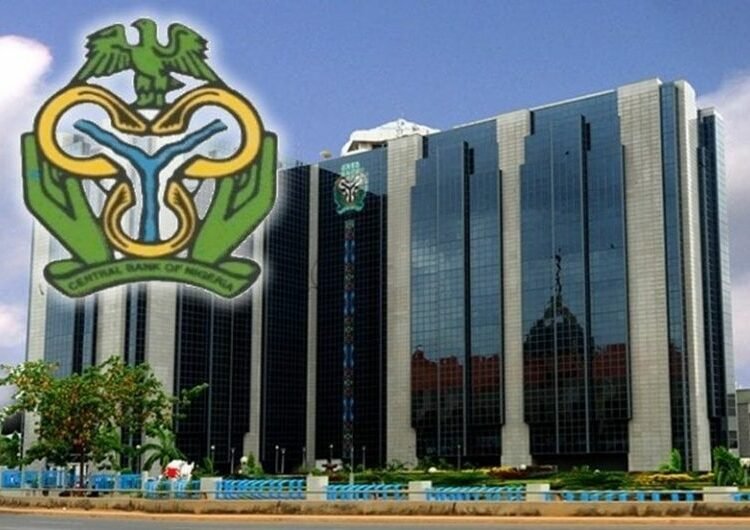
The Central Bank of Nigeria (CBN) has directed all banks in the country to restrict banking services to large borrowers with non-performing loans, in a move aimed at strengthening financial stability and reducing risks in the banking sector.
In a circular dated March 12, 2026, and addressed to all financial institutions, the apex bank said the directive targets “non-performing large ticket obligors” whose debt exposures could pose a systemic risk to the financial system.
Under the new directive, banks are required to deny additional credit facilities to any large borrower whose loan has been classified as non-performing and recorded in the Credit Risk Management System (CRMS) or any licensed private credit bureau.
The restriction covers all forms of credit, including loans and other direct lending facilities. Banks have also been instructed not to extend contingent banking services such as letters of credit, performance bonds, banker’s confirmations, or advance payment guarantees to such borrowers.
The CBN further directed banks to strengthen collateral coverage by obtaining additional realizable collateral from affected borrowers in order to secure existing exposures.
According to the apex bank, large ticket obligors are borrowers whose total exposure meets the threshold outlined in the Prudential Guidelines for Deposit Money Banks in Nigeria or whose combined borrowings across banks exceed the Single Obligor Limit (SOL), thereby posing potential risks to banks’ Capital Adequacy Ratio (CAR).
The directive forms part of the regulator’s efforts to protect depositors, enforce prudential compliance, and maintain stability within Nigeria’s banking system.
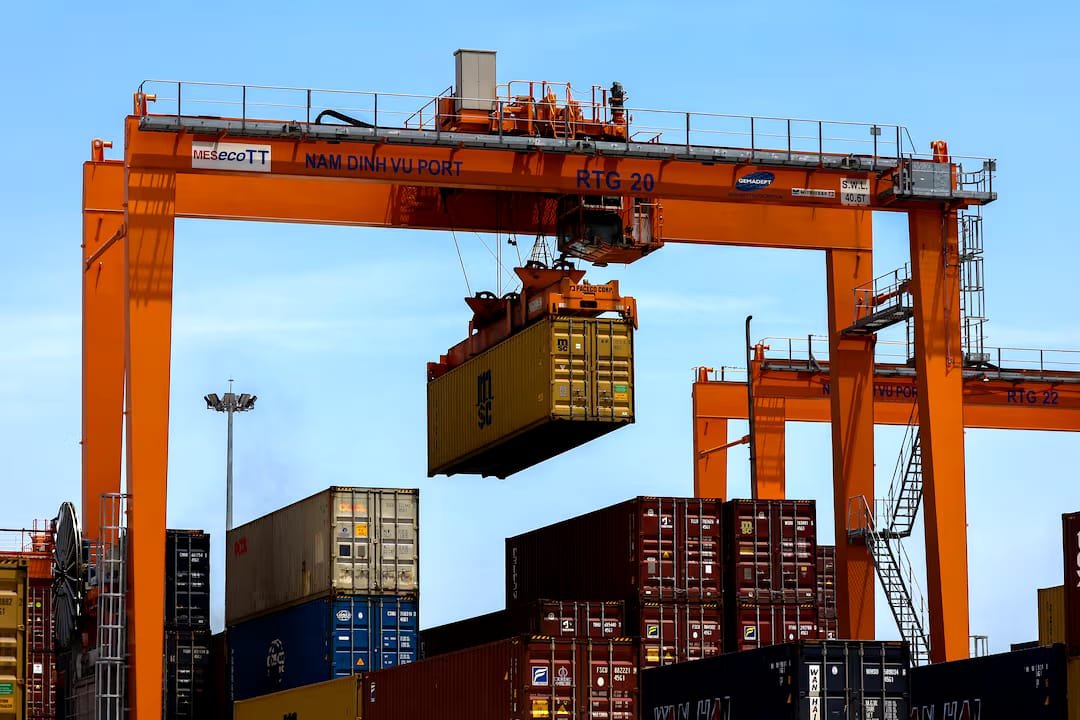
Vietnam recorded the world’s largest trade surplus with the United States in January 2026, surpassing both Mexico and China, according to the newly released U.S. trade data.
The figures show that Vietnam’s exports to the United States surged sharply at the start of the year, helping the Southeast Asian country top the list of America’s largest trade surplus partners.
Data from U.S. authorities indicate that the trade surplus reached about $19 billion in January, driven largely by a 53% increase in Vietnamese exports to the U.S., which exceeded $20 billion during the period.
The development reflects a continuing shift in global trade patterns, as American imports from China declined while more goods are sourced from Vietnam and other Asian manufacturing hubs.
Despite the strong trade figures, negotiations between Washington and Hanoi over a bilateral trade agreement remain unresolved. Officials say disagreements over tariff rates and the widening trade imbalance have delayed progress on a deal.
Analysts also note that Vietnam’s trade surplus with the United States has been expanding steadily in recent years, partly because higher tariffs on Chinese goods encouraged companies to shift manufacturing and exports to Vietnam.