BREAKING NEWS
PRESIDENT TINUBU DISSOLVES NNPCL BOARD, APPOINTS NEW CHAIRMAN AND GROUP CEO
President Bola Ahmed Tinubu has dissolved the board of the Nigerian National Petroleum Company Limited (NNPCL), removing its chairman, Chief Pius Akinyelure, and Group Chief Executive Officer, Mallam Mele Kolo Kyari, in a sweeping overhaul. The move, effective April 2, 2024, follows the president’s invocation of powers under Section 59(2) of the Petroleum Industry Act (PIA), 2021, to reconstitute an 11-member board aimed at enhancing operational efficiency, restoring investor confidence, and driving economic growth.

Ahmadu Musa Kida, a former Deputy Managing Director of Total Exploration and Production Nigeria, has been appointed as the new Non-Executive Chairman. Engineer Bashir Bayo Ojulari, previously Executive Vice President of Renaissance Africa Energy Company, takes over as Group CEO. The board also includes six non-executive directors representing Nigeria’s geopolitical zones: Bello Rabiu (North West), Yusuf Usman (North East), Babs Omotowa (North Central), Austin Avuru (South-South), David Ige (South West), and Henry Obih (South East).
Adedapo Segun, Chief Financial Officer since November 2023, retains his position on the board. Mrs. Lydia Shehu Jafiya, Permanent Secretary of the Federal Ministry of Finance, and Aminu Said Ahmed, representing the Ministry of Petroleum Resources, complete the new lineup.

President Tinubu directed the board to conduct an immediate strategic review of NNPCL’s assets and joint ventures to align with “value maximization objectives.” The administration targets raising oil production to 2 million barrels per day by 2027 and 3 million by 2030, alongside increasing gas output to 8 billion cubic feet daily by 2027 and 10 billion by 2030. Refining capacity is expected to hit 200,000 barrels daily by 2027 and 500,000 by 2030.
Highlighting reforms initiated since 2023, Tinubu noted that $17 billion in new investments had been secured for the sector, with ambitions to attract $30 billion by 2027 and $60 billion by 2030. He praised the outgoing board for rehabilitating the Port Harcourt and Warri refineries, which resumed production after prolonged shutdowns, and wished them well in future endeavors.
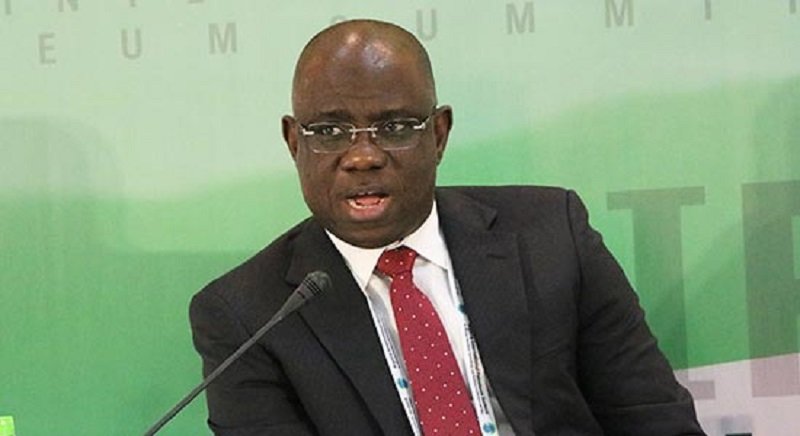
Kida, an alumnus of Ahmadu Bello University and former President of the Nigerian Basketball Federation, brings decades of experience from Total and Pan Ocean-Newcross Group. Ojulari, a mechanical engineering graduate from the same institution, previously led Shell Nigeria Exploration and Production Company and played a key role in Renaissance’s $2.4 billion acquisition of Shell Petroleum Development Company assets.
“This restructuring is critical to boosting local content, gas commercialization, and economic diversification,” Tinubu stated, emphasizing the need for transparency and investor-friendly policies. The new board is tasked with steering NNPCL toward meeting Nigeria’s energy demands and global market competitiveness.
BREAKING NEWS
US Military Refuelling Aircraft Crashes in Iraq, Four Crew Members Confirmed Dead
At least four crew members have been confirmed dead after a United States military refuelling aircraft crashed in western Iraq, according to the United States Central Command (CENTCOM).
CENTCOM said the aircraft, a KC-135 Stratotanker, went down around 14:00 ET (19:00 GMT) on Thursday while operating in the region. Rescue operations are still ongoing for the remaining crew members.
Military officials earlier stated that neither hostile nor friendly fire was responsible for the incident. The aircraft was reportedly part of ongoing U.S. operations linked to tensions with Iran.
According to CENTCOM, two aircraft were involved in the mission at the time of the incident, but the second aircraft landed safely.
The KC-135, manufactured by Boeing, is designed to refuel military aircraft mid-air, allowing fighter jets and bombers to extend their range during operations. The tanker aircraft has been a critical component of U.S. air operations since its introduction in the 1950s and was widely used during the Gulf War.
Officials said the identities of the deceased personnel would not be released until their families are formally notified.
The aircraft typically carries a crew that includes a pilot, co-pilot and a boom operator responsible for controlling the refuelling arm used to transfer fuel to other aircraft during flight.
Although CENTCOM described the crash as occurring in friendly airspace, the area of western Iraq is known to host several pro-Iranian militia groups. Iranian state media claimed that an allied group targeted the aircraft with a missile, though this has not been confirmed by U.S. authorities.
The latest incident comes amid escalating tensions between the United States and Iran in the region, during which several American service members and aircraft have been lost. Earlier this month, three U.S. fighter jets were reportedly shot down in an apparent friendly-fire incident over Kuwait, although all six crew members ejected safely.
An investigation into the cause of Thursday’s crash is currently underway.
BREAKING NEWS
Troops Thwart Coordinated Terrorist Attacks on Military Locations in North-East
Troops of the Joint Task Force (North East) under Operation HADIN KAI have thwarted multiple coordinated attacks launched by suspected Islamic State West Africa Province (ISWAP) terrorists on several military positions across the North-East.

The attacks occurred on the night of March 8 and the early hours of March 9, 2026, between 10:00 p.m. and 3:00 a.m., targeting military locations in Delwa, Goniri, Kukawa, Mainok, and a troop harbour position within the Sambisa Forest.
In a statement issued on Monday by the Media Information Officer of Operation HADIN KAI, Lt. Col. Sani Uba, the terrorists were said to have launched the assaults simultaneously from multiple directions in what appeared to be a coordinated attempt to overwhelm troop positions.
Despite the intensity of the attacks and the heavy firepower deployed by the insurgents, troops held their ground and mounted strong defensive responses across the affected locations. Reinforcements and the Air Component of Operation HADIN KAI were also deployed, providing timely support during the engagements.

According to the statement, the attackers were eventually forced to withdraw after encountering overwhelming resistance from the troops, leaving behind several casualties.
Troops also recovered weapons and equipment abandoned by the fleeing terrorists, including two PKT machine guns, six AK-47 rifles, eight rocket-propelled grenade (RPG) bombs, four mortar bombs, and assorted ammunition of various calibres.

Military authorities disclosed that the intensity of the firefights led to temporary breaches in sections of the defensive perimeters at Goniri and Kukawa. Some structures within the bases as well as a number of vehicles were also damaged during the clashes.
However, the military confirmed that all the affected locations remain firmly under the control of Operation HADIN KAI troops.
The statement added that ground forces, supported by the Air Component, have commenced follow-up exploitation operations in the affected areas. Cordon and search operations are also ongoing in neighbouring communities following reports that some wounded terrorists may have sought refuge there.
The military also confirmed that the engagements resulted in the loss of some soldiers, including an officer in Kukawa who was described as outstanding.
The statement noted that the fallen personnel paid the ultimate sacrifice in defence of the nation and the protection of innocent citizens.
Operation HADIN KAI assured that its troops remain vigilant, motivated, and committed to sustaining relentless operations aimed at denying terrorists freedom of action and ensuring lasting security across the North-East region.
BREAKING NEWS
Dangote Refinery Raises Petrol Price to N1,175, Diesel to N1,620 …Sales resume as depot prices surge nationwide
The cost of goods and services in Nigeria may rise further following a fresh increase in fuel prices by the Dangote Petroleum Refinery, which has raised the gantry price of Premium Motor Spirit (PMS), popularly known as petrol, to N1,175 per litre.
The latest adjustment represents the third price increase within a week, signaling continued volatility in the country’s downstream petroleum sector.
The refinery communicated the new price to petroleum marketers on Monday, increasing the gantry price from N995 per litre announced on Friday to N1,175 per litre, an increase of N180 or about 18.1 per cent within three days.
In addition, the refinery revised the gantry price of Automotive Gas Oil (AGO), commonly known as diesel, to N1,620 per litre.
A senior refinery official, who spoke on condition of anonymity because he was not authorised to comment publicly, confirmed that the new prices had already been circulated to marketers and depot operators.
“Yes, the gantry prices have been adjusted. PMS is now N1,175 per litre while Automotive Gas Oil is N1,620 per litre,” the official said.
According to the source, the changes reflect the realities of the current global market environment.
“The market has been extremely volatile and replacement costs have shifted significantly in recent days. These adjustments reflect prevailing market fundamentals and the cost environment we are currently operating in,” the official added.
Industry checks showed that the updated prices have already been reflected on the petroleum pricing platform petroleumprice.ng, indicating a shift in the benchmark prices used by downstream marketers.
The latest increase follows previous adjustments that moved the refinery’s petrol gantry price from N774 to N995 per litre, with retail pump prices now exceeding N1,000 per litre in many parts of the country. In some locations, filling stations are already dispensing petrol at about N1,200 per litre, worsening the financial strain on consumers.
Analysts warn that the hike is likely to trigger another round of price increases at filling stations nationwide, as higher fuel costs typically translate into increased transportation, logistics, and production expenses.
The development comes despite ongoing efforts by the Nigerian National Petroleum Company Limited to boost crude supply to the refinery through international third-party traders in order to sustain domestic refining operations.
A senior NNPC official explained that crude oil is being sourced at rates comparable with international market prices.
“Leveraging our global crude trading network, we are sourcing third-party crude for the refinery at prices that are competitive with prevailing international market rates,” the official said.
He added that the national oil company remains committed to ensuring stable crude supply for domestic refining.
“As the national oil company entrusted with safeguarding Nigeria’s energy security, NNPC Limited remains fully committed to supporting domestic refining, including the Dangote Petroleum Refinery. Within the framework of our existing agreements, we continue to facilitate crude supply to the refinery, despite temporary availability constraints.”
However, the official cautioned that the intervention may not immediately lead to lower fuel prices for consumers.
“This will not necessarily impact price. The current crisis in the Middle East is affecting global energy markets, including crude oil, LNG, and other fuels, and that has implications for refined product pricing worldwide,” he said.