
International
Security Breach in Vatican Conclave: Cardinal Found With Cellphone, Book Reveals

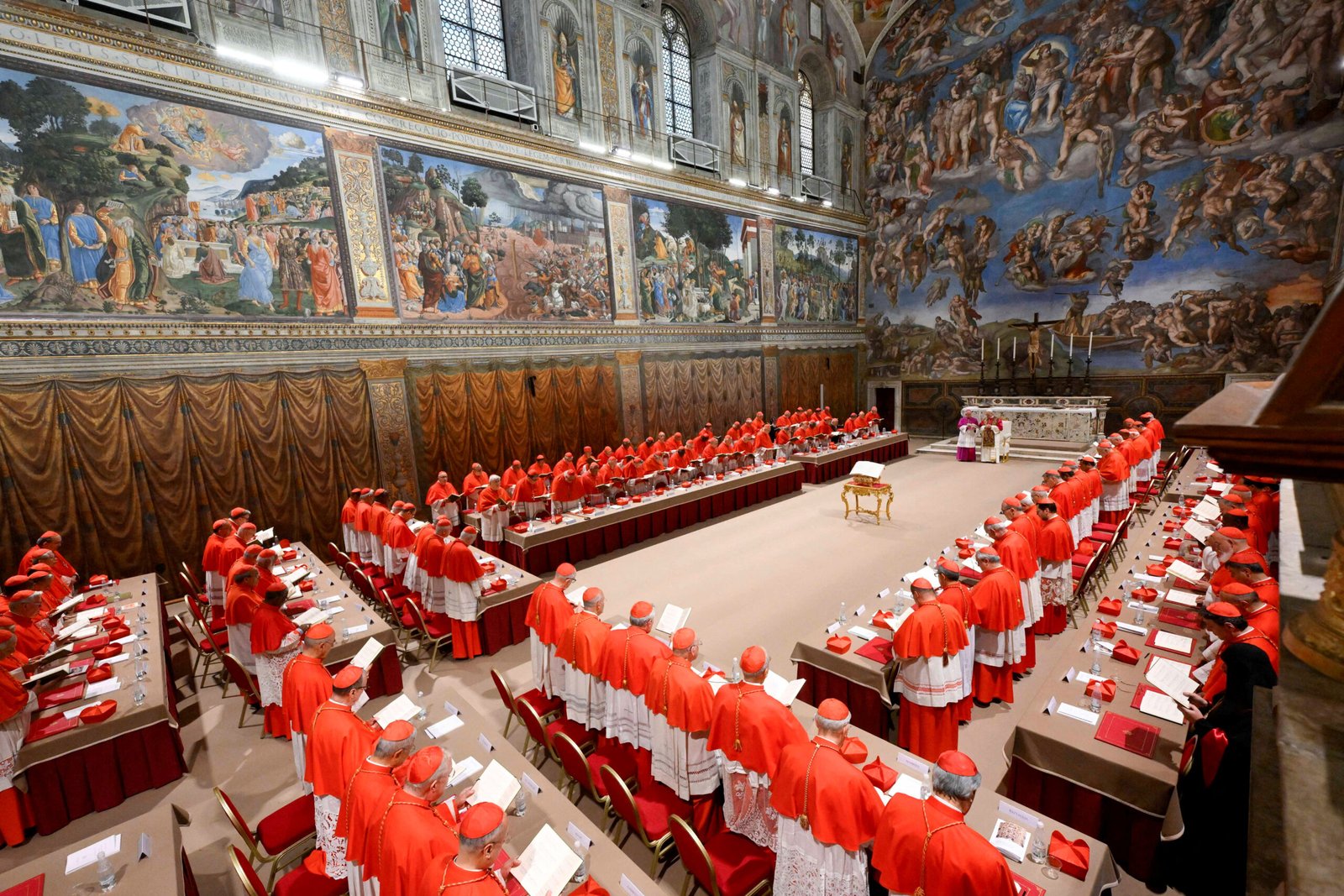
A shocking breach of protocol occurred during the secret conclave that elected Pope Leo XIV last May, a new book by veteran Vatican reporters reveals.
As 133 cardinals gathered in the Sistine Chapel for their first vote, which is typically safeguarded by signal-jamming equipment to prevent outside communications, security officials detected an active mobile phone signal inside the chapel.
In a scene the authors describe as “unimaginable even for a film,” one of the older cardinals discovered a cellphone in his pocket and handed it over to security. The book, The Election of Pope Leo XIV, does not identify the cardinal or suggests he had any motive for carrying the phone but notes he was “disoriented and distressed” by the incident.
The incident is unprecedented in the history of modern papal conclaves, which require cardinals to relinquish all communication devices to ensure the election process remains secret.
Pope Leo XIV, elected on the fourth ballot with 108 votes, became the first pope from the United States. The revelation of this security lapse provides a rare behind-the-scenes glimpse into one of the world’s most secretive religious events.
International
Exiled Iranian Prince Backs U.S.-Israel Strikes, Urges Citizens to Rise Against Regime

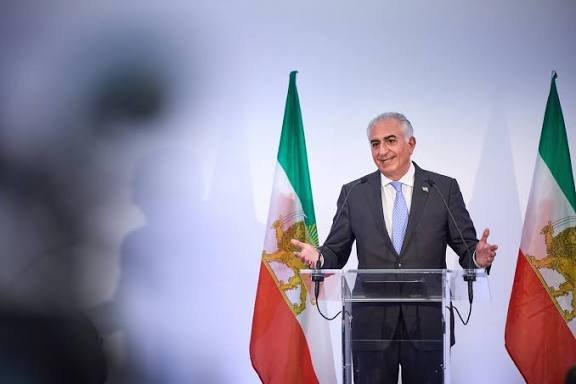
Exiled Iranian Crown Prince Reza Pahlavi has endorsed the ongoing joint U.S.-Israeli military strikes on Iran, describing them as a form of “humanitarian intervention” aimed at dismantling the country’s ruling clerical establishment.
In a strongly worded statement released on social media, Pahlavi characterized the strikes as long-promised assistance to the Iranian people rather than an attack on the nation itself. He framed the operation as targeting what he called the Islamic Republic’s “repressive apparatus” and not the Iranian population.
“The aid that the President of the United States promised to the brave people of Iran has now arrived,” Pahlavi wrote. “This is a humanitarian intervention; its target is the Islamic Republic, not the country and great nation of Iran.”
Pahlavi also praised U.S. President Donald Trump, thanking him for what he described as support for Iranians seeking change. However, he urged Washington to take every possible precaution to minimize civilian casualties.
Calling the current moment a turning point, the exiled prince declared that the Islamic Republic was “collapsing” and appealed directly to Iran’s military, police, and security forces to withdraw their loyalty from Supreme Leader Ali Khamenei.
“You have sworn an oath to protect Iran and its people, not a regime that has held the country hostage,” he stated, warning that those who remain aligned with the leadership risk “going down with Khamenei’s sinking ship.”
Pahlavi stopped short of calling for immediate nationwide demonstrations but suggested that large-scale protests could resume soon. He advised citizens to remain alert and await what he described as the “appropriate time” to return to the streets.
“Moments of destiny lie ahead,” he said, expressing confidence that Iranians themselves would ultimately determine the country’s future. “We are very close to final victory.”
He further indicated that he would continue communicating with supporters even if authorities attempted to restrict internet or satellite services measures previously employed during periods of unrest.
Pahlavi’s remarks echo past opposition efforts to encourage defections within Iran’s security establishment, a factor analysts say could prove decisive in shaping the country’s political trajectory amid escalating tensions.
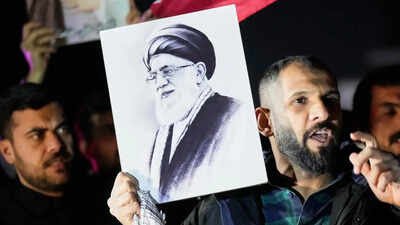
Iran’s President, Masoud Pezeshkian, on Sunday announced that a new leadership council has officially begun operations following the death of Supreme Leader Ali Khamenei.
In a prerecorded message broadcast on Iranian state television, Pezeshkian said the council had “begun its work,” signalling the start of a political transition at the highest level of the Islamic Republic.
Meanwhile, Iran’s Foreign Minister, Abbas Araghchi, told Al Jazeera that a new supreme leader is expected to be selected within “one or two days,” suggesting an expedited process amid mounting regional tensions.
The leadership transition comes as violence escalates between Iran and Israel. A massive explosion struck Tehran on Sunday, with the Israeli military stating it was targeting strategic sites in central parts of the capital.
Earlier in the day, Iran launched missile attacks against an expanding list of targets in Israel and several Gulf Arab states, describing the strikes as retaliation.
The rapid political developments and intensifying military exchanges have heightened fears of a broader regional confrontation in the Middle East.
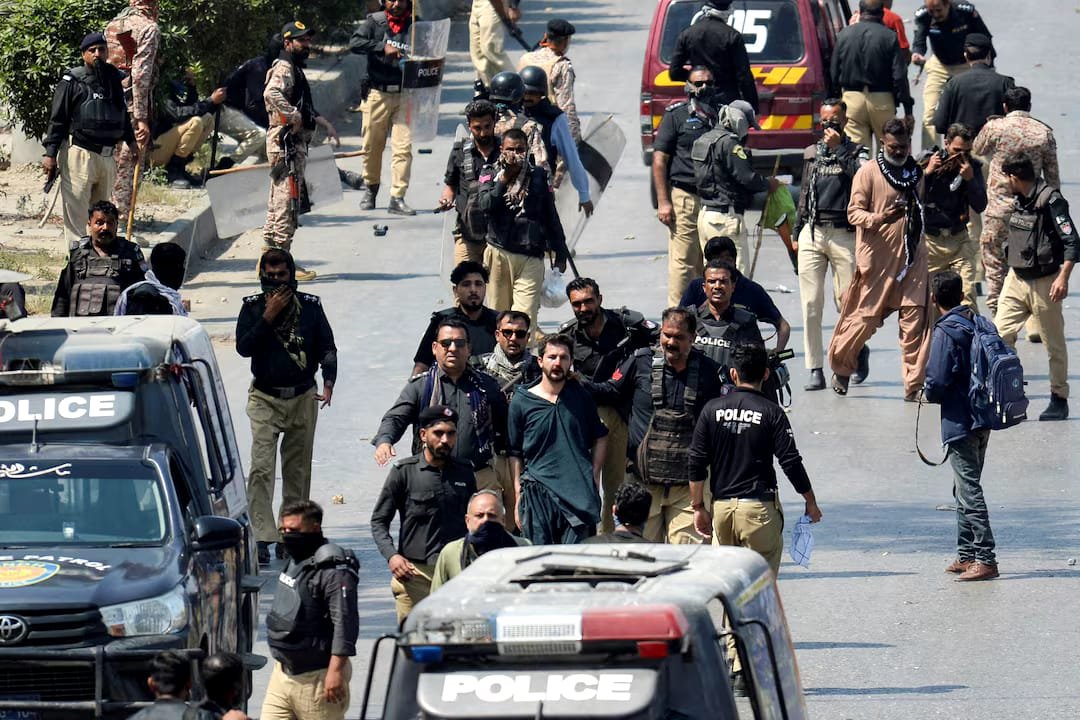
At least nine people have been killed, and more than 50 others injured following violent clashes between pro-Iran protesters and security forces in Pakistan’s southern port city of Karachi, authorities confirmed on Sunday.
The unrest erupted after demonstrators attempted to storm the United States Consulate General Karachi in protest against recent U.S. and Israeli military strikes on Iran that reportedly killed Supreme Leader Ali Khamenei.
Police officials and hospital authorities said at least 25 of the injured were rushed to medical facilities, with several listed in critical condition.
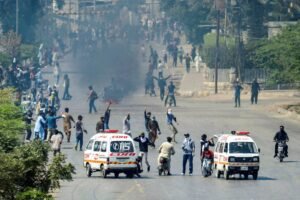
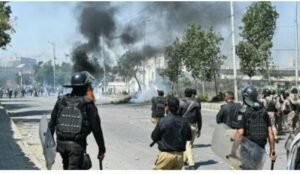
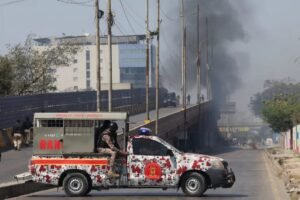
Dr. Summaiya Syed Tariq, a police surgeon at the city’s main government hospital, confirmed that six bodies were initially brought to the facility alongside dozens of wounded individuals. She later disclosed that the death toll rose to nine after three critically injured victims succumbed to their wounds.
The violence was not limited to Karachi. In Pakistan’s northern Gilgit-Baltistan region, thousands of Shiite demonstrators are angered by the U.S. and Israeli strikes attacked offices belonging to the United Nations Military Observer Group in India and Pakistan and the United Nations Development Programme (UNDP).
Government spokesman Shabir Mir confirmed the attacks but stated that all U.N. personnel were safe and accounted for.
The escalating unrest in Pakistan reflects growing regional tensions following the strikes on Iran, raising concerns about wider instability across South Asia and the Middle East.