
Legislature
Senate Backs Down on Sack Threat Against CAC Registrar-General

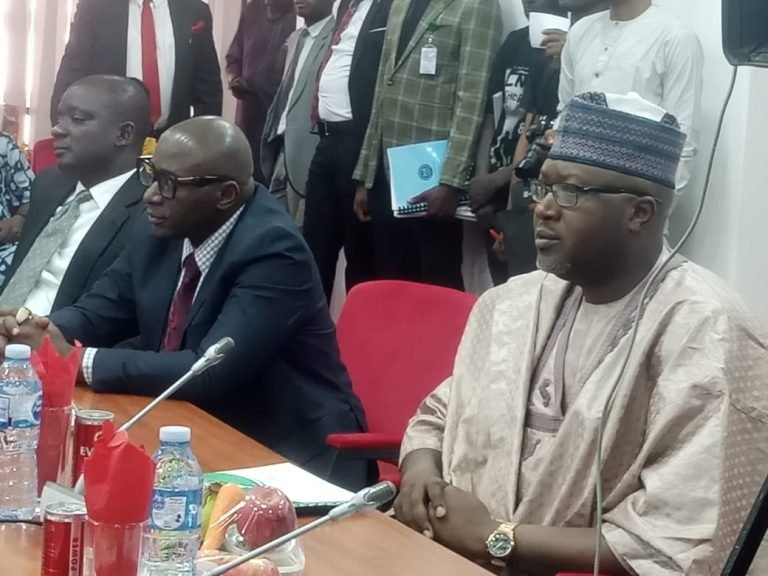
The Senate has stepped back from its earlier decision to recommend the removal of the Registrar-General of the Corporate Affairs Commission (CAC), Hussaini Magaji, after he appeared before its Committee on Finance and tendered an apology for failing to honour previous invitations.
Last week, the committee had threatened to ask President Bola Tinubu to relieve Magaji of his duties over his absence at hearings on the commission’s 2025 budget performance and 2026 budget proposal.
At Monday’s session, Chairman of the Senate Committee on Finance, Senator Sani Musa, stressed that legislative oversight of ministries, departments and agencies is a constitutional responsibility of the National Assembly. He described the Registrar-General’s earlier failure to appear as unacceptable and a hindrance to the committee’s investigation into the financial activities of the commission.
Musa disclosed that the panel had resolved to forward a memo to the Presidency recommending Magaji’s removal before his eventual appearance.
Responding, the CAC boss apologised to the lawmakers, explaining that his absence was due to an official engagement in Lagos and logistical challenges, not a deliberate attempt to disregard the Senate.
“Distinguished Chairman and members of the committee, I sincerely apologise for my inability to honour the earlier invitation. My absence was due to circumstances beyond my control. I hold the Senate in high esteem and assure you of my full cooperation going forward,” Magaji said.
Senator Dicket Plang appealed to the committee to accept the apology and give the Registrar-General another opportunity to improve relations with the legislature. Former Senate Leader, Senator Yahaya Abdullahi, also supported the plea but warned that ignoring parliamentary summons should not happen again.
The committee subsequently adopted a motion moved by Senator Isah Jibrin and seconded by Senator Ned Nwoko, unanimously accepting Magaji’s apology.
With that decision, the Senate withdrew its earlier threat to recommend his sack, allowing him to remain in office while pledging closer engagement with lawmakers.

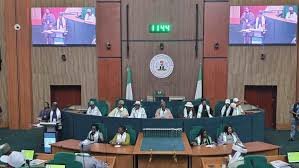
The National Assembly of Nigeria is set to commission a newly completed ultra-modern newsroom on Tuesday, March 3, 2026, in a bold move to modernize its information machinery and tighten its grip on public communication. The facility, described as a major leap in legislative communication infrastructure, will be formally unveiled at exactly 12 noon at Room 1.310, Annex I, Third Floor of the National Assembly Complex, Abuja.
According to an official invitation e-signed by Dr. Ali B. Umoru, Secretary of the National Assembly Directorate of Research and Information, the ceremony will be presided over by the Clerk to the National Assembly, who is expected to lead the formal inauguration. The project marks what insiders describe as a decisive upgrade in how Africa’s largest legislature manages information flow, media engagement and public interface.
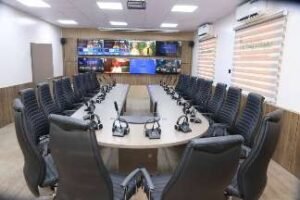
For years, stakeholders have called for improved coordination and faster dissemination of legislative proceedings. Tuesdays commissioning appears to answer that call, positioning the National Assembly to operate with a more structured, technology-driven communication framework. Officials say the state-of-the-art newsroom is designed to enhance media operations, streamline research-backed reporting, and deepen engagement between lawmakers and citizens.
Beyond bricks and screens, the unveiling carries symbolic weight. It underscores a renewed push toward transparency, institutional efficiency and professionalized legislative reporting. Media practitioners, lawmakers, senior bureaucrats and invited stakeholders are expected to grace the event, as the legislature takes another visible step toward strengthening public trust through improved information management.
With growing public demand for accountability and real-time updates on parliamentary activities, the new facility could redefine how legislative business is communicated and how Nigerians connect with decisions taken within the chambers.

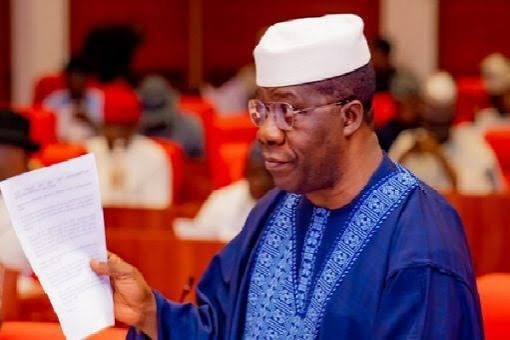
The Senate Leader of the 10th National Assembly, Opeyemi Bamidele, has pledged a N1 billion research fund for lecturers of the Federal University of Technology and Environmental Sciences (FUTES), Iyin-Ekiti.
Bamidele made the commitment at the university’s maiden matriculation ceremony held at the weekend, where 1,564 pioneer students were formally admitted into the 2025/2026 academic session.
He explained that the N1 billion intervention would be disbursed in yearly instalments of N200 million over a five-year period to strengthen research and academic development within the institution.
In addition, the lawmaker representing Ekiti Central Senatorial District donated over N31 million to support students, with each of the matriculating students receiving N20,000 alongside food items.
Expansion plans
In his goodwill message, Bamidele outlined plans to expand the university’s academic and research capacity. He disclosed that although FUTES currently runs four faculties, arrangements are in place to establish three additional faculties as part of its growth drive.
According to him, engagement has commenced with the Medical and Dental Council of Nigeria to ensure compliance with accreditation standards, particularly in providing the necessary infrastructure and equipment.
He added that construction is ongoing at the university’s permanent site, including three new faculty buildings and a comprehensive medical complex designed as a “Medical Village.” The proposed facility will house a hospital with an Intensive Care Unit (ICU), a diagnostic centre equipped with MRI and CT scan machines, an eye care centre, a dental care centre, and a kidney and dialysis centre.
“Beyond infrastructure, university education is about research. For the next five years, I will make available N200 million annually to support research and the work of the academic community. Though it may be modest, it is a commitment to strengthening this institution. We will also build partnerships with government and the private sector to ensure sustainable support,” he said.
VC highlights vision
Earlier, the Vice-Chancellor, Professor Gbenga Aribisala, said the university commenced academic activities within one year of its establishment, with 36 departments spread across four faculties and a total enrolment of 1,564 students.
He described FUTES as a citadel of learning positioned to rank among leading universities globally within its first decade. He noted that the institution’s mission is to advance humanity through transformative learning anchored on cutting-edge teaching and research.
Aribisala listed the university’s objectives to include delivering world-class education in technology and environmental sciences, promoting innovation and creativity, developing sustainable solutions to environmental challenges, and instilling ethical values in students.
He urged the pioneer students to serve as worthy ambassadors of the institution and warned against antisocial behaviours such as drug abuse, sexual assault and intimidation, stressing that discipline and character would be as important as academic excellence.
Government commendation
Ekiti State Governor, Biodun Oyebanji, represented by his Special Adviser on Tertiary Education, Dr Azeez Mayowa, commended President Bola Tinubu for assenting to the bill establishing the university.
He also praised Bamidele for his efforts in ensuring that the institution commenced academic activities within a year of its establishment and encouraged students to prioritise creativity and service to humanity over mere certification.


The Supreme Court of Nigeria has affirmed the conviction and seven-year prison sentence of Senator Albert Bassey over a N240 million fraud case, bringing to a close a protracted legal battle.
In a unanimous judgment delivered on February 27, 2026, a five-member panel of the apex court upheld the earlier decisions of the trial court and the Court of Appeal, confirming Bassey’s conviction secured by the Economic and Financial Crimes Commission (EFCC). The court also restored an order directing him to refund N204 million to the Akwa Ibom State Government.
Delivering the lead judgment, Justice Stephen Jonah Adah ruled that while the conviction and sentence imposed on June 23, 2023, were valid, the Court of Appeal erred when it voided the restitution order earlier granted by the trial court.
“The conviction and sentencing imposed by the lower court are hereby affirmed,” Justice Adah held. “However, the order avoiding the restitution granted by the trial court did not follow the law. It is hereby nullified and the restitution of N204 million as ordered by the trial court is restored.”
From Commissioner to Convict
Bassey’s prosecution stemmed from his tenure as Commissioner for Finance in Akwa Ibom State. He was arraigned before Justice Agatha Okeke of the Federal High Court on a seven-count charge bordering on corruption and abuse of office.
The EFCC, led by prosecution counsel Ekele Iheanacho (SAN), accused him of receiving 12 luxury vehicles valued at N254 million as bribes while in office.
On December 1, 2022, the trial court found him guilty on all counts and sentenced him to seven years imprisonment on each count — totalling 42 years. The sentences, however, were to run concurrently.
Appeal and Final Verdict
Dissatisfied with the ruling, Bassey approached the Court of Appeal, where a three-member panel upheld his conviction but introduced an option of fine and set aside the restitution order.
The EFCC challenged aspects of that decision, leading to the final appeal before the Supreme Court.
With Friday’s judgment, the apex court not only affirmed the conviction and seven-year term but also reinstated the N204 million restitution order, effectively ending the legal contest.
Anti-Corruption Signal
Legal analysts say the ruling reinforces the judiciary’s stance against public sector corruption and strengthens accountability in public office.
The EFCC described the verdict as a major affirmation of its anti-corruption mandate and a victory for the rule of law.
With the conviction now conclusively upheld, Bassey is expected to serve his sentence while complying with the court-ordered repayment to the Akwa Ibom State Government.